

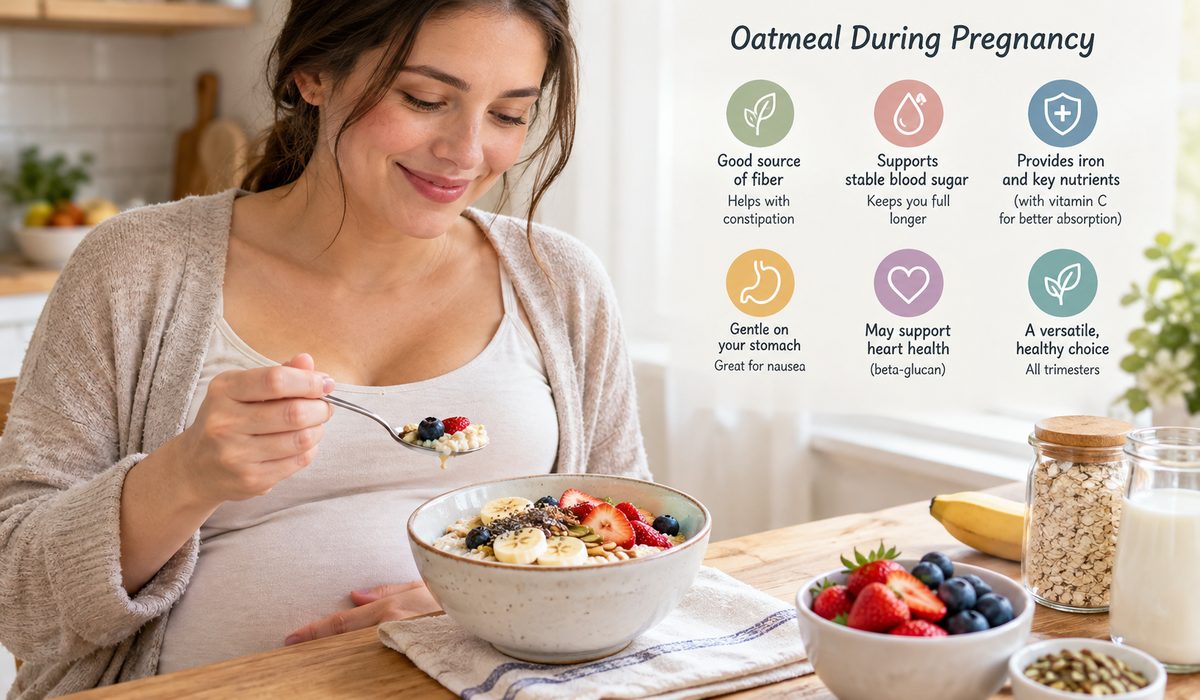
Can you eat oatmeal while pregnant? Yes. Of all the breakfast questions that come up in pregnancy, this one has about the friendliest answer. Oats are filling, gentle on a queasy stomach, and a real help with the fiber and iron your body suddenly wants more of. The only catches are the sugar in flavored packets and a couple of handling rules for raw oats, and I’ll get to both.
Is oatmeal good during pregnancy?
Mostly, yes, and it depends on what’s in the bowl.
Plain oats are a whole grain. You get slow-burning carbohydrate, some protein, fiber, and small amounts of iron, magnesium, zinc, and B vitamins. That’s a solid start to the day, especially if you’re the kind of hungry that shows up an hour after breakfast or the kind of nauseated that rules out anything greasy.
So if you’re wondering whether oatmeal is healthy during pregnancy, or whether oatmeal is healthy while pregnant if you eat it daily, the answer is the same. Plain or lightly topped oatmeal is a good choice. The maple-brown-sugar packet with the cartoon on the box is a different food that happens to share a name. Most of the trouble with pregnancy oatmeal comes from the sugar added to it, and very little comes from the oat itself.
The benefits of oatmeal during pregnancy
Constipation is the one most people notice first. Pregnancy hormones slow your gut down, and by the second trimester plenty of people are dealing with it more days than not. Oats have two kinds of fiber. One turns gel-like and softens stool, the other adds bulk. The Dietary Guidelines for Americans suggest about 28 grams of fiber a day in pregnancy, and a bowl of oats gets you a good way there. Just don’t go from almost no fiber to a lot overnight. You’ll be bloated and unhappy. Add it gradually, and drink more water while you do.
Blood sugar is the second big one. Oats contain a fiber called beta-glucan that slows how fast carbohydrate reaches your bloodstream. Next to a pastry or a sweet cereal, a bowl of oats usually gives you a gentler rise and keeps you full longer. That helps everyone, and it matters more if your glucose has been running high or you’re managing gestational diabetes.
Iron needs a little honesty. Your blood volume expands a lot during pregnancy, and oats do contain iron. But it’s the plant kind, which your body absorbs less easily, and oats have natural compounds called phytates that cut absorption a bit further. So oatmeal helps, but it won’t replace your prenatal vitamin. Tossing strawberries or kiwi on top helps, since vitamin C improves how much iron you take up.
Folate is worth a quick word, because people assume oats are a big source. Plain oats aren’t. Some instant oatmeal is fortified with folic acid, so read the label, and keep taking your prenatal either way.
Then there’s heart health. Beta-glucan can modestly lower LDL cholesterol, and oats contain antioxidants that researchers are still studying. Nice to have. It’s not a treatment for high blood pressure, though, and if yours is up, your provider’s plan comes first.
And honestly, one of the best benefits of oatmeal during pregnancy has nothing to do with nutrients. When almost nothing sounds edible, warm, mild oats are often what stays down.
Which type is the best oatmeal for pregnancy?
If you want one answer, buy plain steel-cut or rolled oats and cook them in milk or a fortified plant milk. You get the most fiber, and you control the sweetness. On rushed mornings, plain instant oats are fine too. Save the flavored packets for now and then, or use half a packet and stir it into plain oats.
| Type | Texture and cook time | Blood sugar effect | Good to know |
|---|---|---|---|
| Steel-cut | Chewy, 20 to 30 minutes | Slowest, most gradual | Make a big batch and reheat it all week |
| Rolled (old-fashioned) | Softer, 5 to 10 minutes | Moderate | The everyday pick, and it works for overnight oats |
| Quick oats | Fine, 1 to 3 minutes | Faster | Fine when plain |
| Instant packets | Very soft, about 1 minute | Fastest, especially flavored | Often heavy on sugar, so buy plain and top it yourself |
One more thing if you have celiac disease or a gluten sensitivity: look for oats labeled gluten-free. Oats don’t contain gluten on their own, but they’re often processed alongside wheat.
Can you have raw oats while pregnant?
Usually, yes. Store-bought rolled oats have already been steamed and heated during processing, so they aren’t raw in the way raw flour or raw eggs are. That’s why overnight oats and muesli are generally fine for pregnant women.
How you handle them matters more. Use pasteurized milk or yogurt. Keep overnight oats in the fridge and eat them within three or four days. Store dry oats in a sealed container, and toss them if they smell musty. If you have a condition that affects your immune system, ask your provider about food safety in general.
Making the bowl work harder
Oatmeal is really a base, and what you put on it does a lot of the work.
Strawberries and pumpkin seeds give you iron with vitamin C. Greek yogurt or peanut butter adds protein, which helps the bowl hold you until lunch. Cooking the oats in milk or fortified soy milk brings in calcium. Ground flax or chia adds omega-3s. For sweetness, mashed banana and cinnamon go a long way, and a little honey is fine for you (the honey warning is about babies under one, not about you).
Here’s an odd one that some people swear by: whisk an egg into hot oatmeal near the end of cooking, and it turns creamy and savory. Not for everyone. But it works.
What about oats for skin, and for breastfeeding?
Pregnancy and oatmeal tend to show up together in these two spots as well.
Finely ground oats, sold as colloidal oatmeal, are a well-established way to calm itchy skin. A warm, not hot, bath with ground oats for around 15 minutes is a reasonable thing to try when your belly starts itching. If you add lavender, keep it light or skip it, because essential oils haven’t been studied much in pregnancy. And if the itching is intense, comes without a rash, or is worst on your palms and soles, don’t treat it at home. Call your provider. That pattern can point to a liver condition called cholestasis of pregnancy.
On breastfeeding, plenty of mothers say oatmeal boosts their milk supply. The research behind that is thin. Oatmeal is nourishing and comforting, which is reason enough to keep eating it after delivery, but I wouldn’t count on it as a supply fix.
When to call your provider
Oatmeal is a low-risk food, but reach out if you notice:
- severe or worsening constipation, or blood in your stool
- bloating, cramping, or diarrhea that doesn’t settle once you adjust your fiber
- hives, swelling, wheezing, or vomiting after eating oats
- blood sugar readings that stay high despite changes to what you eat
- intense itching without a rash, especially on your hands and feet
FAQs
Can pregnant women eat oatmeal every day?
For most people, yes. It fits well into a balanced diet. Just rotate the toppings and keep other whole grains, vegetables, and protein in the mix so one food isn’t doing all the work.
Is oatmeal good for pregnancy in the first trimester?
Often, yes. It’s one of the foods people tolerate best when nausea is high. Plain, warm, and low in fat tends to sit best.
Is oatmeal good for pregnant women with gestational diabetes?
It can be, particularly steel-cut or rolled oats paired with protein and a little fat. Portion size and toppings matter, and everyone’s glucose response is a bit different, so your care team can help you figure out what works.
Is oatmeal good while pregnant if I’m constipated?
Usually, as long as you’re drinking enough fluid alongside the fiber.
Are oats and oatmeal the same thing?
Oats are the grain and oatmeal is the cooked dish, though in everyday advice people use the words interchangeably.
Are there any risks to the baby from oatmeal?
Plain oats aren’t linked to any pregnancy risk. The practical issues are added sugar in packets and safe storage of overnight oats.
Final Thoughts
Oatmeal earns its good reputation. It’s cheap, filling, easy on the stomach, and flexible enough to work in every trimester. Choose plain steel-cut or rolled oats when you can, watch the added sugar, add vitamin C and protein, and treat it as one good habit instead of a fix for any single problem. If your digestion, blood sugar, or skin seems off, take that question to your provider.

Dr. Tania Adib is a Board Certified OB/GYN based in the northern suburbs of Chicago. She earned her undergraduate degree from the University of Notre Dame and her medical degree from Georgetown University in Washington, D.C., before completing her residency in Obstetrics and Gynecology at Magee-Womens Hospital, University of Pittsburgh Medical Center. Her clinical interests include full-spectrum obstetrics and gynecology, from the first period through the menopausal years, contraception, and abnormal bleeding.