


Yes, in most of its forms. But poieno, more commonly spelled pionono, isn’t one dish. It’s a name that gets attached to a rolled sponge cake with toasted cream in one country, a plantain cup stuffed with picadillo and egg in another, and a savory roll filled with ham salad and mayonnaise somewhere in between. So the pregnancy question isn’t really about poieno. It’s about what’s inside it.
I get some version of this question constantly with regional foods people grew up eating somewhere specific. The name carries a reputation, but the actual ingredients shift so much from country to country that a flat yes or no just doesn’t hold up here. Let’s go filling by filling.
What Exactly Is Poieno?
Depending on the source, you’ll see this spelled poieno, pianono, or pionono. Same food family. The original version came out of Santa Fe, near Granada, Spain, back in 1897, when a pastry chef named Ceferino Isla made a syrup-soaked sponge cake and named it after Pope Pius IX. Toasted cream on top, eaten in a bite or two. That’s the whole thing.
From there it spread and changed almost completely depending on where it landed:
- Spain: small syrup-soaked sponge cakes topped with toasted cream, eaten in a bite or two
- Philippines (pianono): a Swiss-roll style sponge cake, usually filled with sweetened butter or margarine
- Argentina, Uruguay, Chile, Colombia, Venezuela, Cuba, Peru: rolled sponge dough, sweet with dulce de leche or fruit and cream, or savory with ham, cheese, tomato, and mayonnaise-based salads
- Puerto Rico: the outlier. Here it isn’t cake at all. It’s a fried, sweet plantain formed into a cup, stuffed with picadillo and beaten egg, then fried or baked
That range is the whole reason a blanket answer doesn’t work. The risks in a custard-topped sponge cake have nothing to do with the risks in a beef-and-egg plantain cup.
The Sweet Versions: Sponge Cake, Syrup, Cream
Baked sponge, sugar syrup, a cooked or whipped cream topping. Nothing here is inherently risky in pregnancy. What’s actually worth checking is the same short list that applies to any cake or pastry:
- Toasted cream or custard topping. Fine once it’s a cooked custard base, like crema pastelera. The exception is a version made with raw or undercooked egg that never gets heated properly, which does turn up in some home recipes.
- Whipped cream (chantilly). Fine with pasteurized cream, which is standard in commercial and most home kitchens in the US. Unpasteurized dairy is the actual line to watch, not whipped cream on its own.
- Dulce de leche. Cooked milk and sugar. Nothing to flag.
A bakery-bought poieno in this style is a normal treat. Sugar is the only thing worth moderating, same as with any dessert.
The Savory Latin American Version: Ham, Cheese, Mayonnaise Salads
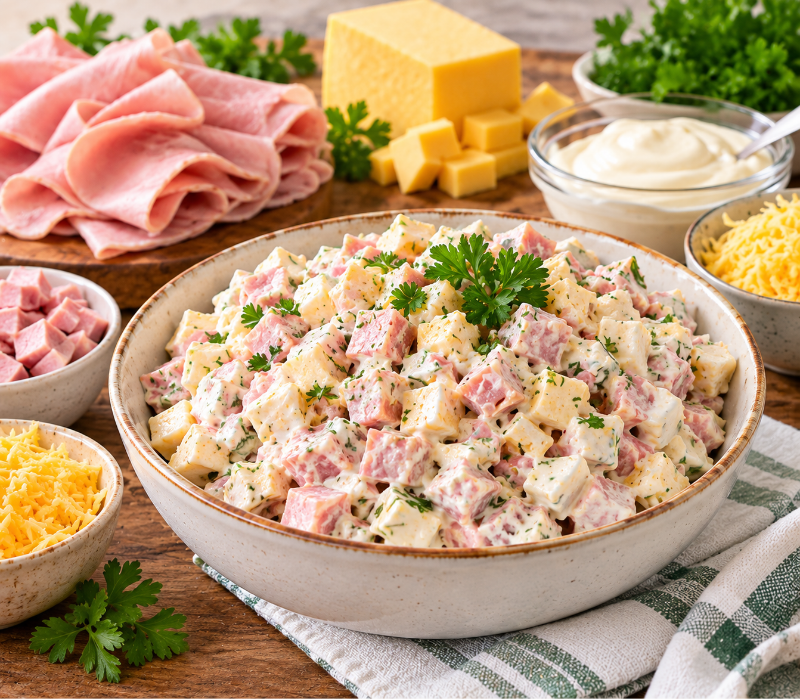
This is where I’d slow down a little. Savory versions filled with cured ham, chicken salad, tuna salad, or ham-and-cheese carry two separate things worth thinking about, and they’re not the same issue.
Cured or deli meat. Ham that hasn’t been reheated to steaming hot carries a small listeria risk. That matters more in pregnancy because listeria can cross the placenta even when it’s causing you nothing more than mild symptoms, or none at all. Nothing about this is specific to poieno. It’s the same guidance that applies to deli ham, prosciutto, or any charcuterie plate.
Mayonnaise-based salads sitting at room temperature. Commercial mayonnaise in the US is made with pasteurized eggs, so the mayo isn’t the problem. The problem is a chicken or tuna salad that’s been sitting out at a buffet or bakery counter for hours. General food-safety issue, not a pregnancy-specific one. But pregnancy is exactly when you don’t want to test it.
The Puerto Rican Version: Plantain, Picadillo, Egg
Puerto Rican poieno is fully cooked, start to finish. The plantain is fried, the picadillo (ground beef with sofrito, tomato sauce, seasoning) is simmered through, and the beaten egg that holds everything together gets fried or baked until set. No raw or rare component anywhere in a properly made one.
That’s actually the reassuring part. Ground beef and egg are the two ingredients that would raise a flag if undercooked, and here, they’re not. If you’re ordering it out, the only thing worth confirming is that it’s served hot, not left out and reheated on and off.
Poieno Variants at a Glance
| Version | Main Filling/Topping | Pregnancy Consideration |
|---|---|---|
| Spanish (original) | Syrup, toasted cream | Generally fine; confirm custard is cooked, not raw egg |
| Filipino (pianono) | Sweetened butter/margarine | No specific concern |
| Latin American, sweet | Dulce de leche, fruit, whipped cream | Fine with pasteurized dairy |
| Latin American, savory | Cured ham, cheese, mayo-based salad | Reheat ham until steaming; avoid salad left at room temp |
| Puerto Rican | Fried plantain, picadillo, egg | Fine once fully cooked through, which is standard prep |
Practical Guidance
Making it at home is the easy case, because you control every variable. Cook the picadillo through. Make sure any egg component is fully set. Use pasteurized dairy for cream fillings. That’s it, that covers all of it.
Buying it is only slightly more work. Ask whether the ham or deli filling is served hot, whether the salad-style filling has been sitting out, and whether the cream topping is a cooked custard rather than raw egg whip. Most bakeries and restaurants already get this right, since the same standards apply to any customer with a weaker immune system. Still doesn’t hurt to ask when you’re not sure.
When to Contact Your Provider
Call your OB or midwife if fever, chills, muscle aches, or flu-like symptoms show up within a couple of months of eating a deli meat or cheese product you’re now second-guessing. That’s the listeria window. Worth ruling out even though the actual odds are low. Otherwise this is a food question, not a symptom question, and there’s no need to escalate it.
FAQ
Can I eat poieno if I’m pregnant?
Yes, in any of its common forms. Just make sure the filling is fully cooked and any deli meat is served hot, not cold from the counter.
Is the cream topping on Spanish poieno safe?
Yes, if it’s a cooked custard or made with pasteurized cream, which is standard. Ask if you’re somewhere unfamiliar and the prep isn’t obvious.
Does the Puerto Rican version need any special caution?
Not really. Beef and egg are both fully cooked in standard prep, which removes the two concerns that would otherwise apply.
What about the mayonnaise in savory versions?
Commercial mayonnaise made with pasteurized eggs is fine. The real risk is a mayo-based salad left unrefrigerated for a long stretch. That’s a general food-safety issue, not something specific to mayonnaise.
Bottom Line
Poieno isn’t one food. It’s a name attached to very different dishes across several countries, and the pregnancy answer changes with the filling, not the name. The sweet, baked versions are a normal treat. The savory ones are fine too, once you handle the same two things that apply to any deli ham or mayo salad: heat it through, skip it if it’s been sitting out. And the Puerto Rican version, which sounds like the riskiest one on paper, turns out to be the most straightforward, because everything in it is already cooked by the time it reaches you.

Dr. Tania Adib is a Board Certified OB/GYN based in the northern suburbs of Chicago. She earned her undergraduate degree from the University of Notre Dame and her medical degree from Georgetown University in Washington, D.C., before completing her residency in Obstetrics and Gynecology at Magee-Womens Hospital, University of Pittsburgh Medical Center. Her clinical interests include full-spectrum obstetrics and gynecology, from the first period through the menopausal years, contraception, and abnormal bleeding.