

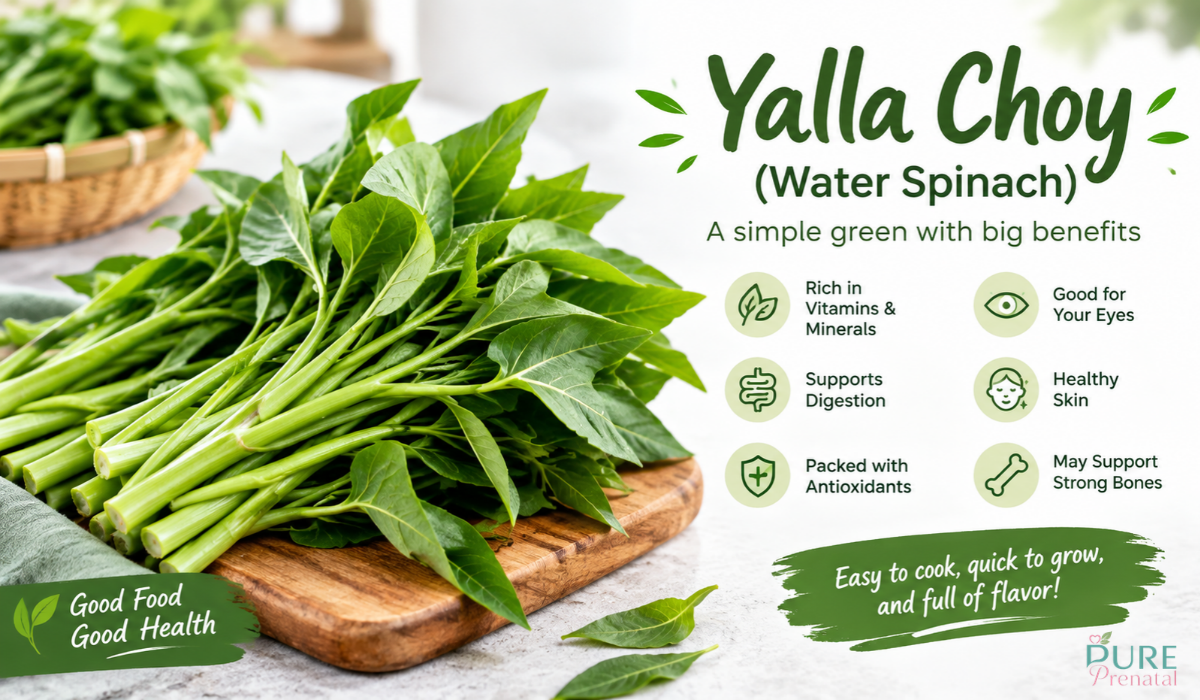
Okay, confession time. For years I walked right past this stuff at the market. Bunches of long, hollow-stemmed greens, piled up next to the bok choy, and I never once picked them up. Kale gets all the hype, and spinach has its famous cartoon sailor. Meanwhile yalla choy, which you may know as water spinach or kangkong, has been quietly feeding families across Asia for generations.
Then one evening I was tired, hungry, and out of ideas, so I grabbed a bunch. Three minutes in a hot pan with some garlic, and I was hooked. Let me tell you everything I’ve learned since, like I would if you’d asked me over dinner.
So, What Is Yalla Choy, Really?
It’s a leafy green vegetable from the Morning Glory family (Ipomoea aquatica, if you like the fancy name). The stems are long and hollow, the leaves are soft and tender, and the whole plant just loves warm, wet places like ponds and streams. That’s where “water spinach” comes from.
And the name “yalla choy”? I love it. Yalla is Arabic slang for “let’s go!” or “hurry up!”, and choy is the Chinese word for vegetable. So it’s basically “hurry up, vegetable.” Honestly, that fits. It grows fast, it cooks fast, and it doesn’t waste your time.
You might also run into it under other names:
- Kangkong in the Philippines, Malaysia, and Indonesia
- Ong choy or water spinach at Chinese grocery stores
- River spinach or swamp cabbage in some places
If the label says any of those, you’re in the right aisle.
What Does It Taste Like?
Mild and a little sweet, with a gentle earthiness. It isn’t bitter at all, which is a big deal if you’ve ever bitten into a mustard green and regretted it. The leaves go soft when cooked, while the stems stay crisp, so you get two textures in one bite.
If spinach is the guest who talks a bit too loudly at the party, yalla choy is the one who gets along with everybody. It soaks up whatever you cook it with, whether that’s garlic, chili, or soy sauce. And you can eat the whole thing, stems and leaves, so there’s barely anything to throw away.
What’s Actually in It?
It’s super light and still packs a punch. In about 100 grams, raw or lightly cooked, you’re looking at roughly:
- 13 to 20 calories
- 1.5 g of protein
- About 1 g of fiber
- About 50 mg of vitamin C
- About 105 mg of calcium
- About 1.2 mg of iron
Plus a good dose of vitamin A in the form of beta-carotene. These numbers shift depending on how the plant was grown and cooked, so think of them as a friendly estimate, not a lab report.
Why It’s Good for You
I’m not going to tell you one vegetable will change your life. But adding more leafy greens to your plate is one of those small habits that really adds up, and yalla choy makes it easy. Here’s what it has going for it:
Your gut will thank you. The fiber and the high water content help keep digestion moving and can ease bloating.
It’s full of antioxidants. Vitamin C and beta-carotene help protect your cells from everyday wear and tear.
Your eyes get some love. Vitamin A and carotenoids are linked to healthy vision, which is nice when you stare at screens all day.
It’s good for your skin. Vitamin C helps your body make collagen, and eating plenty of hydrating, vitamin-rich foods tends to show up on your face.
You get a little iron and calcium. Not huge amounts, but they all count toward healthy blood and strong bones.
And because it’s so light, it fits into balanced meals without ever feeling like “diet food.”
Yalla Choy vs. Spinach: Who Wins?
Honestly? Neither. They’re just different, and I like having both.
Spinach prefers cool weather, while yalla choy thrives in heat and humidity. Spinach turns silky and soft, while yalla choy keeps its crunchy stems. Spinach is famous for iron and folate, and yalla choy is great for hydration, quick growth, and how easily it slides into almost any dish.
If you’re a spinach person, try swapping yalla choy into your sautés, grain bowls, or even green smoothies. You might be pleasantly surprised.
How I Like to Cook It
One rule: don’t walk away. The leaves wilt in minutes, and if you stop to answer a text, you’ll come back to a sad, limp pile. Stay close to the stove and you’ll be rewarded.
My go-to methods:
- Stir-fried. The classic for a reason. Garlic, a splash of soy sauce, and a pinch of chili is honestly all you need.
- In soup. Toss it in at the very end so the leaves soften without turning mushy.
- Steamed or blanched. A drizzle of sesame oil, a pinch of salt, and a squeeze of lemon. Simple and lovely.
- Raw in salads. Stick to young, tender leaves and pair them with fruit, nuts, or seeds.
- In noodles or fried rice. It adds color and a bit of crunch, and it makes the whole bowl feel fresher.
My Five-Minute Weeknight Stir-Fry
You’ll need: 1 bunch yalla choy, 2 minced garlic cloves, 1 tablespoon vegetable oil, 1 teaspoon soy sauce, a pinch of salt, and chili flakes or a little sesame oil if you’re feeling fancy.
- Wash the greens well and chop them into bite-sized pieces. Keep stems and leaves in separate piles, because the stems need a head start.
- Heat the oil in a pan over medium-high heat.
- Toss in the garlic for 20 to 30 seconds, until your kitchen smells incredible.
- Add the stems and cook for about a minute.
- Add the leaves and stir until they just start to wilt.
- Splash in the soy sauce, add the salt, toss for another minute, and serve right away.
Pile it over rice, tuck it next to noodles, or eat it alongside anything grilled. It’s hard to get wrong.
Picking It and Storing It
At the market, look for bright green leaves, firm stems, and a crisp feel. If it’s yellow or droopy, leave it. At home, wrap it loosely in a paper towel, slip it into a produce bag, and keep it in the fridge. It should last about a week. One tip that helped me a lot: wash it right before cooking, not before storing. Extra moisture is what makes it go bad faster.
Growing Yalla Choy at Home
This is the part where I really fell for it. If you’ve ever killed a basil plant (no judgment, I have), yalla choy is a kind and forgiving place to start. You can often harvest within 3 to 4 weeks.
Warmth. It loves temperatures around 20–35°C (roughly 68–95°F) and doesn’t enjoy frost. Spring, summer, and monsoon season are the best planting times.
Light. Full sun or partial shade works. Aim for about 4 to 6 hours of direct sunlight.
Soil. Go for loose, fertile soil that holds moisture and is rich in organic matter, with a pH between 5.5 and 7.0.
Water. It’s semi-aquatic, so keep the soil damp. Just don’t let it sit in stagnant, dirty water.
Planting. Start with seeds or stem cuttings. For cuttings, strip the lower leaves and pop the stems into moist soil or a shallow dish of water. Roots show up in just a few days, which is oddly satisfying to watch. Space the plants 6 to 8 inches apart, and give them a drink right after transplanting.
Care. Mulch around the base to keep moisture in and the roots cool. Harvest often by snipping the top stems, since that makes the plant grow bushier. If aphids, snails, or caterpillars turn up, a bit of neem oil usually sorts them out.
Tiny space? A wide pot with drainage holes works nicely. Just keep the water coming.
One important heads-up: in some places, including parts of the United States, water spinach is listed as invasive or restricted because it spreads fast in waterways. Check your local rules before planting, and if you’re not sure, keep it in a container.
Final Thoughts
Yalla choy is one of those wonderful, unfussy foods. It’s mild, quick, forgiving, and good for you, and it doesn’t ask for much in return. Whether you’re stir-frying a bunch after a long day, dropping some into soup, or growing it on a sunny balcony, you’ll get a lot of fresh flavor for very little effort.

Dr. Tania Adib is a Board Certified OB/GYN based in the northern suburbs of Chicago. She earned her undergraduate degree from the University of Notre Dame and her medical degree from Georgetown University in Washington, D.C., before completing her residency in Obstetrics and Gynecology at Magee-Womens Hospital, University of Pittsburgh Medical Center. Her clinical interests include full-spectrum obstetrics and gynecology, from the first period through the menopausal years, contraception, and abnormal bleeding.