

Breastfeeding does not always go exactly as planned. Some mothers establish a comfortable feeding routine quickly, while others find themselves wondering whether their baby is getting enough milk or whether their milk supply has dropped. Changes in feeding patterns, returning to work, illness, stress, or simply a baby’s changing needs can all make milk production feel unpredictable.
Breast milk production is really dependent, on how you express milk and how well you do it. So if you want to make milk you can try to stimulate your breasts more. A lot of mothers who breastfeed try something called power pumping. This is one way that breastfeeding mothers can get their breasts to make milk. Breast milk production will increase if you use power pumping because it helps to remove milk from the breasts often.
Increasing Breast Milk Supply – Power Pumping is a strategy designed to mimic the repeated feeding pattern sometimes seen when a baby is cluster feeding or going through a growth spurt. Instead of pumping continuously, you alternate pumping and short rest periods during a single session. The repeated stimulation may encourage the breasts to produce more milk over time.
Power pumping is not something you do of breastfeeding your baby or pumping milk regularly. It is something you can do in addition, to your feeding or pumping routine when you want to make more milk. Power pumping can help when you need to increase your milk production for a while.
What Is Power Pumping?
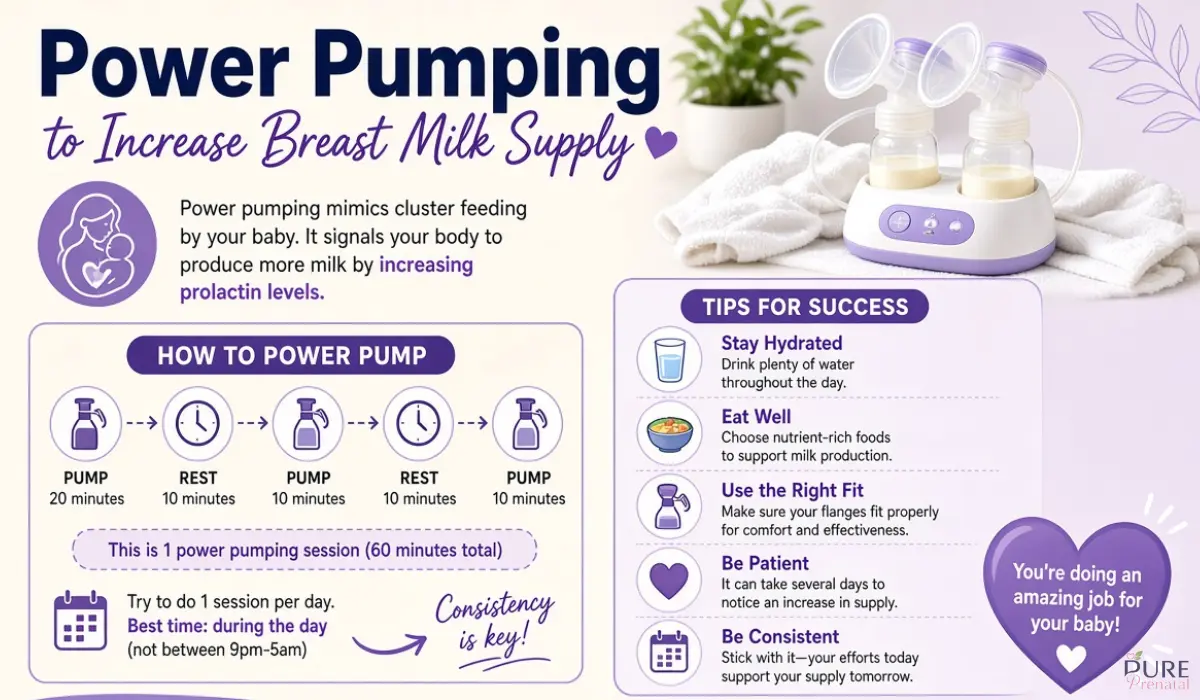
Power pumping is a structured pumping technique that involves several short pumping periods separated by breaks. The idea is to provide repeated stimulation to the breasts, similar to the frequent sucking that occurs during cluster feeding.
A commonly used one-hour power pumping routine is:
- Pump for 20 minutes
- Rest for 10 minutes
- Pump for 10 minutes
- Rest for 10 minutes
- Pump for 10 minutes
The amount of milk collected during the first session may be small. That does not necessarily mean the technique is ineffective. The purpose is to repeatedly stimulate and empty the breasts so the body receives a stronger signal that additional milk may be needed.
How Does Power Pumping Increase Milk Supply?
Breast milk production is closely connected to milk removal. When milk is regularly removed from the breasts, the body receives signals to continue producing milk.
This is why babies may naturally nurse more frequently during periods of rapid growth. Their increased demand can encourage the mother’s body to adjust milk production.
Power pumping attempts to recreate that pattern using a breast pump. The repeated cycles of pumping and resting provide additional breast stimulation within a relatively short period.
For some mothers, this can be useful when they are trying to increase breast milk supply. However, it is important to remember that milk production varies from person to person, and power pumping does not guarantee an increase.
A Simple Power Pumping Schedule
If you are trying to increase breast milk supply, consistency is usually more practical than trying to pump for long periods randomly throughout the day.
A standard one-hour session can look like this:
20 minutes: Pump
10 minutes: Rest
10 minutes: Pump
10 minutes: Rest
10 minutes: Pump
You can choose a time that fits naturally into your day. Some mothers prefer the morning because they may have more time and often notice higher pumping volumes earlier in the day.
There is no requirement to choose a particular hour. The most useful time is one that you can follow consistently without creating additional stress.
How Often Should You Power Pump?
There is no single schedule that is right for every breastfeeding mother.
Many women begin with one power pumping session a day while continuing their normal breastfeeding or pumping routine. After several days, they can assess whether their overall milk production appears to be changing.
Power pumping should generally supplement regular milk removal rather than replace it. If your baby normally breastfeeds, continue offering regular feeds. If you exclusively pump, continue your usual pumping schedule.
Adding more and more pumping sessions is not necessarily better. Excessive pumping can leave the nipples sore and may make breastfeeding feel exhausting.
If you are thinking about trying a power pumping routine that’s really intense especially because your baby is not getting heavier like they should be you should talk to a lactation consultant or a midwife or a health visitor or another healthcare professional who knows what they are doing. They can give you advice, about power pumping and help you figure out what to do to help your baby gain weight. You should talk to them about your power pumping routine and your babys weight.
When Might Power Pumping Be Useful?
Power pumping may be considered when a breastfeeding mother wants to encourage additional milk production.
Some situations that may lead someone to try it include:
- A temporary decrease in milk production
- Changes in breastfeeding frequency
- Returning to work
- Increasing the amount of expressed milk available
- A baby entering a period of more frequent feeding
- A change in pumping routine
- Difficulty maintaining the previous amount of expressed milk
However, a perceived low supply does not always mean that the body is producing too little milk.
When you are breastfeeding your breasts will probably feel softer after a while. This is because breastfeeding is working well. Your baby is getting better at drinking the milk from your breasts.
If you use a pump to get milk from your breasts and you do not get much milk as you thought you would that does not mean your baby is not getting enough breastfeeding milk.
How Long Does Power Pumping Take to Work?
There is no guaranteed timeframe for increasing breast milk supply.
Some mothers notice a change after several days, while others may need longer. Some may not see a meaningful difference at all.
Try to look at your overall pattern rather than focusing on one bottle of expressed milk. Pumping output can change throughout the day and may be affected by recent breastfeeding, sleep, hydration, stress, and the time since your last milk removal.
If you have been power pumping consistently and see no improvement, it may be more useful to investigate why milk production appears low rather than simply adding more pumping time.
Your Breast Pump Matters
The effectiveness of power pumping can depend partly on how well your pump removes milk.
An electric breast pump is generally more practical for a one-hour power pumping session than a manual pump. A double electric pump can also save time if you need to express from both breasts.
Comfort is particularly important.
The pump flange should fit properly, and suction should be comfortable. Turning the suction to the highest possible setting does not automatically mean you will produce more milk.
If pumping causes significant pain, nipple damage, swelling, or persistent discomfort, stop and reassess your equipment and technique. A lactation professional can help check flange fit and pump settings.
Ways to Make Power Pumping More Comfortable
Pumping for an hour can feel like a lot when you are already caring for a newborn. Making your surroundings comfortable can help.
Before beginning, prepare everything you need so you do not have to keep getting up.
Keep your:
- Breast pump
- Collection bottles
- Water
- Phone or entertainment
- Tissues or breast pads
- Comfortable pillow
within easy reach.
Choose a comfortable chair where you can support your back and feet. Some mothers find that listening to music, watching a familiar program, reading, or simply resting helps the hour pass more easily.
You can also try gentle breast massage or breast compressions during pumping if they feel comfortable.
The goal is not to turn power pumping into a stressful task. A relaxed and practical routine is more likely to be one you can continue.
Does Drinking More Water Increase Milk Supply?
Staying hydrated is important while breastfeeding, but forcing yourself to drink excessive amounts of water does not necessarily increase breast milk production.
Drink according to your thirst and maintain regular meals and snacks. Your body needs adequate energy and nutrients during lactation, so a balanced diet is important for your overall health.
There is also no single food that guarantees an increase in milk production. Products marketed as lactation cookies, drinks, teas, or supplements may have limited evidence behind them.
If you are considering herbal supplements or medications marketed as galactagogues, discuss them with a healthcare professional first. Natural does not automatically mean safe for every breastfeeding mother or baby.
Should You Power Pump at Night?
You do not necessarily need to wake during the night specifically to power pump.
Sleep is really important after you have a baby and getting up in the middle of the night to pump milk can be very tough. It can make it even harder to take care of yourself and your baby.
If your doctor or nurse has told you to wake up and breastfeed or pump milk because of something with your baby like their weight or age or if they are having trouble eating you should do what they say. They know what is best for your baby so it is an idea to follow their advice, about breastfeeding or pumping.
Otherwise, choose a time that allows you to power pump without unnecessarily sacrificing essential rest.
What If Power Pumping Does Not Increase Milk Supply?
If you do not notice an improvement, it does not mean that you have failed.
There are many possible reasons for low milk production or low pumping output, including:
- Infrequent milk removal
- Poor latch
- Difficulty transferring milk
- Incorrect flange size
- Pump settings that are not suitable
- Worn pump parts
- Certain medications
- Previous breast surgery
- Hormonal or medical factors
- Significant changes in routine
A lactation consultant can assess breastfeeding or pumping and help identify potential problems.
In some cases, improving the way milk is removed may be more helpful than adding another power pumping session.
How Do You Know If Your Baby Is Getting Enough Milk?
Pumping volume alone cannot tell you whether your baby is receiving enough breast milk.
Depending on your baby’s age, healthcare professionals may look at factors such as weight gain, feeding behavior, wet diapers, and overall health.
If your baby is consistently difficult to wake for feeds, has noticeably fewer wet diapers, seems unusually lethargic, struggles to feed, or is not gaining weight appropriately, contact your baby’s healthcare professional promptly.
Do not rely on power pumping alone if there are concerns about your baby’s intake.
Frequently Asked Questions
Does power pumping really increase breast milk supply?
Power pumping may increase milk production for some mothers because it provides additional breast stimulation and milk removal. However, results vary, and it is not guaranteed to work for everyone.
How many days should I power pump?
Many mothers try one session per day for several days while continuing their normal breastfeeding or pumping schedule. The appropriate duration depends on your individual circumstances.
Can I power pump instead of breastfeeding?
Power pumping should generally be considered an addition to regular breastfeeding rather than a replacement. If your baby can breastfeed effectively, regular feeding remains an important part of maintaining milk production.
How long should one power pumping session last?
A commonly used routine lasts one hour: 20 minutes pumping, 10 minutes resting, 10 minutes pumping, 10 minutes resting, and 10 minutes pumping.
Can power pumping hurt?
Power pumping should not cause significant pain. Mild pulling or tugging can occur, but persistent pain, nipple damage, or breast injury should be addressed. Check your flange fit and suction level and seek professional support if necessary.
How quickly can power pumping increase milk production?
Some mothers notice changes within several days, while others may need longer. There is no guaranteed timeframe, and some women may not experience a noticeable increase.
Should I drink extra water while power pumping?
You should stay hydrated, but drinking excessive amounts of water does not necessarily increase milk supply. Drink regularly according to your thirst and focus on a balanced diet and effective milk removal.
Is power pumping safe for breastfeeding mothers?
For many breastfeeding mothers, power pumping can be incorporated safely into a normal breastfeeding or pumping routine. However, excessive pumping may cause soreness or discomfort. If you have specific medical concerns, seek individualized advice.
The Bottom Line
Increasing Breast Milk Supply – Power Pumping can be a useful short-term strategy for mothers who want to provide additional stimulation to the breasts. By alternating periods of pumping and rest, the technique attempts to mimic the repeated feeding pattern of cluster feeding.
The commonly used approach is 20 minutes of pumping, followed by 10 minutes of rest, then 10 minutes of pumping, another 10-minute rest, and a final 10 minutes of pumping.
The most important thing to remember is that power pumping is only one possible tool. Regular and effective milk removal, a comfortable pump setup, appropriate breastfeeding support, adequate nutrition, and sufficient rest all matter.
If you are concerned about your milk supply or your baby’s intake, speak with a lactation professional or healthcare provider. Identifying the reason behind a supply concern is often more useful than simply pumping more frequently.

Dr. Tania Adib is a Board Certified OB/GYN based in the northern suburbs of Chicago. She earned her undergraduate degree from the University of Notre Dame and her medical degree from Georgetown University in Washington, D.C., before completing her residency in Obstetrics and Gynecology at Magee-Womens Hospital, University of Pittsburgh Medical Center. Her clinical interests include full-spectrum obstetrics and gynecology, from the first period through the menopausal years, contraception, and abnormal bleeding.