

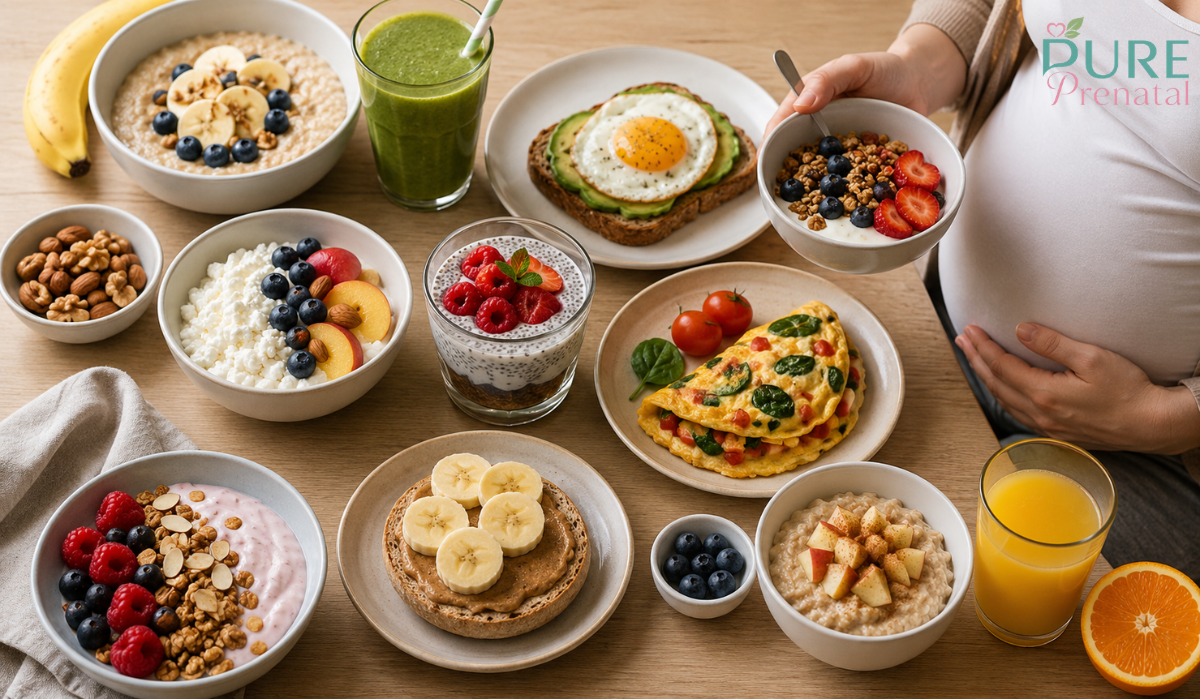
Mornings during pregnancy can feel complicated. One day you’re starving the moment you wake up, and the next, even the smell of toast sends you running to the bathroom. Finding a healthy pregnancy breakfast that actually works for your body, your energy levels, and your baby’s development isn’t always straightforward, and that’s completely normal.
The first meal of the day matters more than most people realize when you’re expecting. Your body is working overtime, building a placenta, supporting your baby’s growth, and adjusting to hormonal shifts that can leave you feeling drained before 9 a.m. A thoughtful breakfast helps steady your blood sugar, ease nausea, and give you the stamina to get through the morning without hitting a wall by 10.
Below are ten nutritious, realistic breakfast ideas for pregnancy, along with guidance on what to eat before a glucose test, how to manage nausea in the morning, and why foods like oats and Greek yogurt keep coming up in conversations about pregnancy nutrition.
Why Breakfast Deserves Extra Attention During Pregnancy
Skipping breakfast or grabbing something sugary can cause a spike and then a crash in blood sugar, which often makes morning nausea and fatigue worse. A good breakfast for pregnancy typically combines three things: complex carbohydrates, protein, and a little healthy fat. This combination slows digestion, keeps you fuller longer, and helps prevent the mid-morning energy dip that so many pregnant women describe.
It’s also worth remembering that “healthy” doesn’t mean complicated. Some mornings you’ll have time to prep something thoughtful. Other mornings, especially in the first trimester, just keeping food down is the win. Both are okay.
1. Overnight Oats with Berries and Chia Seeds
Oats in pregnancy are often recommended because they’re rich in fiber, which supports digestion at a time when constipation is common. Oats also contain B vitamins and a steady source of slow-release energy.
To make overnight oats, combine rolled oats with milk or a fortified plant-based alternative, a spoonful of chia seeds, and a handful of berries. Leave it in the fridge overnight, and it’s ready to eat cold or warmed the next morning. Because there’s no cooking required, this is a good option on days when nausea makes standing near a stove unappealing.
2. Greek Yogurt with Nuts and Fruit
Pregnancy and Greek yogurt seem to go hand in hand, and there’s a simple reason why. Greek yogurt is thicker and higher in protein than regular yogurt, and it also provides calcium, which supports your baby’s developing bones and teeth.
A simple bowl of Greek yogurt for pregnant women can be topped with sliced banana, a few walnuts, and a drizzle of honey. The combination of protein from the yogurt and healthy fats from the nuts helps keep blood sugar more stable than a bowl of sweetened cereal would.
3. Whole Grain Toast with Avocado and Egg
This is a classic for a reason. Whole grain toast provides fiber, mashed avocado offers folate and healthy monounsaturated fats, and a boiled or poached egg adds protein along with choline, a nutrient that plays a role in your baby’s brain development.
If nausea is an issue, a soft-boiled egg with lightly toasted bread tends to sit better than anything greasy or heavily seasoned.
4. Smoothie with Spinach, Banana, and Nut Butter
When solid food feels like too much, a smoothie can be an easy way in. Blend spinach, a frozen banana, a spoonful of nut butter, and milk or yogurt for a drink that’s gentle on the stomach but still nutrient-dense.
Spinach adds iron and folate, the banana provides potassium, and the nut butter contributes protein and fat to help the smoothie keep you satisfied rather than leaving you hungry an hour later.
5. Vegetable and Cheese Omelet
Eggs are a strong source of protein and choline, and pairing them with vegetables like spinach, tomatoes, or bell peppers adds vitamins without much extra effort. A sprinkle of cheese brings in additional calcium.
If mornings are rushed, the vegetables can be chopped the night before so the omelet only takes a few minutes to cook.
6. Whole Grain Cereal with Milk and Sliced Fruit
Not every morning allows for a home-cooked breakfast, and that’s fine. Choosing a whole grain cereal that’s low in added sugar and pairing it with milk and fresh fruit still counts as one of the simpler healthy breakfast recipes for pregnancy. Look for options with fiber listed near the top of the ingredient list rather than sugar.
7. Cottage Cheese with Pineapple or Peaches
Cottage cheese is another protein-rich option that pairs well with fruit for natural sweetness. It’s also generally easy to digest, which can make it a good choice on days when nausea is more noticeable.
8. Whole Wheat Pancakes with Mashed Banana
Craving something a little more indulgent doesn’t mean stepping away from good nutrition. Whole wheat pancake batter mixed with mashed banana adds fiber and natural sweetness, reducing the need for syrup while still feeling like a treat.
9. Bran Muffin with a Boiled Egg
For grab-and-go mornings, a homemade bran muffin (or a store-bought one that’s lower in added sugar) paired with a boiled egg covers fiber and protein without much prep. Bran muffins can be made in batches ahead of time and kept in the fridge or freezer for busy weeks.
10. Peanut Butter on Whole Grain Toast with Sliced Apple
Simple, budget-friendly, and effective. Peanut butter provides protein and healthy fat, whole grain toast offers fiber, and apple slices add natural sweetness along with a bit of vitamin C. This combination is also one that many women find gentle on a queasy stomach.
Breakfast Foods That Fight Nausea During Pregnancy
Morning sickness, despite its name, can strike at any time of day, and breakfast is often the hardest meal to manage in the first trimester. A few patterns tend to help:
- Bland, starchy foods like dry toast, crackers, or plain rice cakes are often easier to tolerate than rich or spicy meals.
- Ginger, whether in tea, ginger biscuits, or grated into a smoothie, has long been associated with easing nausea.
- Small, frequent bites rather than one large meal can prevent the stomach from feeling too empty or too full, both of which can trigger queasiness.
- Cold or room-temperature foods sometimes smell less intense than hot meals, which can make them easier to manage when smells are a trigger.
If nausea is severe or persistent, it’s worth mentioning to your healthcare provider, since there are safe options available to help manage it.
What to Eat for Breakfast Before a Pregnancy Glucose Test
The glucose screening test, usually done between 24 and 28 weeks, checks how your body processes sugar. Many women wonder what to eat for breakfast before a pregnancy glucose test so the results aren’t skewed.
General guidance often includes:
- Eating a normal, balanced breakfast rather than skipping the meal entirely, unless your provider has specifically instructed fasting.
- Avoiding high-sugar foods like pastries, sweetened juice, or sugary cereal right before the test, since these can artificially raise your blood sugar reading.
- Choosing a breakfast with protein and fiber, such as eggs with whole grain toast, rather than something that spikes blood sugar quickly.
Because instructions can vary depending on the type of test (a one-hour screening versus a three-hour diagnostic test), it’s best to follow the specific guidance given by your doctor or clinic.
GD Breakfast Ideas
For women managing gestational diabetes, breakfast requires a bit more attention to how quickly a food raises blood sugar. Some gd breakfast ideas that are commonly recommended include:
- Eggs with a small portion of whole grain toast
- Plain Greek yogurt with a small amount of berries and a few nuts
- A vegetable omelet without added sugar or high-carb sides
- Cottage cheese with a small serving of low-sugar fruit
Portion size and pairing protein with carbohydrates both matter for keeping blood sugar steady. A registered dietitian or your healthcare provider can help build a breakfast plan tailored to your specific glucose targets.
A Few General Tips for Building a Healthy Pregnancy Breakfast
- Don’t skip it, even if it’s small. Something is generally better than nothing when it comes to steadying blood sugar and energy.
- Combine food groups. A mix of protein, fiber, and healthy fat tends to keep you full longer than carbohydrates alone.
- Keep backup options on hand. Nausea and appetite can change quickly, so having a few easy, shelf-stable choices like crackers or nut butter can help on harder mornings.
- Stay hydrated. Sometimes what feels like morning fatigue is partly dehydration, so a glass of water alongside breakfast can help.
Frequently Asked Questions
Is oatmeal a good breakfast during pregnancy?
Yes, oats in pregnancy are generally considered a beneficial choice because of their fiber content, which can support digestion and help manage constipation, a common pregnancy complaint.
Can I eat Greek yogurt every day while pregnant?
Greek yogurt for pregnant women is typically a safe, nutritious daily option, offering protein and calcium. As with any food, moderation and variety in your overall diet are still helpful.
What should I avoid eating for breakfast during pregnancy?
It’s generally advised to limit unpasteurized dairy products, raw or undercooked eggs, and breakfasts very high in added sugar, since these can affect blood sugar stability or carry food safety concerns.
What is the best breakfast for morning sickness?
Bland, easy-to-digest foods such as dry toast, crackers, or ginger tea are often better tolerated than heavy or greasy breakfasts when nausea is present.
Do I need to eat before my glucose screening test?
This depends on your provider’s specific instructions for the type of test you’re having. Many one-hour screenings don’t require fasting, but always confirm with your healthcare team beforehand.
How much protein should be in a pregnancy breakfast?
There’s no single fixed number for breakfast specifically, but including a source of protein, such as eggs, Greek yogurt, or nut butter, generally helps with satiety and blood sugar stability throughout the morning.

Dr. Tania Adib is a Board Certified OB/GYN based in the northern suburbs of Chicago. She earned her undergraduate degree from the University of Notre Dame and her medical degree from Georgetown University in Washington, D.C., before completing her residency in Obstetrics and Gynecology at Magee-Womens Hospital, University of Pittsburgh Medical Center. Her clinical interests include full-spectrum obstetrics and gynecology, from the first period through the menopausal years, contraception, and abnormal bleeding.