

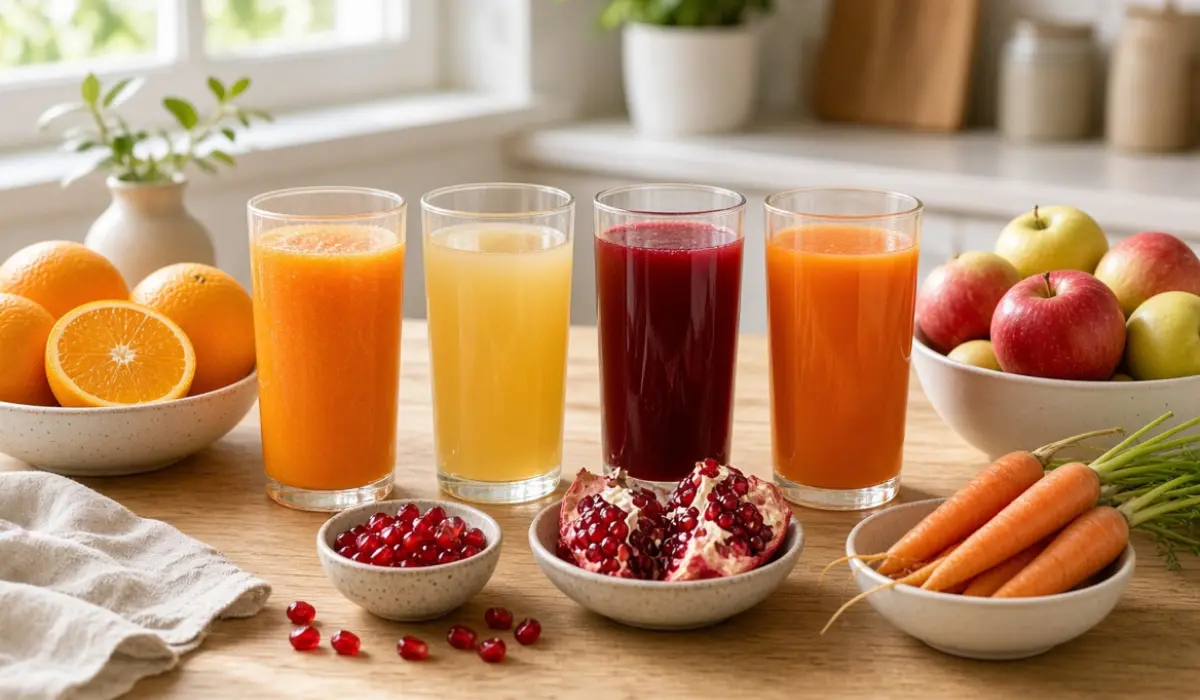
There’s something about a cold glass of juice that hits differently when you’re pregnant, especially on the days when nausea has taken most food off the table. The reassuring part is that juice really can fit into a healthy pregnancy diet. The part that needs a bit more thought is that not all juice is equal, and a couple of safety details matter more now than they did before you were expecting.
Below is a look at which juices bring the most useful nutrients to the table during pregnancy, what “safe” actually means in this context, and roughly how much makes sense to drink.
Is juice safe during pregnancy?
Most shop-bought juice is fine to drink in pregnancy. The real question isn’t the fruit itself, it’s whether the juice has been pasteurised.
Pasteurisation is simply a heat treatment that kills off harmful bacteria like listeria, salmonella and E. coli. These can sometimes contaminate fruit and veg during growing, harvesting or pressing, and pregnancy changes how your body handles that kind of exposure, which is why the extra caution exists. FoodSafety.gov calls out unpasteurised juice specifically, including fresh-squeezed juice, as something linked to past outbreaks of E. coli and other harmful bacteria, and its advice is to pick a pasteurised version, or boil unpasteurised juice for at least a minute before drinking it.
When you are pregnant you should drink milk or juice that has been pasteurised. This helps to kill bacteria. Some people do not know that unpasteurised juices are bad for them. These juices include the kind that you squeeze yourself at home. You can also get juice at a market or a juice bar.
The milk or juice does not have to say “raw” or “cold-pressed” to be unpasteurised. Milk or juice is unpasteurised if it has not been heat-treated. This is true even if the milk or juice is made from fruit that you like to eat. For example you can eat apples or oranges without any problems.. If you drink unpasteurised juice made from these fruits it can still be bad, for you when you are pregnant.
In practice, this tends to mean:
- Almost everything sold in cartons, bottles or cans in a UK supermarket is pasteurised, even the versions labelled “not from concentrate.”
- Juice bars, farmers’ market stalls and juice made at home can be unpasteurised unless stated otherwise, so it’s worth checking rather than assuming.
- If you’re not sure, look for the word “pasteurised” on the label, or just ask when you’re ordering somewhere.
You do not have to stop drinking juice if you like it. You should wash the fruits and vegetables properly. Keep your juicer clean. It is also an idea to drink the juice right away instead of storing it. This will help reduce some of the risk of drinking juice. It is not the same as pasteurisation. It helps. If you have already had a juice and you are not sure if it was pasteurised you should tell your midwife. Do this of worrying about it especially if you start to feel sick afterwards. Homemade juice can still be a problem so you should be careful, with juice.
Best juices for pregnancy
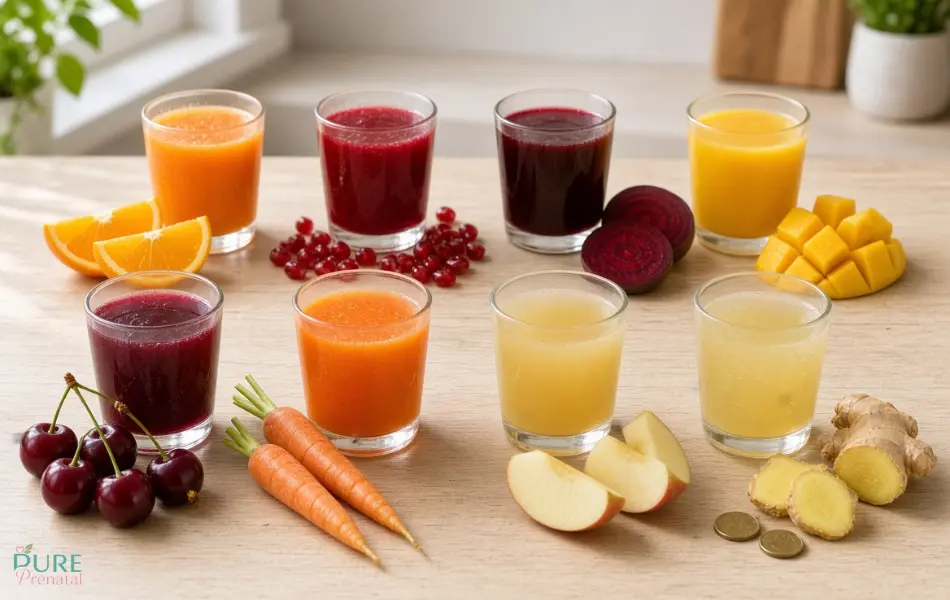
Once the pasteurisation question is settled, the next thing worth thinking about is which juices are actually worth reaching for. Here’s where a few stand out.
Orange juice
Probably the obvious one, but for good reason. Orange juice is naturally rich in vitamin C, which helps your body absorb iron from plant-based meals, and it’s an easy way to give your immune system a boost. A lot of UK brands are also fortified with vitamin D, so it’s worth a glance at the label if that’s something you’re trying to top up.
Pomegranate juice
Pomegranate juice brings antioxidants called polyphenols to the mix, along with a decent amount of potassium and vitamin C. Its slightly tart flavour makes it a nice change from sweeter juices, though it’s still worth keeping to a modest amount given how much natural sugar it contains.
Beetroot juice
This one has folate, potassium and dietary nitrates going for it, and some women find it gives a gentle lift on days when fatigue really sets in. On its own, the flavour is strong, so it’s often blended with apple or carrot juice to make it easier to drink. Worth flagging to your midwife if you’re drinking it regularly and also have low blood pressure, since beetroot juice can have a mild blood-pressure lowering effect.
Mango juice
Sweet, easy to drink, and a decent source of vitamin C along with vitamin A precursors. If you’re watching your sugar intake, diluting it with a bit of water works well without losing much of the flavour.
Tart cherry juice
Tart cherry juice contains melatonin precursors and antioxidants, and quite a few women reach for it in the third trimester when sleep gets harder to come by. There isn’t much research specific to pregnancy on this, so it’s best thought of as a pleasant option rather than a guaranteed fix for sleep.
Carrot juice
A solid source of beta-carotene, which your body converts into vitamin A as needed. It’s worth knowing that this is different from the preformed vitamin A (retinol) found in liver or some supplements, which is the type doctors advise limiting in pregnancy. The beta-carotene form doesn’t carry the same concern, because the body regulates how much it converts.
Apple juice
Gentle, mild, and one of the most commonly reached-for options when stronger flavours feel like too much. It doesn’t offer as many standout nutrients as some of the others on this list, but it’s reliable, well tolerated, and a good base for mixing with other juices if you want to soften a stronger one.
Ginger-infused juice or ginger shots
Small amounts of ginger juice or a ginger shot are a popular go-to for settling morning sickness. Keep quantities modest though, since concentrated ginger shots pack more punch than the ginger you’d get from tea or food, and check with your midwife if you’re also taking anti-nausea medication.
Juice comparison table
| Juice | Pregnancy consideration | Safer choice | Key note |
|---|---|---|---|
| Orange juice | Good vitamin C source, supports iron absorption | Choose pasteurised, check if fortified with vitamin D | Can be acidic if you have heartburn |
| Pomegranate juice | Antioxidants, potassium, vitamin C | Pasteurised, no added sugar | Naturally high in sugar, keep to a small glass |
| Beetroot juice | Folate, potassium, nitrates | Pasteurised, dilute with water or another juice | Mention regular use if you have low blood pressure |
| Mango juice | Vitamin C and vitamin A precursors | Pasteurised, 100% juice not “juice drink” | Often high in sugar, dilute if preferred |
| Tart cherry juice | Antioxidants, possible sleep support | Pasteurised | Evidence in pregnancy specifically is limited |
| Carrot juice | Beta-carotene for vitamin A | Pasteurised | Different from preformed vitamin A in liver or supplements |
| Apple juice | Gentle, easy to tolerate | Pasteurised, unsweetened | Lower in standout nutrients, useful for nausea |
| Ginger juice/shots | May help settle nausea | Small amounts, pasteurised where relevant | Check with a midwife if also using anti-sickness medication |
What to avoid or limit
- Unpasteurised juice of any kind, whether that’s from a juice bar, a market stall, or homemade juice that’s been stored rather than drunk right away.
- Juice “drinks” or cordials that are mostly water and sugar with only a small percentage of actual juice. Check the label for “100% juice” before assuming.
- Big volumes in one go. Juice doesn’t have the fibre that whole fruit does, so it pushes blood sugar up faster and can add up to a lot of sugar if you’re having several glasses across the day.
- Large amounts of liquorice-root juice or blends containing liquorice, which some guidance links to concerns in pregnancy at high intakes.
- Herbal juice blends with added extracts you don’t recognise. If a juice has botanicals mixed in beyond just fruit or vegetables, it’s worth reading the ingredients closely, since a lot of herbs simply haven’t been well studied in pregnancy.
How much juice is a sensible amount?
limit unsweetened fruit or vegetable juice and smoothies to a combined total of 150ml a day, so roughly one small glass. This isn’t a pregnancy-specific rule, it applies generally, because juicing strips out most of the fibre and concentrates the natural sugar, which affects blood sugar and dental health either way. However much you drink, juice and smoothies only ever count once toward your five-a-day, no matter how many different types you combine.
One good way to think about juice is to have a glass of it with breakfast or lunch. This way you can get the things from the juice without eating too much sugar. If you have diabetes you should talk to your midwife or dietitian. They can give you advice that’s just for you. Juice can make your blood sugar go up more, than eating fruit does. So it is an idea to check with them about drinking juice when you have gestational diabetes.
Benefits and nutrients worth knowing about
Juice isn’t a stand-in for whole fruit and vegetables, but in sensible amounts it can still contribute:
- Vitamin C, which helps with iron absorption and supports immune function
- Folate, particularly from beetroot and some vegetable juices, though this sits alongside your folic acid supplement rather than replacing it
- Potassium, useful for fluid balance, especially on days when nausea has knocked your appetite around
- Hydration and an easier way to get some nutrients in on the days when solid food just isn’t happening
None of this replaces your prenatal supplement or a varied diet day to day. Juice works best as a small supporting piece rather than the main event.
When to speak to a healthcare professional
Get in touch with your midwife or GP if you develop symptoms after drinking a juice you weren’t sure was pasteurised, things like fever, vomiting, diarrhoea or flu-like aches, since these can occasionally point to a foodborne infection worth checking out. It’s also worth mentioning if you are drinking juice every day juice made from beets or grapefruit if you are taking any medicine on a regular basis because some juices can affect how certain medicines work in your body.. If you have diabetes that comes during pregnancy get specific guidance, on whether and how much juice can be part of your eating plan.
FAQ
Is orange juice good for pregnancy?
Yes, pasteurised orange juice is a solid source of vitamin C and can help your body absorb iron from meals. Stick to around 150ml a day and go for 100% juice rather than a juice drink with added sugar.
Can I drink freshly squeezed juice while pregnant?
Freshly squeezed juice that hasn’t been pasteurised carries a small risk of bacterial contamination. Making it at home, wash the produce well, keep your equipment clean, and drink it as soon as you make it. Buying from a juice bar, just ask whether it’s pasteurised, or pick a bottled, labelled option instead.
Is beetroot juice safe in pregnancy?
Pasteurised beetroot juice is generally fine in normal amounts and offers folate and potassium. If you have low blood pressure, or you’re on medication for it, mention regular beetroot juice drinking to your midwife.
How much juice can I drink per day while pregnant?
juice and smoothies. Try to keep them to 150ml a day. This is one small glass. The reason for this is that juice has a lot of sugars in it. It is also missing the fibre that you get when you eat the fruit whole. So juice is not as good for you as eating the fruit. You get fibre when you eat the fruit. Unsweetened juice and smoothies are okay, in amounts. Just keep juice and smoothies to one small glass a day.
Can juice help with morning sickness?
Some women find ginger juice, ginger shots, or plain apple juice easier to keep down than stronger flavours when they’re feeling queasy. It varies a lot from person to person, so it’s really a matter of trying a few things and seeing what settles best.
Is it safe to drink juice from a juice bar or smoothie shop?
Only if it’s pasteurised. A lot of juice bars use fresh, unpasteurised produce, so it’s worth asking before you order. If you’re not sure, a bottled, pasteurised juice from a shop is the safer bet.

Dr. Tania Adib is a Board Certified OB/GYN based in the northern suburbs of Chicago. She earned her undergraduate degree from the University of Notre Dame and her medical degree from Georgetown University in Washington, D.C., before completing her residency in Obstetrics and Gynecology at Magee-Womens Hospital, University of Pittsburgh Medical Center. Her clinical interests include full-spectrum obstetrics and gynecology, from the first period through the menopausal years, contraception, and abnormal bleeding.