

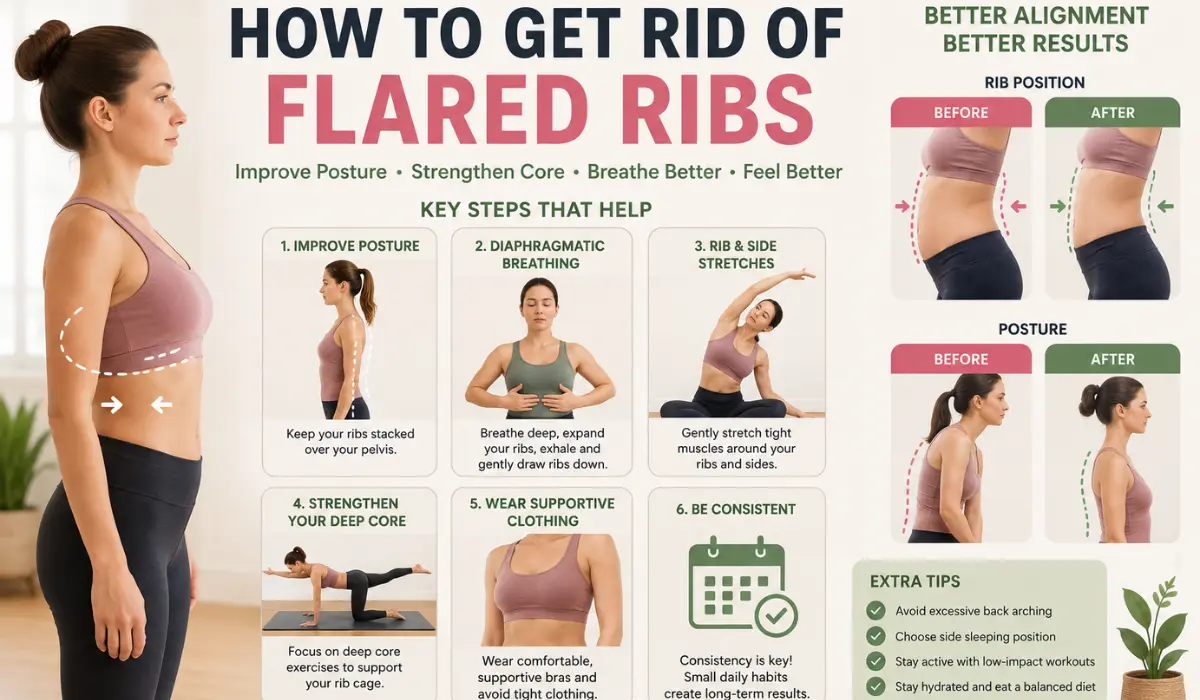
Noticed your lower ribs poking out more than they used to? Maybe you caught it in the mirror, or maybe it’s more of a feeling, a tightness under the bust that wasn’t there before. Either way, you’re not imagining things. Rib flare is one of those pregnancy changes nobody really warns you about, and it can be a bit unsettling to watch your rib cage settle into a completely different shape.
Here’s the reassuring part. Flared ribs in pregnancy are common, they’re rarely a sign anything is wrong, and there’s a fair bit you can do about the discomfort. This guide gets into why rib flare happens, what actually helps right now, and what tends to happen once your baby is here.
What Does It Mean When Your Ribs Are Flared?
Rib flare is what happens when the lower edges of your rib cage, roughly where they meet the bottom of your breastbone, start angling outward instead of sitting in more of a vertical line. It usually creeps in slowly, through the second and into the third trimester, as your growing uterus pushes up and out against the diaphragm and lower ribs.
Some women notice it visually. A change in the shape of the torso, something that looks different in photos or in the mirror. Others feel it more than see it. A tight, achy, pressured sensation just under the bust, especially after a meal or when lying down, is how a lot of people describe it.
Worth saying plainly here. Rib flare on its own isn’t dangerous. It’s a mechanical shift tied to the space your baby needs, not a medical complication, even though it can feel alarming the first time you notice it.
Why Do Ribs Flare During Pregnancy?
There’s usually a handful of things happening at once rather than one single cause.
Your growing uterus needs room. From around 20 weeks onward, there’s simply less vertical space to work with as your baby grows. The rib cage widens to make up for it, which is part of why a deep breath can feel a bit harder as the third trimester wears on.
Hormones soften your connective tissue. Relaxin, a hormone that rises steadily through pregnancy, loosens ligaments right across the body to get things ready for birth. That includes the ligaments and cartilage that normally hold your rib cage fairly still, so the ribs end up shifting and spreading more than they otherwise would.
Posture shifts as the bump grows. A lot of women lean back slightly without even noticing, just to counterbalance the weight out front, or end up with more of a curve in the lower back. Over the weeks, that change in posture pulls the ribs into a more flared position.
Diastasis recti can add to it. When the abdominal muscles separate along the midline, which happens to plenty of pregnant women, the front of the body loses some of the support that usually keeps the ribs aligned. That tends to make the flaring more noticeable.
More often than not it’s a mix of all four, not one single thing, and it usually becomes more obvious the further along you get.
Is Rib Flare in Pregnancy Something to Worry About?
For most women, no. It’s a normal structural adjustment plenty of bodies go through, and it isn’t linked to any harm for you or your baby.
Still, it’s worth getting in touch with your midwife or GP if you notice any of the following:
- Sudden, severe, or one-sided rib pain
- Pain that doesn’t settle with rest or a change in position
- Breathlessness that feels sudden, or noticeably worse than the breathlessness you’ve come to expect in pregnancy
- Rib pain turning up alongside swelling, headache, or changes to your vision, which could point to something else and would need checking urgently
None of this means rib flare itself is dangerous. It’s more of a reminder that any new or severe symptom in pregnancy is worth having looked at, simply because a few unrelated things can cause rib or chest discomfort too.
How to Get Rid of Flared Ribs During Pregnancy: What Actually Helps
You can’t stop your rib cage from adjusting altogether. Your body needs to make room for your baby, and that’s not something to fight against. But there’s still plenty you can do to ease the discomfort, support better alignment, and keep things from becoming more pronounced than they need to be.
1. Work on Your Posture Through the Day
Slouching and leaning back both tend to make rib flare worse. Try to keep your ribs stacked more or less over your pelvis instead of pushed forward. A simple way to check yourself: picture a straight line running from ear, through shoulder, down to hip when you’re standing.
2. Practice Gentle Breathing Exercises
Deep diaphragmatic breathing trains the muscles around the rib cage and can take the edge off the tightness that builds up when the ribs sit flared all day.
Worth trying:
- Sit or lie somewhere comfortable
- One hand on your chest, one on your ribs
- Breathe in slowly through your nose, letting the ribs expand outward and slightly to the sides
- Exhale slowly, drawing the lower ribs gently down and in, a bit like closing an umbrella
- Repeat for 5 to 10 breaths, a few times through the day
3. Try Rib-Focused Stretches
A little gentle stretching goes a long way for the tightness around a flared rib cage.
- Overhead reach stretch: Sit tall, reach one arm overhead, and lean gently to the opposite side until you feel a stretch along the ribs. Hold for 15 to 20 seconds, then switch sides.
- Cat-cow stretch: On hands and knees, slowly alternate between arching and rounding the back. This moves the spine and rib cage together and is generally fine throughout pregnancy, though it’s worth checking with your midwife first if you have any complications.
- Seated side stretch: Sitting cross-legged, reach one arm up and over to the side and feel the stretch along the ribs and waist.
4. Strengthen Your Deep Core Muscles Safely
The transverse abdominis, the deepest layer of core muscle, wraps around the torso a bit like a natural corset and helps support the rib cage from underneath. Gentle, pregnancy-safe core work can genuinely help here, even if it doesn’t feel like much at first.
- Pelvic tilts, standing or on all fours
- Seated deep belly breathing, with a gentle draw-in of the lower abdomen on the exhale
- Supported bridge poses, steering clear of long stretches flat on your back once you’re in the second and third trimester
Skip the traditional crunches or sit-ups for now. They put extra pressure on an abdominal wall that’s already stretched and can make diastasis recti worse.
5. Support Your Rib Cage With Clothing Choices
Loose, non-restrictive clothing around the ribs and bust makes a real difference for comfort. A well-fitted maternity bra is worth thinking about too. Anything too tight, or an underwire pressing into the rib area, adds pressure exactly where you don’t need it.
6. Adjust How You Sleep and Sit
Side sleeping, with a pillow supporting the bump and another tucked between the knees, puts less strain on the rib cage than lying flat does. When you’re sitting, try not to sink into soft sofas for hours at a time, and look for back support that keeps your spine and ribs in a more neutral position.
7. Consider a Prenatal Physiotherapist
If rib flare has gone past mild discomfort into something more like ongoing pain, a physiotherapist who works specifically with pregnant women can look at your posture, your breathing pattern, and how your core is functioning, then build exercises around your body. This is especially worth considering if diastasis recti or pelvic girdle pain are also part of the picture, since these tend to overlap.
Rib Flare Relief Methods at a Glance
| Method | What It Helps With | How Often |
|---|---|---|
| Diaphragmatic breathing | Rib tightness, tension release | Daily, a few short sessions |
| Posture correction | Slows progressive flaring | Ongoing, throughout the day |
| Rib and side stretches | Muscle tightness, mobility | Daily, a few minutes |
| Deep core activation | Structural support for ribs | 3 to 4 times a week |
| Supportive clothing | Comfort, reduced pressure | As needed |
| Sleep positioning | Reduces overnight strain | Every night |
| Prenatal physiotherapy | Persistent or severe discomfort | As recommended |
What Happens to Flared Ribs After Pregnancy?
For a lot of women, rib flare eases up gradually in the months after birth, as the uterus shrinks back down and relaxin levels start to drop. It doesn’t always reverse completely on its own though, especially if diastasis recti or postural habits from pregnancy carry on into the postpartum months without much attention.
Postpartum rib flare tends to respond to much the same approach as before the birth. Gentle core rehab, breathing work, and paying attention to posture, ideally with some guidance from a postnatal physiotherapist or pelvic health specialist, particularly if you notice ongoing doming or bulging along the abdominal midline.
Frequently Asked Questions
Can flared ribs during pregnancy be prevented completely?
Not entirely, no. Some amount of rib flare is simply part of how the body makes room for a growing baby. What you can influence is how pronounced it gets and how uncomfortable it feels, through posture, breathing, and some gentle strengthening work along the way.
Does rib flare mean I have diastasis recti?
Not necessarily, though the two often show up together, since both come from the abdominal wall stretching and softening during pregnancy. A midwife, GP, or physiotherapist can check for diastasis recti with a simple hands-on assessment if you’re not sure.
Is it safe to exercise if my ribs are flared?
Generally, yes. Just steer clear of movements that put heavy strain on the abdominal wall, things like intense crunches or heavy lifting. Gentle, pregnancy-appropriate core and breathing work tends to be encouraged rather than avoided.
Will my ribs go back to normal after I give birth?
For many women, rib position improves noticeably in the months following birth, as hormones settle and posture shifts back toward how it was before. Some lasting change in rib shape is common and not something to worry about on its own, though targeted postnatal exercises can support the recovery.
When should I see a doctor about rib pain in pregnancy?
Get in touch with your midwife or GP for sudden or severe rib pain, pain that’s only on one side, breathlessness that feels significantly different from your usual pregnancy breathlessness, or rib pain that shows up alongside swelling, headache, or visual changes.
Can wearing a belly band help with rib flare?
Some pregnant women find a well-fitted support garment comfortable, though there isn’t strong evidence that it specifically corrects rib flare. If you do wear one, it should feel supportive rather than restrictive, and it should never be tight enough to affect your breathing.

Dr. Tania Adib is a Board Certified OB/GYN based in the northern suburbs of Chicago. She earned her undergraduate degree from the University of Notre Dame and her medical degree from Georgetown University in Washington, D.C., before completing her residency in Obstetrics and Gynecology at Magee-Womens Hospital, University of Pittsburgh Medical Center. Her clinical interests include full-spectrum obstetrics and gynecology, from the first period through the menopausal years, contraception, and abnormal bleeding.