

I can’t tell you how many patients have told me some version of the same thing: “I used to be such a good sleeper, and now I can’t get comfortable no matter what I do.” If that sounds familiar, you’re not alone, and it’s not really about your mattress or your pillow count. A lot of it comes down to something simple — the position you’re sleeping in.
So let’s actually answer the question. What’s the best sleeping position during pregnancy, and does it really make that much of a difference? Short answer: yes, more than most people realize. In this guide I’ll walk you through what doctors actually recommend, why it changes as your pregnancy progresses, and how to deal with the back pain, heartburn, and restless nights that come with the territory.
Why Bother Thinking About Sleep Position at All?
Your body is quietly doing a huge amount of extra work right now. Blood volume climbs. Your organs get pushed around to make room. Your circulatory system has to work harder just to keep oxygen and nutrients flowing where they’re needed — including to your baby, through the placenta. The position you sleep in can either help that process along or get in its way.
Some positions put pressure on major blood vessels or strain your back more than others. Ignore it long enough and you’re looking at more swelling, worse sleep, and discomfort you didn’t need to deal with. That’s the whole reason this comes up in prenatal visits so often — not because it’s some arbitrary rule, but because it genuinely changes how you feel day to day.
So, What Is the Best Sleeping Position During Pregnancy?
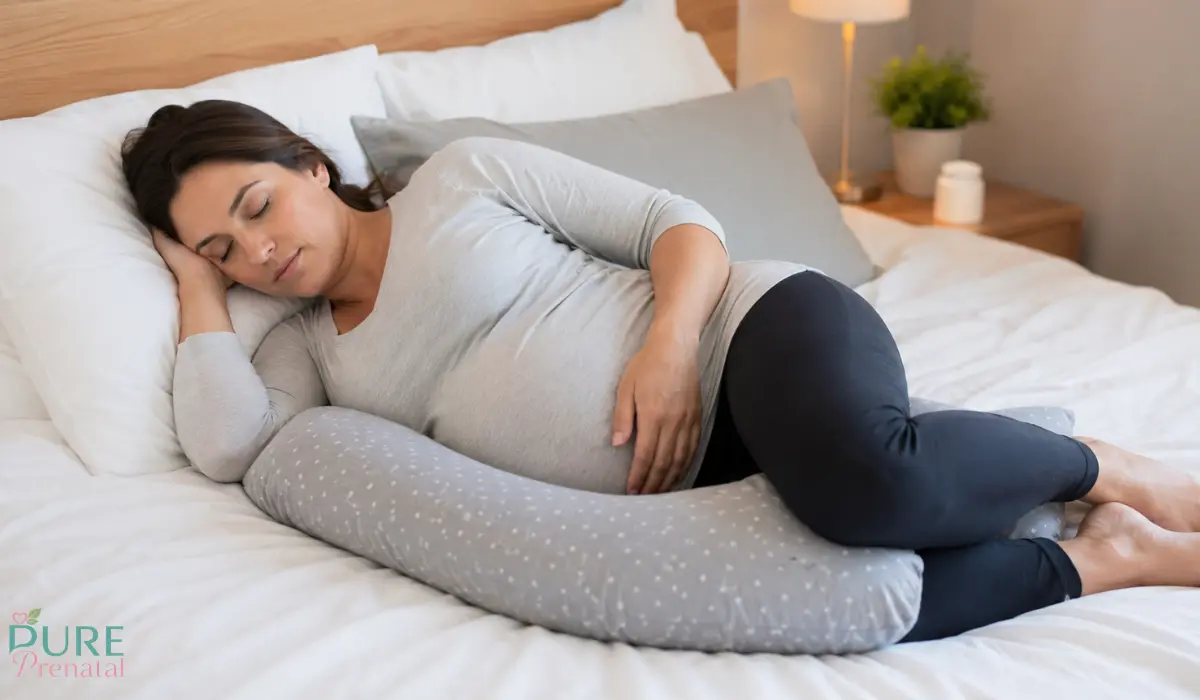
You’ll sometimes hear this shortened to “SOS” — Sleep On Side. It’s the position most consistently recommended once you’re past the early weeks, and left-side sleeping in particular tends to get singled out. It supports better circulation for you and the baby, and it takes weight off your internal organs that back sleeping doesn’t.
Why the Left Side, Specifically?
Here’s the anatomy, briefly. There’s a large vein — the inferior vena cava — that runs up the right side of your spine and carries blood back to your heart. Spend too long flat on your back, or even on your right side, later in pregnancy, and your growing uterus can press on that vein and slow things down.
Shift to your left side and that pressure lets up. A few things tend to improve as a result:
- More oxygen and nutrients get through to the placenta
- Your kidneys filter waste and fluid more efficiently
- Swelling in your legs and feet often eases
- Your odds of varicose veins or hemorrhoids go down a bit
None of this means you need to panic if you wake up on your right side, though. Honestly, most people roll around more than they think during the night. Right side is still a perfectly fine backup — it’s really just back sleeping you want to avoid for long stretches.
Okay, But How Do You Actually Sleep Comfortably on Your Side?
If you’ve never really slept on your side before, the first few nights can feel kind of strange. Here’s what usually helps.
Bend your knees instead of keeping your legs straight out — it lets your body settle in more naturally. Put a pillow between your knees; this one small thing does more for hip and spine alignment than people expect. A lot of women eventually pick up a pregnancy pillow, whether that’s a full-body one or the C-shaped kind, since it supports your belly, back, and legs at the same time. And once your bump starts really showing, tucking a small pillow or even a rolled-up blanket under your abdomen can take a surprising amount of pressure off your lower back.
It won’t feel completely natural on night one. Give it a week or so and most people stop thinking about it altogether.
Does the “Best” Position Change as Pregnancy Goes On?
Yes, a bit. Here’s roughly how it shifts.
Early on, first trimester, your belly hasn’t grown much, so sleeping on your back or stomach is generally fine. Honestly, this is a decent time to just start practicing side sleeping anyway, so it’s already second nature by the time it actually matters.
Second trimester is usually where things change. Your uterus has grown enough that long stretches on your back can start pressing on that vein I mentioned earlier. Most doctors will suggest switching over to side sleeping around now, and if you’re going to get a pregnancy pillow, this is a good time to start.
By the third trimester, side sleeping isn’t really optional anymore — or at least, it shouldn’t be your default habit to lie flat. Your baby’s bigger, your uterus is heavier, and the pressure on your back and blood vessels is at its highest. A pillow between the knees, maybe another under the belly, tends to be what makes the biggest difference here.
What About Back Pain, Heartburn, and All the Rest?
Position alone won’t fix everything. A lot of the discomforts that keep pregnant women up at night need a bit more than just “sleep on your side.”
Back pain shows up as your center of gravity shifts and your ligaments loosen up ahead of delivery. Sticking with side sleeping and adding a pillow under your belly usually spreads your weight out more evenly and takes some strain off your lower spine.
Heartburn tends to get worse at night, partly because pregnancy hormones relax the valve between your stomach and esophagus. Propping yourself up a bit with an extra pillow — or a wedge, if you have one — can keep acid from creeping up while you’re lying down.
Shortness of breath usually shows up later in pregnancy, once your uterus starts pressing up against your diaphragm. Side sleeping, or propping yourself up slightly, gives your lungs more room and often helps within a night or two.
Insomnia is its own thing entirely — part discomfort, part hormones, part your brain just not switching off. A few habits genuinely help alongside good positioning: cut off caffeine by mid-afternoon, drink water steadily through the day but ease up before bed, get some light movement earlier rather than right before sleep, and wind down with something relaxing, like a warm bath. A dark, cool, quiet room really does help more than people give it credit for.
Are There Positions You Should Actually Avoid?
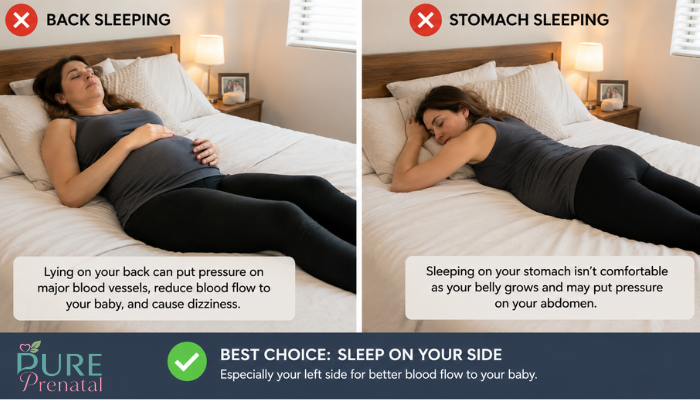
Not in a panic-inducing way, but yes, a couple are worth minimizing as pregnancy progresses. Long stretches flat on your back, especially in the second and third trimester, can press on major blood vessels and reduce blood flow to you and your baby. Stomach sleeping just becomes impractical once your belly grows — it’s not dangerous early on, it just stops being comfortable pretty quickly.
If you wake up on your back, don’t overthink it. Just roll onto your side and go back to sleep. Your body tends to get better at avoiding that position on its own as things progress — almost like it figures it out.
A Quick Word on Pregnancy Pillows
Not every pregnancy pillow does the same job, so it’s worth knowing the differences before you buy one. C-shaped pillows wrap around your whole body — head, back, belly, knees — which is great if you move around a lot at night, since they keep cradling you no matter which way you shift. Wedge pillows are smaller, usually tucked under the belly or behind the back, and don’t take over the whole bed. Full-body pillows sit somewhere in between, running the length of your body and supporting your knees and belly together.
There’s no single “right” one. It’s whichever keeps you comfortably on your side the longest without waking up. Plenty of women go through two or three before finding their favorite.
When Should You Actually Bring This Up With Your Doctor?
Most sleep issues during pregnancy are totally normal and manageable with the tips above. That said, a few things are worth mentioning at your next appointment rather than just working around. Sudden or severe swelling — especially in your face or hands — is worth flagging no matter what position you sleep in. Same with shortness of breath that doesn’t ease up when you sit up or shift to your side, or any chest pain.
If insomnia is genuinely affecting your ability to function during the day, or if someone’s mentioned you snore loudly or seem to gasp during sleep, bring that up too. Sleep apnea becomes more common during pregnancy, and it’s worth ruling out. None of this is meant to worry you — it’s just about knowing the difference between “uncomfortable but normal” and “worth a conversation.”
And How Much Sleep Do You Actually Need?
Position aside, total sleep still matters. Most guidance lands around seven to nine hours a night, roughly in line with general adult recommendations, though plenty of pregnant women find they need a little more, especially in the first and third trimesters when fatigue tends to hit hardest.
If nighttime sleep keeps getting interrupted by bathroom trips or discomfort, a short nap during the day — twenty or thirty minutes is usually plenty — can help close the gap without messing up your nighttime schedule. You’re not aiming for a flawless eight hours every single night. You’re aiming for enough rest, overall, to keep up with what pregnancy is asking of your body.
Frequently Asked Questions
What is the best sleeping position during pregnancy?
Side sleeping, ideally on the left, is what’s most widely recommended. It supports healthy blood flow to the placenta and eases pressure on your back and organs.
Is it bad to sleep on my right side while pregnant?
Not really. It’s a perfectly safe alternative — left-side sleeping just has a slight edge when it comes to circulation.
What happens if I accidentally end up on my back?
Nothing to worry about if it’s occasional. The real concern is prolonged, sustained back sleeping later in pregnancy, not a brief shift you don’t even notice happening.
When should I actually start sleeping on my side?
Most providers suggest making the switch around the second trimester, since that’s roughly when your growing uterus starts affecting circulation more noticeably.
How do I stay comfortable on my side all night?
A pregnancy pillow, bent knees, and a pillow between your legs — and under your belly if needed — usually makes the biggest difference.
Can sleep position actually affect my baby?
Extended back sleeping later in pregnancy can put pressure on a major vein and reduce blood flow to the placenta. Side sleeping helps keep that circulation steady and consistent.

Dr. Tania Adib is a Board Certified OB/GYN based in the northern suburbs of Chicago. She earned her undergraduate degree from the University of Notre Dame and her medical degree from Georgetown University in Washington, D.C., before completing her residency in Obstetrics and Gynecology at Magee-Womens Hospital, University of Pittsburgh Medical Center. Her clinical interests include full-spectrum obstetrics and gynecology, from the first period through the menopausal years, contraception, and abnormal bleeding.