

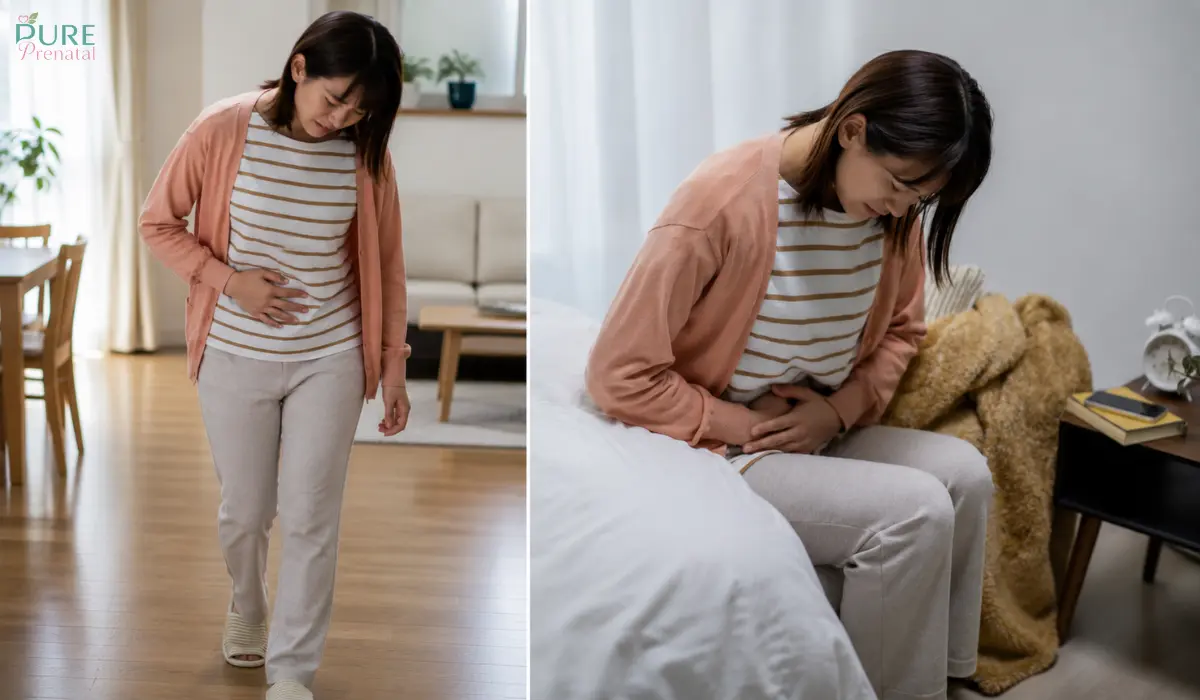
You’re mid-stride, maybe walking to the car, maybe halfway through your evening walk, and suddenly there’s a sharp jab low in your belly. Gone almost as fast as it came. But your heart’s still racing a little. Sound familiar?
Nobody really warns you about this one ahead of time. It catches you off guard, and your mind jumps straight to: is this normal, or should I be worried? Honestly, most of the time it’s just your body keeping up with some pretty remarkable changes. Not a sign anything’s wrong. That said, there are a few situations where sharp pain does need a doctor’s attention, so it’s worth knowing the difference between the two.
Below, we’ll go through what’s actually behind that sharp pull while you’re walking, how to feel more comfortable, and the specific signs that mean it’s time to make a call.
Why Walking Seems to Set It Off
Think about everything walking asks of your body. Your hips rotate. Your core stabilizes you with every single step. Your pelvis shifts weight from side to side, over and over. Now add a growing uterus into that mix, plus ligaments and joints that are stretching and loosening more than they ever have. It’s not surprising that a repetitive motion like walking is the thing that sets off discomfort it’s putting steady, rhythmic pressure on tissue that’s already doing a lot of work.
So what’s actually causing the sharp feeling? A handful of things, usually.
Round Ligament Pain
If you’ve mentioned this to a friend, a nurse, or your mom, and they immediately nodded and said “oh, that’s round ligament pain” there’s a reason that answer comes so fast. It’s the single most common cause of sharp, stabbing pain low in the belly during pregnancy, and walking is one of its favorite triggers.
Two cord-like ligaments run from the front of your uterus down into your groin, and their whole job is keeping things anchored. As the uterus grows, those ligaments stretch and thicken to keep up. A sudden movement a brisk walk, turning to grab something off a shelf, standing up too fast, even a good sneeze can make them contract sharply. What you feel is a quick, stabbing sensation, usually stronger on one side than the other.
Generally it’s sudden and sharp, feels like a pull or a “catch,” and sits more on one side than the other. It rarely lasts more than a minute or two, and it tends to ease up fast once you slow down or shift your position. You’ll likely notice it most in the second trimester, when the uterus is doing most of its growing.
Uncomfortable? Definitely. Dangerous? No. It’s just your body scrambling to keep up with how quickly your shape is changing.
Everyday Uterine Growth
Beyond the round ligaments specifically, your entire pelvic region is under construction, in a sense. Blood flow increases. The uterus expands. Muscles and connective tissue stretch further than they’re used to. Walking adds a bit of mechanical pressure on top of all that activity, and the result can be a dull ache that occasionally spikes into something sharper on certain steps.
Pelvic Girdle Pain
Here’s one that catches a lot of women off guard your own hormones are partly to blame here. Relaxin loosens the ligaments around your pelvic joints to get your body ready for delivery. Great for birth, less great for comfort, since a looser pelvis is also a less stable one.
This one tends to show up as aching or sharp pain in the lower abdomen, groin, or inner thigh, and it usually gets worse with walking, climbing stairs, or rolling over in bed at night. Some women describe an odd clicking or grinding sensation around the pelvis too. It’s not dangerous, but it can genuinely limit how much you feel like moving on a given day. A maternity support belt, or a few sessions with a pelvic floor physiotherapist, tends to help more than most people expect going in.
Braxton Hicks Contractions
Sometimes what feels like a pull while walking isn’t ligament-related at all it’s your uterus practicing. Braxton Hicks contractions are irregular, mildly uncomfortable tightenings that a lot of women start noticing from the second trimester on. They generally settle down once you sit, rest, and get some water into you.
Trapped Gas, Bloating, and Constipation
Not the most glamorous item on this list, but a very real one. Progesterone slows digestion down through pregnancy, and the result is often gas and constipation that can genuinely surprise you with how sharp it feels. Walking can shift trapped gas along, which occasionally produces a localized, pinching pain low in the belly. Notice relief right after passing gas, or bowel movements that have been irregular lately? That’s probably your answer.
Urinary Tract Infections
UTIs are more common in pregnancy, and an irritated bladder can absolutely cause sharp or crampy pain low in the abdomen that feels worse when you’re moving. Burning while you pee, needing to go constantly, cloudy or strong-smelling urine, lower back pain if any of that’s showing up alongside the sharp pain, call your provider. UTIs need to be treated fairly quickly during pregnancy, so it’s not something to sit on.
Ovarian Cysts
Small cysts on the ovaries are pretty common in pregnancy, and most just resolve on their own without ever becoming a problem. Every so often, though, a cyst twists ovarian torsion and that causes sudden, severe, one-sided pain, often with nausea. Not common, but it does need urgent evaluation if it happens.
When It Might Be Something More Serious
Everything above accounts for the vast majority of sharp pain while walking in pregnancy. Still, it’s worth knowing the handful of situations where this kind of pain is your body flagging something more urgent.
Ectopic pregnancy: Happens early on, when a fertilized egg implants somewhere outside the uterus most often in a fallopian tube. Sharp pain on one side, sometimes with light bleeding, dizziness, or an odd pain up in the shoulder tip. This is a medical emergency.
Miscarriage: Cramping combined with vaginal bleeding early in pregnancy should always get checked, even if you’re pretty sure it’s nothing.
Placental abruption: This one shows up later in pregnancy, when the placenta starts separating from the uterine wall before delivery. Sudden, constant pain, a uterus that feels unusually firm or rigid, and vaginal bleeding. It needs emergency care.
Preterm labor: Regular, rhythmic tightening, pressure low in the pelvis, low back pain, or a change in vaginal discharge before 37 weeks can all be signs of labor starting too soon.
Signs You Shouldn’t Wait On
Call your provider right away if sharp pain while walking comes with any of the following: vaginal bleeding or spotting, a fever above 100.4°F (38°C) or chills, vomiting that won’t quit, pain that doesn’t ease up after a few minutes of rest (round ligament pain almost always calms down fast), pain bad enough that it’s hard to breathe, talk, or walk, dizziness or fainting, regular contractions before 37 weeks, or a clear change in how much your baby’s moving later in pregnancy.
If something feels different from your usual pregnancy aches, that instinct is worth trusting. Calling and hearing “it’s nothing serious” beats staying quiet and wondering, every time.
Making Walking More Comfortable
Once your provider’s confirmed there’s nothing concerning going on, a few small habits tend to help:
- Ease into your pace: Sudden, fast movements are more likely to set off round ligament pain a steady pace puts less strain on stretched ligaments.
- Wear a support belt: It takes some pressure off the round ligaments and pelvic joints, especially later on.
- Warm up first: A few minutes of gentle stretching or hip circles before a longer walk loosens things up.
- Turn with your whole body, not just your waist: Twisting quickly is a common trigger for that sharp pull.
- Keep water on you. Dehydration tends to make cramping and Braxton Hicks contractions worse.
- Choose supportive shoes: Flat, cushioned footwear spreads your weight more evenly and takes load off your pelvis and lower back.
- Pause when it pulls: Stop, breathe, shift position don’t push through a sharp twinge.
- Rest on your side afterward: A pillow between your knees eases pressure on the round ligaments and pelvic joints once you’re done moving.
- Get ahead of constipation: Fiber, fluids, and gentle daily movement help a lot just check with your provider before adding any laxative.
How the Pain Tends to Change Across Trimesters
The likely cause behind this pain often shifts as pregnancy moves along, so knowing what’s typical for your stage can help you make sense of what you’re feeling.
Early on, in the first trimester, mild cramping while moving around usually ties back to implantation or the earliest stages of uterine growth. Sharp, one-sided pain in this window especially paired with spotting or dizziness should always be looked at quickly, since this is the stage where ruling out an ectopic pregnancy matters most.
By the second trimester, round ligament pain tends to peak, since the uterus is growing fastest here and the ligaments are working hard to keep up. Plenty of women describe this trimester as the one where that quick, catching pain while walking or standing up becomes an unwelcome but familiar visitor.
In the third trimester, as your baby settles lower into the pelvis, pelvic girdle pain and pressure-related aches tend to take over. Walking, stairs, even getting in and out of the car can all bring on that sharp twinge around the pelvis or groin. Toward the very end, some of those sharp sensations while walking can also reflect early cervical changes worth flagging at your next visit if it feels new.
Knowing where you are in pregnancy helps explain what you’re feeling, but it’s never a replacement for actually talking to your provider when something feels new or off.
Trust What You’re Feeling
Every pregnancy is different, and so is every woman’s experience of pain. What barely registers for one person can feel genuinely alarming to someone else and both reactions are completely valid. You don’t need a “good enough” reason to call your provider’s office with a question. That’s what they’re there for.
It can also help to jot down a quick note when it happens what you were doing, how long it lasted, what (if anything) made it ease up. Even if it turns out to be nothing, that small detail is genuinely useful to bring to your next appointment.
The Bottom Line
Sharp pain in the lower abdomen while walking during pregnancy is common, and more often than not it traces back to entirely normal changes: stretching round ligaments, an expanding uterus, loosening pelvic joints, or plain old digestive discomfort. This kind of pain is usually brief, tied to movement, and quick to fade once you slow down or rest.
Pain that’s severe, constant, one-sided with other symptoms, or paired with bleeding, fever, or dizziness is a different story, and it deserves prompt medical attention. You know your body better than anyone else does. If something feels wrong, it’s always worth making the call.
Frequently Asked Questions
Is it normal to feel sharp pain in my lower abdomen when I walk during pregnancy?
For many women, yes. Brief, movement-triggered pain — often on one side — is commonly caused by round ligament stretching, which is a normal part of pregnancy.
When does this kind of pain usually start showing up?
Round ligament pain and pelvic girdle discomfort most often become noticeable in the second trimester, when the uterus starts growing more quickly, though some women feel mild twinges earlier.
Do I need to stop walking if I feel a sharp pain?
Not necessarily. Pause, breathe, and gently shift position when it hits. If it lingers past a few minutes or gets worse, stop, rest, and get in touch with your provider if it keeps happening.
Can round ligament pain happen on both sides at once?
It can, though it’s more common to feel it on one side at a time, since each ligament stretches and contracts somewhat independently.
How do I tell round ligament pain apart from something more serious?
Round ligament pain is brief, tied to a specific movement, and fades with rest. Pain that’s constant, severe, comes with bleeding or fever, or doesn’t improve with rest is your signal to call your provider.
Is a maternity support belt actually worth trying?
A lot of women find real relief from one, since it takes strain off the pelvis and round ligaments during activities like walking. Still worth mentioning to your provider or a pelvic floor physiotherapist for advice suited to you specifically.
When does this cross into an emergency room situation?
Go straight to emergency care for pain that’s severe or worsening, heavy vaginal bleeding, fainting, or symptoms pointing toward placental abruption or ectopic pregnancy sudden, intense one-sided pain with dizziness or shoulder-tip pain, for example.

Dr. Tania Adib is a Board Certified OB/GYN based in the northern suburbs of Chicago. She earned her undergraduate degree from the University of Notre Dame and her medical degree from Georgetown University in Washington, D.C., before completing her residency in Obstetrics and Gynecology at Magee-Womens Hospital, University of Pittsburgh Medical Center. Her clinical interests include full-spectrum obstetrics and gynecology, from the first period through the menopausal years, contraception, and abnormal bleeding.