

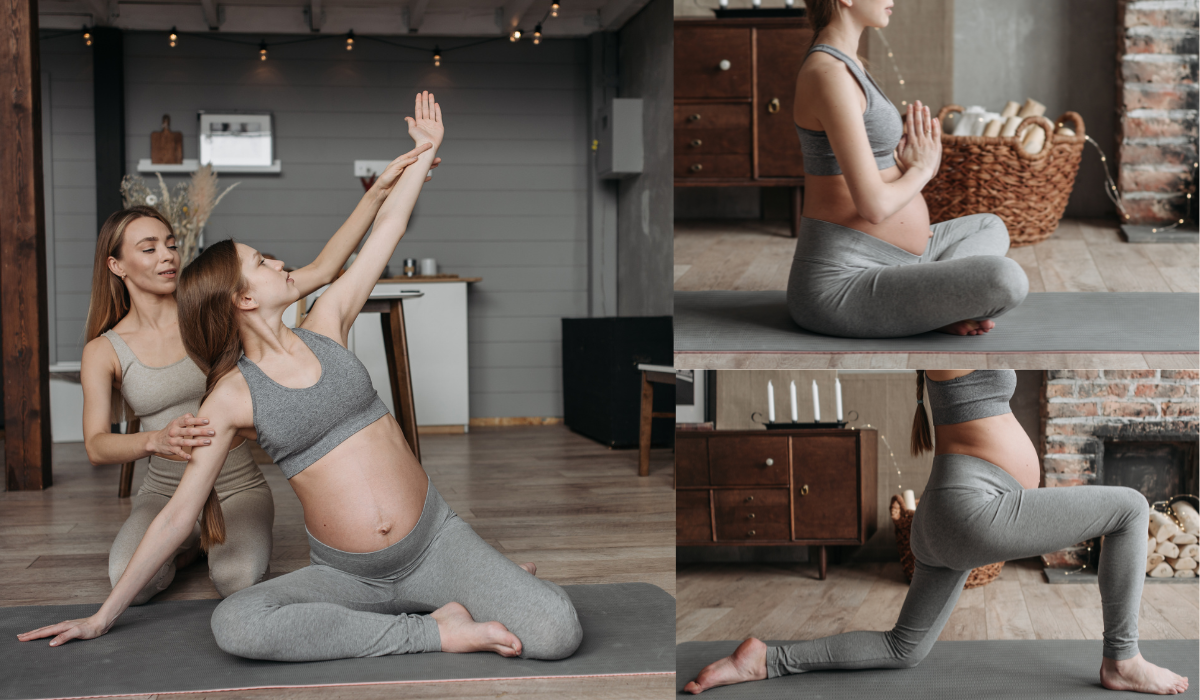
Found out you’re pregnant and now staring at your usual hot yoga schedule wondering if you have to give it up? You’re not alone — this is one of the questions I get asked most often by clients who were mid-routine when they found out. Heated yoga and pregnancy is a genuinely tricky topic, because the honest answer isn’t a flat yes or no. It depends on what kind of class you’re doing, how far along you are, and how your body personally handles heat.
Let’s go through this properly — what heat actually does to your body during pregnancy, what doctors currently say about it, and what you can do instead if you decide the heated room isn’t worth the risk.
Why So Many Women Don’t Want to Give Up Hot Yoga
I get it. There’s something about a heated room that makes stretching feel effortless, workouts feel deeper, and the whole session leave you calmer than almost anything else. If that was your go-to stress reliever before pregnancy, being told to stop can feel like losing a piece of your routine at exactly the moment you need it most.
But here’s the thing — pregnancy changes how your body deals with heat in ways that are worth understanding before you decide what to do next.
What Heat Actually Does to Your Body While You’re Pregnant
Once you’re pregnant, your resting metabolic rate climbs, your blood volume goes up, and your body is already putting in extra work just to keep your internal temperature where it should be. Now put that same body in a heated studio, and things heat up faster than they would if you weren’t pregnant.
Why does that matter so much? Because a prolonged rise in your core body temperature — especially in those early weeks while the baby’s neural tube is still forming — has been linked, in research, to a higher chance of certain developmental issues. Later on in pregnancy, overheating for too long can also cut down blood flow to the uterus, which isn’t great news for getting oxygen and nutrients to your baby.
That’s really the whole reason most obstetric guidance points toward caution with hot yoga during pregnancy. It’s not meant to scare you — it’s just biology being cautious.
So, Can You Do Hot Yoga During Pregnancy?
Honestly? For most women, doctors say no, or at least “not like this.” A few specifics worth knowing:
- The first trimester is when caution matters most, since this is when the risk tied to overheating is at its highest.
- Bikram yoga during pregnancy specifically tends to get flagged more than other formats — rooms are usually heated to around 105°F with humidity added on top, and the sequence doesn’t leave much room to slow down or modify.
- If you’ve never done hot yoga before, pregnancy is really not the moment to try it for the first time.
If you were already an experienced hot yoga practitioner before you got pregnant, some women do continue with shorter, heavily modified sessions later on — but that’s a conversation to have with your OB-GYN or midwife first, not something to decide on your own mid-class. It comes down to your personal health history and how your specific pregnancy is going.
Does It Matter Whether It’s Hot Yoga, Warm Yoga, or Bikram?
Kind of, yes. Warm yoga during pregnancy usually stays under 80°F, which is a gentler version some studios offer, while Bikram sits at the more intense end because of its higher heat and rigid pose sequence. But don’t let “warm” fool you into thinking it’s automatically fine — most prenatal fitness specialists still suggest treating even a mildly heated class with care. Shorten the session, skip the more intense poses, stay near the door, and step out the second you feel too warm. Warm isn’t the same as risk-free once there’s a baby involved.
The Good News: You Don’t Actually Need the Heat for the Benefits
Here’s the part that tends to make people feel better — everything you loved about hot yoga doesn’t actually require heat. A regular, room-temperature yoga for pregnant women routine gives you a lot of the same rewards: better flexibility, improved circulation, less tightness in the lower back, and a real dip in stress levels, all without pushing your core temperature somewhere it shouldn’t go.
Prenatal yoga for anxiety has picked up a lot of attention for exactly this reason. Slow, controlled breathing combined with gentle movement genuinely helps calm the nervous system, and let’s be honest, pregnancy hormones make that calm feel pretty necessary some days. A lot of women also lean on prenatal yoga for sleep, using restorative poses in the evening to ease the physical discomfort that tends to mess with rest once you’re further along.
Practicing Safely: Yoga for Pregnant Women at Home
If you’re stepping away from heated studios, yoga for pregnant women at home is probably the easiest alternative to fall back on. You control the room, the temperature, the pace — all of it. A lot of women now follow prenatal yoga online through certified instructors who build their sessions around each specific trimester, which honestly makes it easier to adjust poses week to week as your body keeps changing.
This kind of guided motherhood yoga also takes the pressure off — no keeping up with a room full of people, no comparing yourself to anyone else’s flexibility that day.
Safe Prenatal Yoga Poses Worth Adding to Your Routine
When you’re building a cooler, more pregnancy-friendly practice, the goal isn’t intensity anymore — it’s support. A few safe prenatal yoga poses worth knowing:
- Cat-Cow stretch: Genuinely one of the best prenatal yoga poses for back pain, and it helps as your center of gravity keeps shifting forward.
- Butterfly pose (Baddha Konasana): A common go-to among prenatal yoga poses for hip pain, since it gently loosens tight hip flexors.
- Supported Warrior II: Builds leg strength while keeping your stance stable and manageable.
- Seated wide-legged forward fold: Stretches the hips and lower back without any pressure on the belly.
- Side-lying stretches: Become a comfortable go-to once lying flat starts feeling uncomfortable later on.
These simple prenatal yoga asanas can easily form a short 20-minute daily routine that keeps you flexible and comfortable as your body changes.
What About Yoga Poses to Skip Altogether?
Just as important as knowing what to add is knowing what to leave out. Some movements put unnecessary strain on your belly, spine, or circulation, and are generally considered prenatal yoga poses to avoid:
- Deep backbends that overstretch the abdominal wall
- Full inversions, like headstands or shoulder stands, unless you’re very experienced and your provider has specifically cleared it
- Deep twisting poses that press into the abdomen
- Lying flat on your back for long stretches, especially past the first trimester, since it can restrict blood flow
- Intense core work that puts strain on already-stretched abdominal muscles
Knowing these yoga poses not to do during pregnancy just helps keep whatever practice you’re doing — home or studio — actually useful instead of risky.
Getting Back to Heated Classes After the Baby Arrives
Once your doctor gives you the green light postpartum, hot yoga can usually go back on the table, since the specific concern about the baby’s development no longer applies. A lot of women start looking into post pregnancy workout classes or post pregnancy fitness classes around this stage to rebuild strength gradually. Even so, ease back in slowly — especially if you’re breastfeeding, since your hydration needs are higher and your body is still recovering from childbirth.
Where This Leaves You
Hot yoga and pregnancy just don’t line up well according to most current medical guidance — mainly because of what overheating can do to early fetal development and, later, to blood flow around the uterus. But the reassuring part is that none of this means giving up yoga entirely. A cooler, thoughtfully modified practice, whether that’s prenatal yoga online, a local studio class, or a simple home routine, can give you nearly everything you loved about hot yoga — minus the risk that comes with the heat.
Frequently Asked Questions
Is hot yoga completely off-limits during pregnancy?
For most women, yes — especially in the first trimester or if you’re new to heated classes. Experienced practitioners sometimes continue in a modified form, but only with their doctor’s input.
What’s actually different between hot yoga and warm yoga during pregnancy?
Hot yoga, including Bikram, runs at higher temperatures with a fixed sequence, while warm yoga is cooler and a bit more flexible. Both still carry some overheating risk during pregnancy, so caution matters either way.
Can you do hot yoga during pregnancy if you feel completely fine during the class?
Not necessarily a safe assumption — overheating can affect the baby before you personally notice any symptoms. That’s part of why doctors recommend caution even when you feel okay in the moment.
Which prenatal yoga poses help most with back and hip pain?
Cat-Cow is a solid choice for easing back tension, and Butterfly pose tends to help with hip tightness as pregnancy progresses.
When is it safe to go back to heated yoga after giving birth?
It really depends on your delivery and recovery, so it’s worth confirming at your postpartum checkup. Many women wait until they’re cleared for general exercise before easing back into heated classes.
What are the warning signs that I’m overheating during a workout?
Feeling flushed, dizzy, unusually breathless, or nauseated are all cues to stop, get somewhere cooler, and rehydrate right away.

Dr. Tania Adib is a Board Certified OB/GYN based in the northern suburbs of Chicago. She earned her undergraduate degree from the University of Notre Dame and her medical degree from Georgetown University in Washington, D.C., before completing her residency in Obstetrics and Gynecology at Magee-Womens Hospital, University of Pittsburgh Medical Center. Her clinical interests include full-spectrum obstetrics and gynecology, from the first period through the menopausal years, contraception, and abnormal bleeding.