

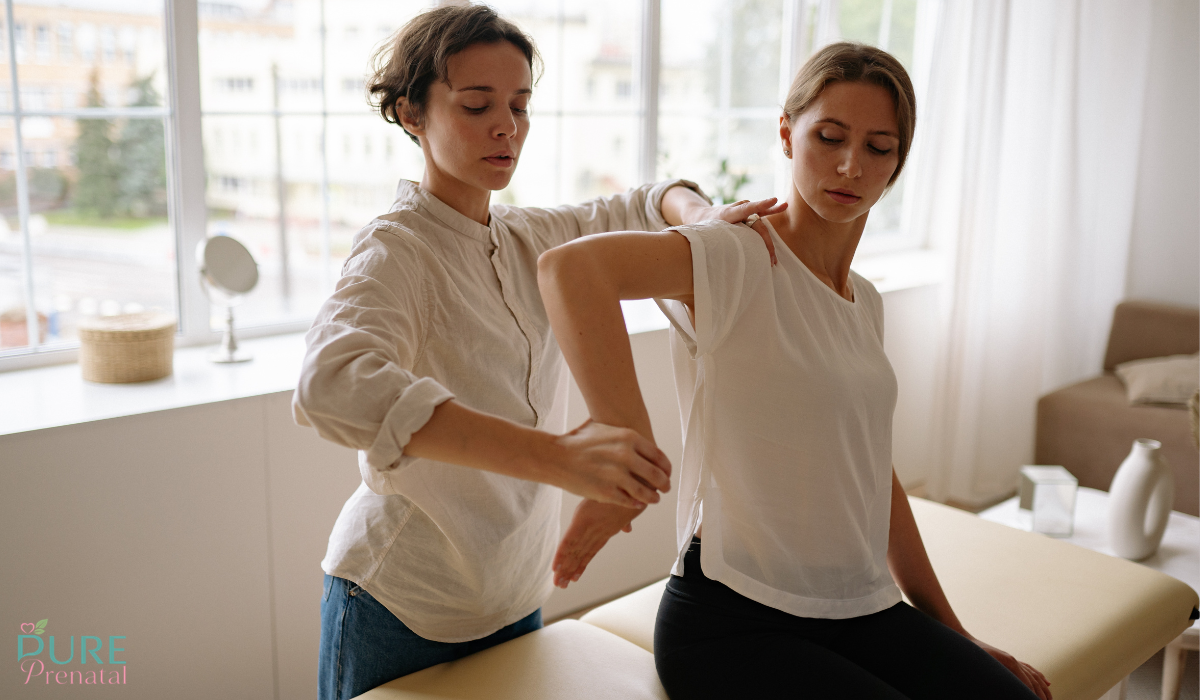
Your body changes fast during pregnancy. One week you feel fine, the next your hips ache, your lower back is tight, and getting comfortable in bed feels like a project. If you’ve come across the term “assisted stretching” and wondered whether it’s something you could actually try while pregnant, you’re asking a fair question — and you’re definitely not the only one asking it.
Done the right way, assisted stretching can genuinely help with a lot of that physical discomfort. This guide breaks down what it actually is, why some expectant mothers find it worth trying, how the safety picture shifts as pregnancy progresses, and which movements are better left alone until after delivery.
So, What Exactly Is Assisted Stretching?
In simple terms, assisted stretching means someone else helps move your body through a stretch — usually a physical therapist, a trained instructor, or in some cases a partner who’s been shown the right technique. It’s different from stretching on your own, where you’re limited by how far you can comfortably push a muscle by yourself. With assistance, that range of motion tends to go a bit further, more gradually, and with less strain on your part.
Why does this matter more during pregnancy specifically? Because your body isn’t quite the same one you’re used to. Your center of gravity shifts. Balance gets trickier. And certain areas — hips, lower back, pelvis in particular — tend to stiffen up as they adjust to the extra weight you’re carrying. Having a second pair of hands during a stretch means less risk of overreaching or tipping over, which starts to matter a lot more once your bump grows.
Why Some Expectant Mothers Try It
Ask around and you’ll find plenty of women who swear by gentle stretching routines during pregnancy. The reported benefits tend to cluster around a few common themes:
- Loosening up tight hips and easing lower back tension that builds from carrying extra weight
- Better circulation, which can take some of the edge off swollen ankles and feet
- More flexibility around the pelvis — something a number of women say helped them feel more prepared heading into labor
- Easing that sharp, tugging sensation known as round ligament pain
- A general sense of calm, since slow movement paired with human touch tends to be relaxing
- Sleeping a little easier, especially if hip or back pain has been keeping you up
Worth saying clearly though: results vary quite a bit from person to person. What works wonders for one woman might do very little for another, and that’s completely normal. Listen to your own body more than anyone’s testimonial.
Is It Actually Safe?
For most healthy pregnancies, yes — gentle, guided stretching is generally considered safe, especially with someone who actually understands prenatal movement (not just a regular trainer who’s never worked with pregnant clients before). That said, “generally safe” doesn’t mean “safe for everyone, all the time.” It depends on your health history, how far along you are, and whether anything about your pregnancy needs closer attention.
Here’s a rough breakdown of how things shift trimester by trimester. Think of it as a starting point, not a rulebook — your provider’s guidance always takes priority.
| Trimester | What to Focus On | Things to Watch For |
|---|---|---|
| First | Easing into gentle movement | Nausea and fatigue can limit how much you want to do; avoid getting overheated |
| Second | Hips, back, and pelvic mobility | Balance starts changing; skip long stretches lying flat on your back |
| Third | Comfort and gentle labor prep | Dizziness is more common; avoid deep or forceful stretching |
One rule that never changes, no matter the trimester: stretching shouldn’t hurt. Sharp pulling, dizziness, anything that feels “off” — that’s your cue to stop and check in with your provider, not push through it.
How to Approach It Safely
Assuming your provider has given the green light, a few practical habits go a long way toward keeping assisted stretching both effective and safe.
- Pick someone who actually knows prenatal care. A generic stretch session isn’t the same as one designed around a changing, pregnant body.
- Keep talking during the session. If something feels too intense, say so immediately — don’t wait it out.
- Skip long stretches flat on your back once you’re past the first trimester, since that position can compress a major blood vessel.
- Go slow. No bouncing. Relaxin, a pregnancy hormone, loosens your joints and ligaments more than usual, so it’s surprisingly easy to overstretch without realizing it in the moment.
- Drink water and don’t let yourself overheat, particularly if you’re stretching right after a workout or on a warm day.
- Use props if you need them — a cushion, a yoga block, even a wall to steady yourself, especially later in pregnancy.
- Prioritize how you feel over how far you can stretch. This isn’t about hitting a new personal best.
Movements Worth Being Careful With
Not every stretch translates well to pregnancy. Some are best avoided entirely, or only attempted with a professional who knows exactly what they’re doing:
- Deep twists that put pressure on your abdomen
- Anything requiring you to lie flat on your back for extended periods (past the first trimester)
- Stretches that involve holding your breath or straining
- Overhead positions that leave you feeling dizzy or lightheaded
- Deep forward folds that compress your belly
Honestly, if you’re ever unsure whether a stretch is a good idea, just skip it. There’s almost always a safer alternative, and it’s not worth the guesswork.
When You Might Want to Skip It Altogether
Certain pregnancy conditions mean structured exercise — stretching included — needs a much more cautious approach, or should be avoided until your provider says otherwise. Talk to your doctor first if any of these apply to you:
- A history of preterm labor, or currently being at risk for it
- Placenta previa or other placenta-related complications
- Bleeding or spotting that hasn’t resolved
- Severe anemia or an existing heart condition
- Symptoms of preeclampsia — think high blood pressure paired with swelling or headaches
Nobody knows your pregnancy better than the provider who’s been tracking it, so this is one of those situations where it really is worth the extra phone call before starting anything new.
What a Simple Routine Might Look Like
For a lower-risk pregnancy, a typical assisted stretching session usually zeroes in on the hips, lower back, hamstrings, and shoulders. Sessions tend to run short — somewhere around 15 to 25 minutes — moving slowly with regular check-ins on how things feel. A lot of women find that combining the stretching with slow, deep breathing makes the whole experience more relaxing and helps the body settle into each position without fighting it.
If there’s one thing that seems to matter more than anything else, it’s consistency over intensity. A short session two or three times a week tends to be far more sustainable — and honestly more beneficial — than one long, occasional session that leaves you sore.
Frequently Asked Questions
Is assisted stretching safe in early pregnancy? Usually, yes, for most healthy pregnancies. First-trimester fatigue and nausea might mean shorter, gentler sessions feel better than anything intense — but it’s always worth confirming with your doctor first.
Can my partner do this with me, or do I need a professional? A partner can help with simple, gentle stretches as long as they’ve been shown how to do it properly and don’t push past what’s comfortable. For anything more structured, though, a prenatal-trained physical therapist or instructor is the safer route.
Does it actually help with labor prep? Some women feel that stretching the hips and pelvis improves mobility and comfort as their due date gets closer. It’s not a guaranteed shortcut to an easier labor, but it can be a helpful piece of an overall prenatal routine.
How often should I be doing this while pregnant? Two or three shorter sessions a week is a pretty common, sustainable pace for most low-risk pregnancies — though your provider can help tailor that to your situation.
How is this different from prenatal yoga? Prenatal yoga is mostly self-guided — you’re moving through poses and breathing techniques on your own. Assisted stretching brings in a second person to help move your body through the stretch. The two aren’t mutually exclusive; plenty of women do both.
Can assisted stretching actually cause harm? It can, if it’s done too aggressively or without accounting for pregnancy-specific precautions — like avoiding flat-back positions or forgetting how loose your joints already are. That’s really the whole reason working with someone trained in prenatal movement matters so much.

Dr. Tania Adib is a Board Certified OB/GYN based in the northern suburbs of Chicago. She earned her undergraduate degree from the University of Notre Dame and her medical degree from Georgetown University in Washington, D.C., before completing her residency in Obstetrics and Gynecology at Magee-Womens Hospital, University of Pittsburgh Medical Center. Her clinical interests include full-spectrum obstetrics and gynecology, from the first period through the menopausal years, contraception, and abnormal bleeding.