
Breakfast has a way of becoming complicated once you’re pregnant. Some mornings you wake up genuinely hungry, ready to eat. Other mornings, particularly in those early weeks, the thought of food does nothing for you, or actively puts you off. Both are normal, and it’s exactly why finding healthy breakfast foods for pregnancy that actually work for you, and not just on paper, is worth a bit of thought. What changes is how much breakfast actually matters now, because it’s setting up your blood sugar, your energy and, often, your appetite for the rest of the day.
This guide covers what a good pregnancy breakfast actually looks like, ideas for different trimesters and appetites, a few foods worth a second thought, and the questions that come up again and again from pregnant women trying to figure out their mornings.
Why Breakfast Matters More Right Now
Your body is doing more than it used to, even on days it doesn’t feel that way. Blood volume rises, your baby is pulling from your stores, and blood sugar tends to swing more than it did before. A nutritious breakfast for pregnancy helps flatten out that swing after the overnight fast, keeps the mid-morning slump at bay, and gets you started on nutrients like folate, iron and calcium that are genuinely harder to make up later in the day if you miss them at breakfast.
Skipping it, or grabbing something purely sugary on the way out the door, tends to backfire for a lot of women, often making nausea and tiredness worse rather than better. That said, a good breakfast for pregnant women doesn’t need to be complicated. Simple and consistent beats elaborate most days.
What a “Healthy” Pregnancy Breakfast Actually Includes
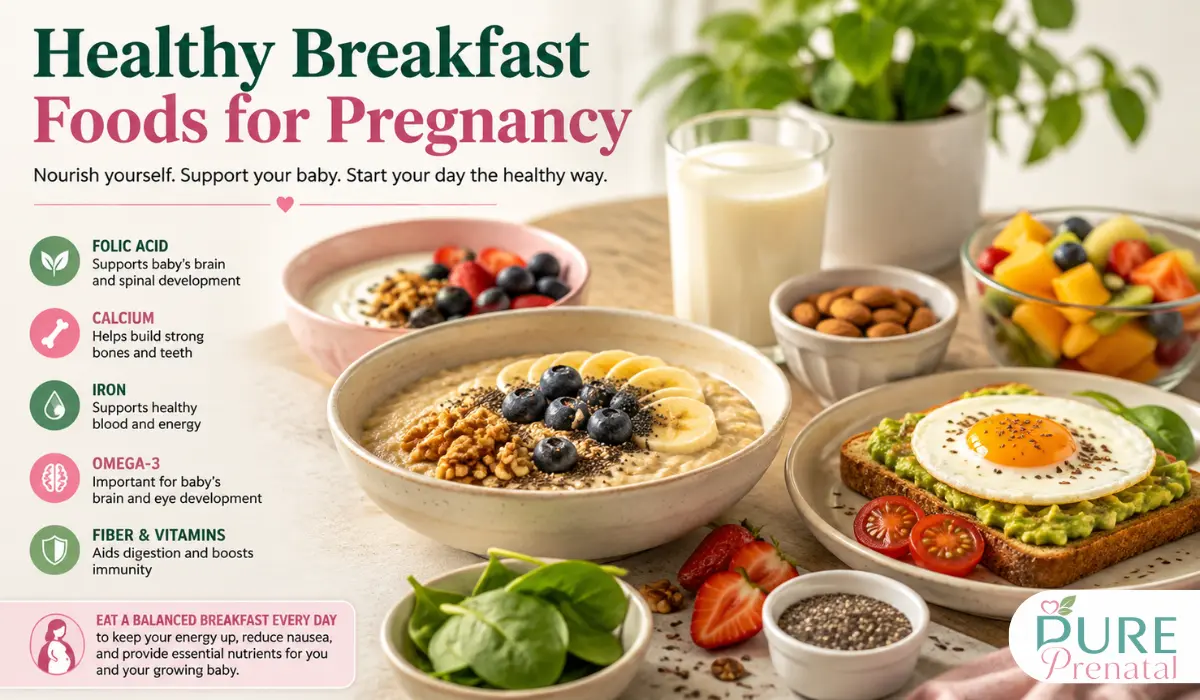
There’s no single correct pregnancy breakfast, but the useful ones tend to share a few things. Protein is one, whether that’s eggs, Greek yogurt, milk or beans, and it does two jobs: supporting your baby’s growth and keeping you fuller for longer than toast alone would. Slow-release carbohydrates, like oats, wholegrain toast or wholemeal cereal, help keep blood sugar steadier than white bread or sugary cereal would. A bit of healthy fat, from avocado, nuts or seeds, supports your baby’s brain development. Fibre from fruit and wholegrains helps with the constipation a lot of women deal with at some point in pregnancy. And folate and iron rich foods matter especially in the first and second trimesters.
You genuinely don’t need all of this on one plate every single morning. Over a week, aim for a decent spread rather than obsessing over any one breakfast.
Healthy Breakfast Ideas for Pregnancy
Here’s a run-through of practical breakfast ideas for pregnant women, split by how much time and appetite you actually have.
If mornings are rushed, wholegrain toast with mashed avocado and a well-cooked egg does the job in minutes. Greek yogurt with berries and a scattering of seeds works just as well, and so does a smoothie made with banana, spinach and a spoon of nut butter blended with milk. Overnight oats are worth setting up the night before if you know your mornings are going to be tight, made with milk, chia seeds and whatever fruit you have on hand. Even something as simple as toast with nut butter and sliced banana counts.
When you’ve got more time, or more appetite, a few breakfast recipes for pregnant women worth trying: scrambled eggs on wholemeal toast with grilled tomatoes and spinach, porridge with stewed apple and walnuts, wholegrain pancakes made with oats and mashed banana, a vegetable and cheese omelette, or baked beans on toast with a boiled egg on the side. None of these take much skill, and most keep well as leftovers if you’re cooking for more than one morning at a time.
Best Breakfast Cereals for Pregnancy
Cereal aisles are not all equal, and it’s worth being a little picky here. Among fortified breakfast cereals for pregnancy, look for wholegrain varieties that are lower in added sugar and fortified with iron and folic acid, things like plain wholewheat biscuits or bran-based cereals rather than the sweetened, brightly coloured boxes. Milk rather than water adds protein and calcium, and a handful of fruit or seeds on top adds fibre. The very sugary cereals aren’t off-limits exactly, but they work better as an occasional thing than a daily default, since they tend to cause a quick spike and then a dip in blood sugar.
High Protein Breakfast for Pregnancy
Protein needs go up as pregnancy progresses, particularly in the second and third trimester, so a high protein breakfast for pregnancy becomes more worth thinking about later on. Eggs with cottage cheese on toast, Greek yogurt with peanut butter and a bit of granola, a protein smoothie made with milk and oats, or beans on toast with a poached egg on top all get you there without much fuss.
Breakfast for the First Trimester and Morning Sickness
Nausea has a habit of making the idea of a proper breakfast completely unappealing, and that’s about as normal as pregnancy symptoms get. A first trimester breakfast doesn’t need to tick every nutritional box. Honestly, the main goal is just getting something in, even if it’s small, plain and nothing like the balanced meal you’d normally aim for.
The foods that tend to work best as breakfast foods that fight nausea during pregnancy are usually the boring ones. Dry crackers or plain toast, eaten slowly before you even get out of bed, help a lot of women. So does ginger tea, or a small piece of crystallised ginger. Plain porridge without strong spices tends to sit better than anything heavily flavoured, and cold food is often easier to tolerate than hot, aromatic dishes when smells are setting off nausea. Small, frequent bites usually work better than trying to push through one bigger meal.
If you can barely face anything, a high protein food for morning sickness such as a spoonful of peanut butter, a small handful of nuts or a piece of cheese can help, partly by stabilising blood sugar and partly because an empty stomach often makes nausea worse, not better. A lot of women find that keeping something bland right by the bed, to eat before standing up, genuinely changes how the rest of the morning goes when it comes to breakfast for morning sickness.
If you can’t keep any food or fluids down at all, that’s worth flagging to your midwife or GP rather than just pushing through, since it may point to hyperemesis gravidarum rather than ordinary morning sickness.
A Few Breakfast Foods Worth a Second Thought
Most breakfast foods are completely fine in pregnancy. A handful just need a bit more attention to how they’re cooked.
Scrambled eggs are a good example. They’re a solid source of protein and choline, which supports your baby’s brain development, and there’s no reason to avoid them. The only thing that matters is making sure they’re cooked until fully set, with nothing runny or liquid left. Undercooked eggs carry a higher salmonella risk, so well-cooked scrambled eggs for pregnancy is really the whole rule.
Breakfast sausage works the same way. It’s fine as long as it’s cooked all the way through, with no pink left in the middle and no pink in the juices either. Processed meats carry more risk of bacterial contamination when undercooked, so anything that looks rare, or has only been briefly warmed through, such as at a hotel buffet, is worth skipping or asking about first.
Pancakes aren’t a problem in themselves. Made with wholegrain flour or oats and topped with fruit, they’re a perfectly reasonable breakfast. Where they go wrong is the toppings, since syrup, chocolate spread and whipped cream piled on together can turn a fine breakfast into a very sugary one fast. A spoon of Greek yogurt or an egg on the side balances things out.
English breakfast tea contains caffeine, so it counts toward your total for the day alongside coffee, cola and chocolate. UK guidance suggests keeping total caffeine under 200mg a day in pregnancy. A cup of English breakfast tea has a moderate amount, so one or two cups spread across the morning is generally fine for most women, it’s really the running total across tea, coffee and everything else that’s worth keeping half an eye on.
Sample Pregnancy Breakfast Table
| Breakfast idea | Good for | Key nutrients | Note |
|---|---|---|---|
| Greek yogurt, berries and seeds | Quick mornings, hot weather | Protein, calcium, fibre | Choose plain yogurt and add your own fruit to control sugar |
| Porridge with milk and fruit | Colder mornings, steady energy | Fibre, calcium, slow carbs | Use milk rather than water for extra protein |
| Scrambled eggs and wholemeal toast | Protein needs, nausea-friendly once settled | Protein, choline, iron | Ensure eggs are fully cooked through |
| Dry toast or crackers | First trimester, morning sickness | Simple carbohydrates | Eat slowly, in small amounts |
| Smoothie with banana and nut butter | On the go, low appetite | Protein, healthy fats, fibre | Add spinach for extra folate |
| Wholegrain pancakes with yogurt | Weekend treat, still balanced | Carbohydrate, protein, calcium | Go easy on syrup and toppings |
When to Speak to a Healthcare Professional
Most of this comes down to ordinary common sense rather than strict rules. Still, it’s worth contacting your midwife, GP or a dietitian if you’re struggling to eat much of anything for more than a few days, if you’re losing weight rather than gaining it as pregnancy goes on, if nausea and vomiting are severe or won’t let up, or if a condition like diabetes or a food allergy is affecting what you can safely eat.
FAQ
What should a pregnant woman eat for breakfast?
Something with protein, slow-release carbs and ideally a bit of fruit or veg, eggs on wholemeal toast, or porridge with milk and berries, are both good defaults. What actually works best usually comes down to appetite and how nauseous you’re feeling, especially early on.
What can a pregnant woman eat for breakfast if she has morning sickness?
Bland, easy foods tend to win out here, dry toast, crackers, plain porridge or ginger tea. Eating a small amount before you even get out of bed can help more than you’d expect.
Is it bad to skip breakfast during pregnancy?
Making a habit of it can lead to blood sugar dips, tiredness and worse nausea for some women. If food genuinely doesn’t appeal first thing, try to get something small in within an hour or two of waking rather than going without altogether.
How much caffeine is in English breakfast tea, and is it safe during pregnancy?
A cup contains a moderate amount of caffeine. It’s fine in moderation, but it should be counted toward your daily caffeine limit alongside coffee and anything else caffeinated.
What is the best breakfast for pregnant women in the first trimester?
Simple, low-odour food that doesn’t need much preparation tends to work best, dry toast, crackers, plain cereal or a small smoothie, particularly when nausea makes anything bigger feel like too much.

Dr. Tania Adib is a Board Certified OB/GYN based in the northern suburbs of Chicago. She earned her undergraduate degree from the University of Notre Dame and her medical degree from Georgetown University in Washington, D.C., before completing her residency in Obstetrics and Gynecology at Magee-Womens Hospital, University of Pittsburgh Medical Center. Her clinical interests include full-spectrum obstetrics and gynecology, from the first period through the menopausal years, contraception, and abnormal bleeding.