
If you have just found out you are expecting and you are already reaching for pickles at 9am, you are probably wondering whether this is normal, and how early pregnancy cravings are supposed to start. It is one of the most common questions new mums ask, right alongside morning sickness and fatigue.
The short answer is that most pregnancy cravings start in the first trimester, often around week 5 to week 8, though the timing varies quite a lot from one woman to the next. Some notice strong cravings within days of a positive test, others do not experience anything unusual until the second trimester, and a fair number of women go through pregnancy with barely any cravings at all.
This article looks at when cravings start in pregnancy, why they happen, what is considered common, and when there might be something worth mentioning to a midwife or GP.
When Do Pregnancy Cravings Usually Start?
For most women, cravings during pregnancy begin somewhere in the first trimester, typically once hormone levels have shifted enough to affect appetite and smell. Because hCG and oestrogen rise quickly in early pregnancy, many women notice their first food cravings around the same time they notice nausea, tender breasts, or extreme tiredness.
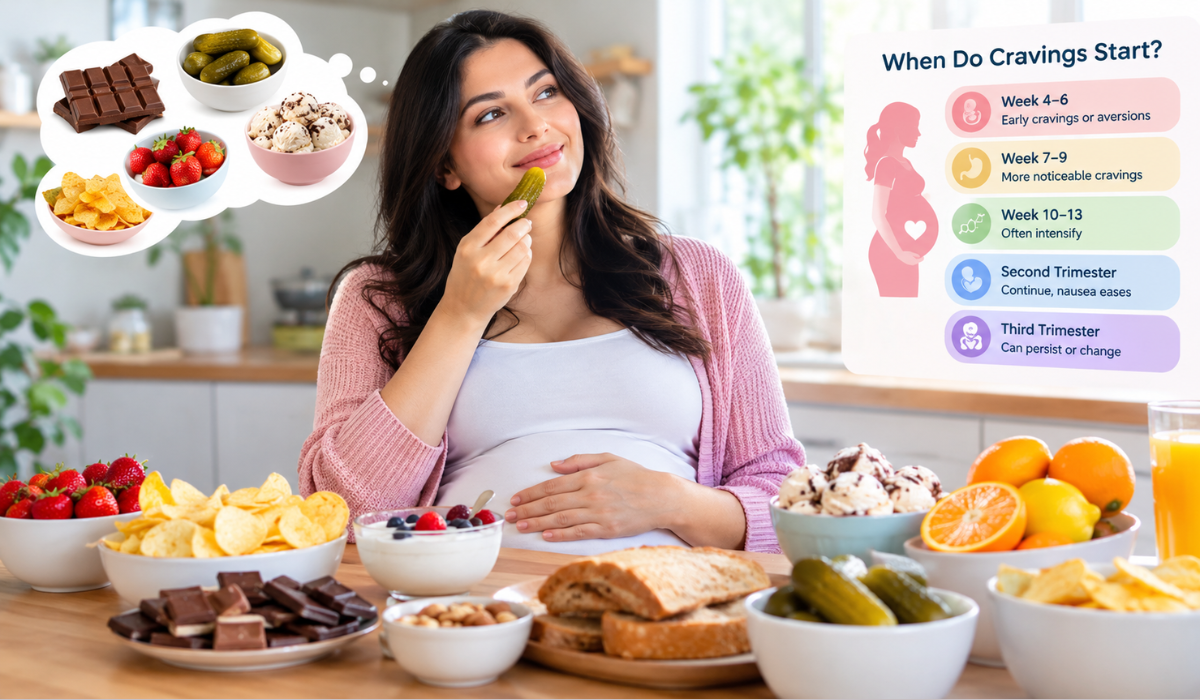
To give a clearer picture of when do cravings start in pregnancy for most people, here is a general timeline. It is not a strict rule, just a common pattern based on how hormone levels tend to change through pregnancy.
| Stage of pregnancy | What is common with cravings |
|---|---|
| Week 4 to 6 | Some women notice early cravings or sudden food aversions as hCG rises |
| Week 7 to 9 | Cravings often become more noticeable, especially alongside morning sickness |
| Week 10 to 13 | Cravings may intensify as hormone levels peak toward the end of the first trimester |
| Second trimester (week 14 to 27) | Cravings often continue but nausea usually eases, so food may feel more enjoyable |
| Third trimester (week 28 onward) | Cravings can persist, though some women find they settle down or change again |
So if you are asking how early do pregnancy cravings start, the honest answer is that for many women it is within the first six to eight weeks, sometimes even before a missed period, though this is less common and harder to separate from normal hunger.
How Soon Can Pregnancy Cravings Start?
It is genuinely possible to start craving certain foods before you even know you are pregnant. Some women look back after a positive test and realise they had been eating oddly specific things, like wanting orange juice constantly or suddenly disliking coffee, in the days leading up to it. This is because implantation and the early rise in pregnancy hormones can begin before a missed period shows up.
That said, how soon pregnancy cravings start is not the same for everyone. It depends on:
- How sensitive your body is to early hormonal changes
- Whether you are also experiencing nausea, since cravings and aversions often appear together
- Your individual metabolism and blood sugar patterns
- Whether this is a first pregnancy or a later one, since some women say cravings feel different each time
There is no medical test that predicts exactly when a pregnant woman will start craving food, because appetite changes are influenced by so many overlapping factors at once.
What Causes Pregnancy Cravings?
There is not one single explanation for pregnancy cravings, and researchers do not fully agree on the mechanism. A few explanations are generally accepted as contributing factors.
Hormonal changes: Oestrogen and progesterone affect how the brain processes taste and smell, which is part of why familiar foods can suddenly taste different or become unappealing.
Heightened sense of smell: Many pregnant women develop a much stronger reaction to smells early on, and this can push them toward or away from certain foods.
Nutrient needs and blood sugar shifts: Pregnancy increases energy demands, and some researchers believe cravings for carbohydrate or sugar-rich foods may be partly linked to the body working harder to maintain blood sugar balance, though this is not proven for every craving.
Psychological and cultural factors: What counts as a stereotypical pregnancy craving, like ice cream or pickles, is shaped a lot by culture and expectation. Wanting comfort food during a physically and emotionally demanding time is not unusual.
It is worth noting that a strong craving for something that is not food, such as ice, chalk, or soil, is called pica and is different from a normal food craving. Pica during pregnancy is sometimes linked to iron deficiency and should be mentioned to a midwife or GP, since it is not simply a taste preference.
What Is the Most Common Pregnancy Craving?
There is no single most common pregnancy craving that applies to everyone, but certain patterns come up again and again when pregnant women talk about their cravings.
Common pregnancy food cravings include:
- Sweet foods, such as chocolate, fruit, or desserts
- Salty snacks like crisps or salted crackers
- Carbohydrate-heavy comfort foods, including bread, pasta, and potatoes
- Dairy, particularly cheese or ice cream
- Sour or tangy foods, such as citrus fruit or pickles
- Spicy food, which some women crave more than usual during pregnancy
Pregnant women crave different things at different stages, and it is completely normal for cravings to change from one trimester to the next, or even week to week.
When Are Pregnancy Cravings the Strongest?
Many women find that cravings during pregnancy feel most intense in the first trimester and again in the third trimester, though this varies. In early pregnancy, cravings often overlap with nausea, so a craving can appear suddenly and just as suddenly turn into an aversion to the same food. In the third trimester, some women describe cravings becoming stronger again, possibly linked to increased hunger as the baby grows and the body’s energy needs rise.
The middle of pregnancy, the second trimester, is often described as calmer. Nausea tends to ease for many women during this stage, appetite can improve, and while cravings do not disappear, they often feel less overwhelming than in the first or third trimester.
Is It Normal to Have No Cravings During Pregnancy?
Yes. Having no cravings in pregnancy, or only mild ones, is completely normal and does not indicate anything is wrong with the pregnancy. Cravings are not a required symptom, and plenty of healthy pregnancies happen with barely a change in appetite or food preference.
Some women feel pressure because cravings are so heavily featured in pregnancy culture, but there is no medical significance to having them or not having them. What matters more for a healthy pregnancy is eating a reasonably varied healthy diet, staying hydrated, and attending routine antenatal appointments where growth and wellbeing are monitored.
Practical Ways to Manage Pregnancy Cravings
Cravings are not something to fight constantly, but a few practical habits can help keep things balanced.
- Eat regularly. Going long stretches without food can make cravings, especially for sugar or refined carbohydrates, feel stronger.
- Keep healthier versions on hand. If you are craving something sweet, fruit or yoghurt can sometimes take the edge off without relying only on sugary snacks.
- Stay hydrated. Thirst is sometimes mistaken for hunger or a craving, particularly for salty or fizzy drinks.
- Allow yourself the craving occasionally. Completely restricting a craved food often makes it feel more urgent. Moderation is usually a more sustainable approach than strict avoidance.
- Watch for patterns with non-food cravings. If you find yourself wanting to eat something that is not food, mention it to your midwife or GP, since this can sometimes point to a nutrient gap that is worth checking.
When to Speak to a Midwife or GP About Cravings
Most pregnancy cravings are harmless and simply part of the hormonal and sensory changes of pregnancy. It is worth mentioning cravings to a midwife or GP if:
- You are craving non-food items such as ice, chalk, soap, or soil
- Cravings are pushing you toward eating a very unbalanced diet for a sustained period
- You are struggling to eat enough food overall, whether from cravings, aversions, or nausea
- You have any concerns about your weight gain or nutrient intake during pregnancy
These conversations are a normal part of antenatal care, and healthcare professionals expect questions about appetite and eating patterns throughout pregnancy.
FAQs
When do pregnancy cravings start?
Most women notice cravings starting in the first trimester, often between week 5 and week 8, though some notice changes even earlier and others do not experience strong cravings until later.
How early can pregnancy cravings start?
In some cases, subtle cravings or food aversions can begin before a missed period, as early hormonal changes start to affect taste and smell. This is not universal, and many women do not notice anything until several weeks in.
What week do pregnancy cravings start?
There is no fixed week, but many women describe cravings beginning somewhere between week 5 and week 9, around the same time as other early pregnancy symptoms like nausea and fatigue.
What are common pregnancy cravings?
Sweet foods, salty snacks, carbohydrates, dairy, and sour foods are among the most frequently reported pregnancy cravings, though individual cravings vary widely.
Is it normal to have no cravings in pregnancy?
Yes. Not everyone experiences cravings, and having none does not suggest a problem with the pregnancy.
Why do pregnancy cravings happen?
They are generally linked to hormonal shifts, a heightened sense of smell, changing nutrient needs, and psychological factors, though the exact cause of any individual craving is not always clear.
When do pregnancy cravings usually stop?
Cravings can continue throughout pregnancy for some women, while others find they ease after the first trimester or change in nature as pregnancy progresses. There is no set point at which cravings are expected to end.

Dr. Tania Adib is a Board Certified OB/GYN based in the northern suburbs of Chicago. She earned her undergraduate degree from the University of Notre Dame and her medical degree from Georgetown University in Washington, D.C., before completing her residency in Obstetrics and Gynecology at Magee-Womens Hospital, University of Pittsburgh Medical Center. Her clinical interests include full-spectrum obstetrics and gynecology, from the first period through the menopausal years, contraception, and abnormal bleeding.