

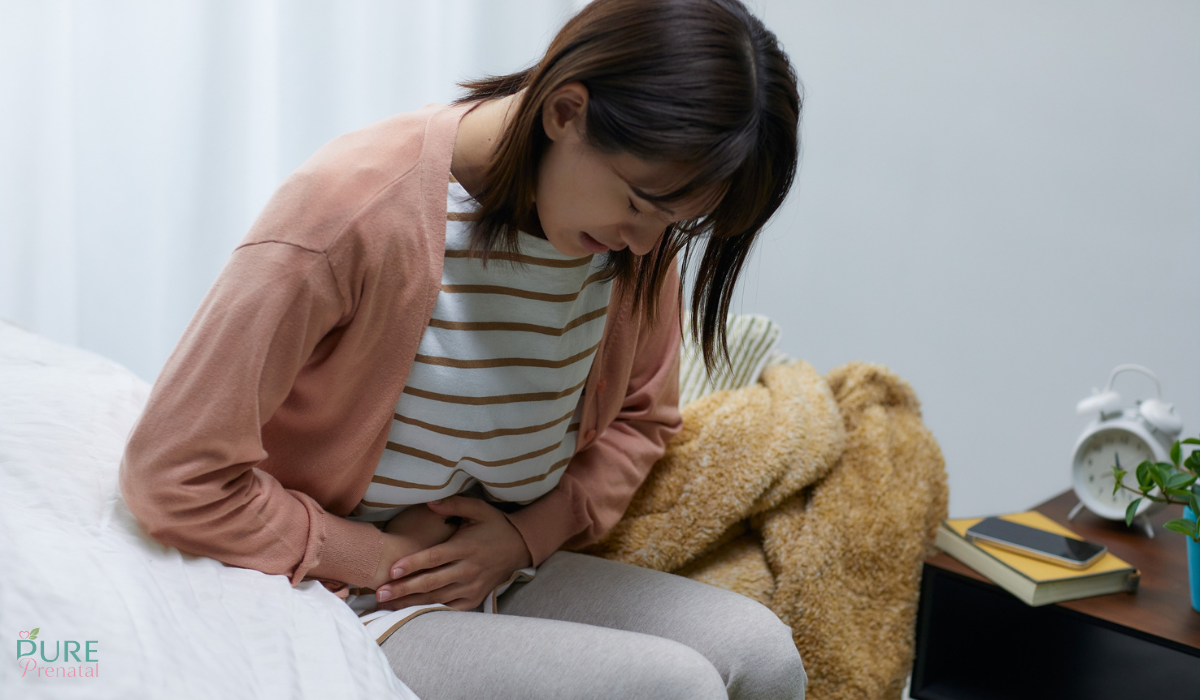
Groin pain during pregnancy is common, especially as your bump grows and your body prepares for labour. For most women, it is caused by shifting ligaments, a growing uterus, or changes in posture rather than anything serious. Still, groin pain during pregnancy can range from a mild, dull ache to a sharp twinge that catches you off guard when you stand up, roll over in bed, or climb the stairs.
This article explains why groin pain happens in pregnancy, what is usually harmless, what might need a midwife’s input, and the warning signs that call for prompt medical attention.
What Does Groin Pain in Pregnancy Feel Like?
Groin pain can show up in a few different ways depending on the cause. Some women describe a dull, achy pressure low in the pelvis. Others notice a sharp, stabbing sensation on one or both sides when they change position quickly, get out of a car, or turn over in bed. It can be constant and mild, or it can come and go with certain movements.
The pain may sit deep in the groin crease where your leg meets your torso, or it can radiate toward the hip, inner thigh, or lower abdomen. Many women find it worse by the end of the day or after being on their feet for a long stretch.
Why Groin Pain Happens During Pregnancy
Several normal pregnancy changes can bring on groin discomfort.
Round ligament pain is one of the most common causes. The round ligaments support the uterus and stretch as it grows. Sudden movements such as coughing, sneezing, laughing, or standing up quickly can cause these ligaments to stretch rapidly, producing a sharp, short-lived pain that usually eases within seconds or minutes.
Relaxin and loosening joints also play a part. During pregnancy, the hormone relaxin softens the ligaments around the pelvis to help prepare the body for birth. This is helpful for labour but can leave the pelvic joints feeling less stable, which some women experience as groin or pelvic girdle discomfort.
Pelvic girdle pain (PGP), sometimes called symphysis pubis dysfunction, happens when the pelvic joints move unevenly. This can cause pain in the groin, pubic area, lower back, or hips, and it often gets worse with walking, climbing stairs, or standing on one leg.
Growing weight and posture changes shift your centre of gravity, which can put extra strain on the pelvis, hips, and groin muscles as pregnancy progresses.
Braxton Hicks contractions, particularly from the second trimester onward, can sometimes be felt as tightening that extends into the groin.
Urinary tract infections (UTIs) are another possible cause, since they can sometimes cause pain that is felt low in the pelvis or groin alongside urinary symptoms.
When Groin Pain Is Usually Common
Occasional, brief groin pain that comes with sudden movement and settles quickly is typically related to round ligament stretching. Mild, achy discomfort that builds gradually through the day and improves with rest is often linked to the normal loosening of pelvic ligaments as pregnancy progresses. These patterns are common, especially in the second and third trimester, and are not usually a sign of a problem.
What May Help
- Move slowly, especially when changing position, getting out of bed, or standing up from sitting.
- Support your bump with your hands when you cough, sneeze, or laugh to reduce sudden tension on the round ligaments.
- Try a pregnancy support belt, which some women find helpful for easing pressure on the pelvis and lower abdomen.
- Rest on your side with a pillow between your knees to keep the pelvis in a more neutral position while sleeping.
- Apply gentle warmth, such as a warm (not hot) compress, to ease muscular aches.
- Stay active within comfort, since gentle movement like walking or pregnancy-safe stretching can help keep pelvic muscles balanced, though it is worth easing off any activity that consistently triggers pain.
- Ask about physiotherapy, particularly if pain is affecting your ability to walk or move comfortably. A midwife or GP can refer you to a physiotherapist experienced in pelvic girdle pain.
- Wear supportive, flat shoes to reduce extra strain on the pelvis and hips.
Symptoms Alongside Groin Pain That May Need Attention
Groin pain on its own is usually nothing to worry about, but certain accompanying symptoms are worth mentioning to a midwife or GP. These include:
- Pain that is severe, worsening, or not relieved by rest
- Pain only on one side that feels different from typical round ligament twinges
- Fever, chills, or feeling generally unwell
- Burning or pain when urinating, or needing to urinate more urgently than usual
- Vaginal bleeding or unusual discharge
- Regular tightening or cramping that does not ease, particularly before 37 weeks
- Difficulty walking or bearing weight on one leg
- Pain accompanied by swelling, redness, or warmth in the leg
These symptoms do not automatically mean something is wrong, but they are the kind of details a healthcare professional will want to know about so they can assess you properly.
When to Contact a Midwife, GP, or Maternity Unit
Contact your midwife or GP for routine advice if groin pain is persistent, is affecting your daily activities, or you simply want reassurance about what you are feeling. This is a normal reason to reach out and does not need to wait for a scheduled appointment.
Seek prompt medical assessment, such as by calling your maternity unit or midwife directly, if you experience:
- Sudden, severe, or one-sided groin or abdominal pain
- Pain with fever or feeling unwell
- Signs of a possible UTI, such as burning on urination
- Any vaginal bleeding alongside the pain
- Regular contractions or tightening before 37 weeks
- Reduced fetal movements alongside the pain
If in doubt, it is always appropriate to call your midwife, GP, or maternity unit for guidance. They would rather check on you than have you worry at home.
Common Causes of Groin Pain at a Glance
| Possible Cause | Typical Feeling | When It Tends to Happen |
|---|---|---|
| Round ligament pain | Sharp, brief pain with sudden movement | Second trimester onward |
| Pelvic girdle pain (PGP) | Aching or grinding pain in groin, pubic area, or hips | Can occur at any stage, often worsens later |
| Loosening ligaments (relaxin) | Dull, general looseness or ache | Progresses through pregnancy |
| Braxton Hicks | Tightening that may radiate to the groin | Second and third trimester |
| Urinary tract infection | Pain with burning on urination, urgency | Any stage |
| Posture and weight changes | Gradual ache, worse by end of day | Later pregnancy |
FAQs
Is it normal to have groin pain in early pregnancy? Mild groin discomfort can occur in the first trimester as the uterus begins to grow and ligaments start to adjust, though round ligament pain is more commonly reported from the second trimester onward. If pain is severe or you have bleeding, contact your midwife or GP.
Can groin pain mean labour is starting? Groin pain alone is not a reliable sign of labour. However, if it comes with regular tightening, lower back pain, or pelvic pressure that increases in frequency, especially before 37 weeks, it is worth contacting your maternity unit for advice.
Is one-sided groin pain more concerning than pain on both sides? Not necessarily, since round ligament pain often affects one side more than the other. That said, persistent one-sided pain that feels different or more intense than usual is worth mentioning to a healthcare professional so other causes can be ruled out.
Can I take paracetamol for groin pain in pregnancy? Paracetamol is generally considered suitable for occasional use in pregnancy, but it is best to check the dose and frequency with a pharmacist, midwife, or GP based on your individual circumstances.
Does pelvic girdle pain go away after birth? For most women, pelvic girdle pain improves in the weeks and months after birth, particularly with appropriate physiotherapy support. Your midwife or GP can advise on management during and after pregnancy.
Final Thoughts
Groin pain in pregnancy is usually a sign that your body is adjusting to support a growing baby rather than a cause for alarm. Understanding the difference between everyday stretching aches and symptoms that warrant a closer look can help you feel more confident about what you are experiencing. When pain feels unusual, severe, or comes with other symptoms, your midwife or GP is there to check things over and offer the right support.

Dr. Tania Adib is a Board Certified OB/GYN based in the northern suburbs of Chicago. She earned her undergraduate degree from the University of Notre Dame and her medical degree from Georgetown University in Washington, D.C., before completing her residency in Obstetrics and Gynecology at Magee-Womens Hospital, University of Pittsburgh Medical Center. Her clinical interests include full-spectrum obstetrics and gynecology, from the first period through the menopausal years, contraception, and abnormal bleeding.