
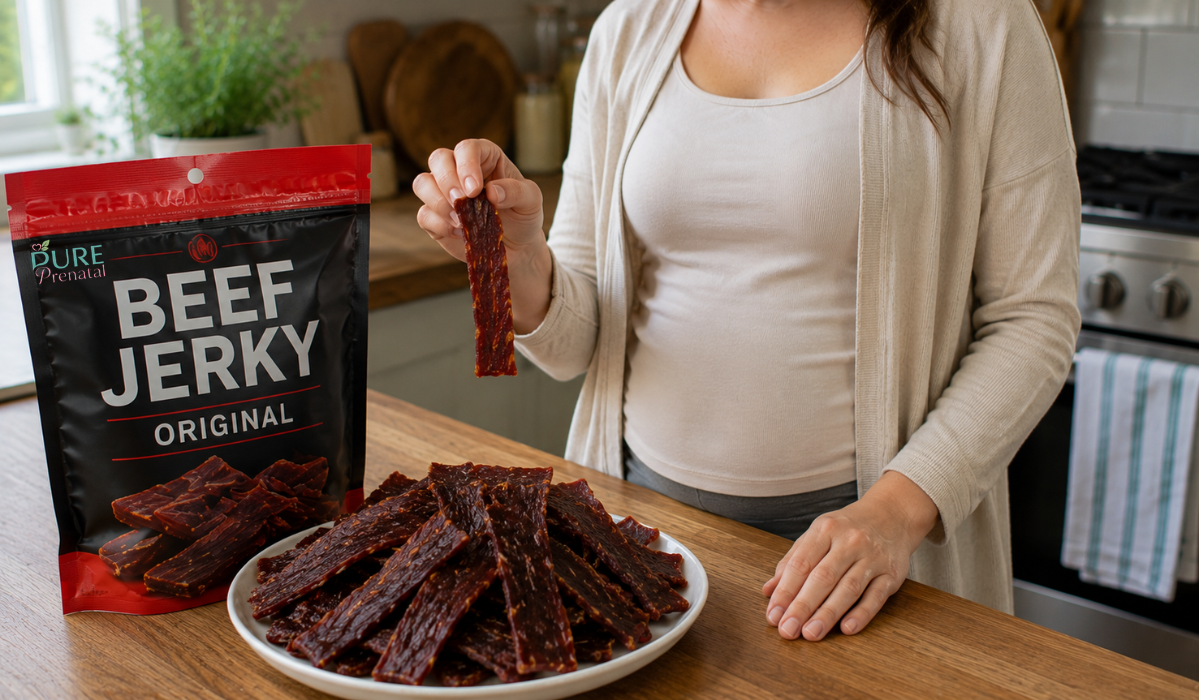
Pregnancy cravings have a way of catching you off guard. One day you’re happily snacking on fruit, and the next you’re eyeing a bag of beef jerky at the supermarket. If you’ve paused and wondered, “Can I actually eat this while I’m pregnant?” you’re certainly not the only one. It’s a surprisingly common question, especially for women looking for a quick, high-protein snack.
The short answer: beef jerky is generally not recommended during pregnancy, mainly because of how it’s made rather than what it’s made of. But the full answer is a little more nuanced, and understanding why can help you make a decision that feels right for you and your baby.
This guide walks through the real risks, what to do if you’ve already eaten it, safer alternatives, and answers to the many related questions pregnant women ask about jerky, beef sticks, Slim Jims, Chomps, and other cured or smoked meats.
The Quick Answer
Most obstetricians and food safety experts advise against regular beef jerky during pregnancy. The concern isn’t really about beef itself — it’s about the curing and drying process jerky goes through, which doesn’t always kill harmful bacteria like Listeria monocytogenes. Combine that with jerky’s high sodium content, and most doctors will tell pregnant women to either avoid it or eat it only occasionally from a trusted, reputable source.
So if you’re asking “can you eat beef jerky while pregnant” or “is it ok to eat beef jerky while pregnant,” the honest answer is: it’s not the safest choice, but an occasional small amount from a reliable, well-known brand is unlikely to cause harm. It comes down to weighing a low-probability risk against a craving.
The good news is that the concern isn’t really about beef itself. In fact, properly cooked beef can be a healthy source of protein and iron during pregnancy. The issue is how beef jerky is processed before it reaches your plate.
Why Is Beef Jerky Considered Risky During Pregnancy?
To understand why is beef jerky safe during pregnancy question keeps coming up with a cautious answer, it helps to know what actually happens during pregnancy that makes certain foods riskier than usual.
1. Pregnancy Changes Your Immune System
Pregnancy naturally changes the way your immune system works. These changes help support your growing baby, but they also make it a little harder for your body to fight off certain foodborne infections.
2. Listeria Is the Main Concern
When people ask is jerky safe during pregnancy, the biggest worry health professionals raise is Listeria. This bacterium can survive in refrigerated and dried foods, and it’s particularly dangerous during pregnancy because it can cross the placenta. Listeriosis in pregnancy has been linked to miscarriage, stillbirth, premature labor, and serious infection in newborns.
Commercial jerky is dried at low temperatures for a long time rather than cooked at high heat, and that drying process doesn’t reliably eliminate Listeria the way thorough cooking does. This is the core reason so many pregnant women search is beef jerky safe to eat during pregnancy and get a cautious response from their care provider.
3. Toxoplasmosis Risk
There’s also a smaller but real risk of Toxoplasma gondii, a parasite that can be present in undercooked or improperly cured meat. Toxoplasmosis during pregnancy can affect fetal development, particularly the brain and eyes, if contracted for the first time while pregnant.
4. Extremely High Sodium Content
Even setting bacteria aside, beef jerky is loaded with sodium — often 400-600mg or more per serving. High sodium intake during pregnancy can contribute to water retention, elevated blood pressure, and may worsen swelling, which many pregnant women already deal with in the second and third trimester.
5. Nitrates and Preservatives
Many commercial jerky brands use sodium nitrite as a preservative. While nitrites in small amounts are generally considered safe within regulated limits, some pregnant women prefer to minimize processed meat additives as a precaution, especially since diet quality during pregnancy is linked to long-term outcomes for the baby.
“Why Can’t You Eat Beef Jerky While Pregnant?” — The Simple Explanation
If a friend or partner asks you why can’t you eat beef jerky while pregnant, here’s the one-line version: it’s a dried, uncooked meat product that can harbor Listeria, and pregnancy makes you more vulnerable to the infection this bacteria causes. It’s not that beef itself is off-limits — thoroughly cooked beef is perfectly fine — it’s the curing-and-drying method that raises the concern.
I Accidentally Ate Beef Jerky While Pregnant — Should I Panic?
If you’re here because you already ate some and are now searching “i accidentally ate beef jerky while pregnant,” take a breath first. One serving of jerky, especially from a well-known, reputable brand, carries a low absolute risk. Millions of pregnant women eat commercial jerky without any issue.
Here’s what to actually do:
- Don’t panic: The odds of contamination in any single package are low, particularly from established brands with strict food safety standards.
- Watch for symptoms: Listeriosis symptoms can include fever, chills, muscle aches, nausea, and sometimes diarrhea, typically appearing anywhere from a few days to a few weeks after exposure.
- Call your provider if you’re worried: If you develop a fever or flu-like symptoms in the days or weeks after eating it, contact your OB or midwife. They may recommend monitoring or, in some cases, testing.
- Avoid making it a habit: A one-time slip isn’t the same as regularly eating jerky throughout pregnancy. Going forward, you can simply choose safer options.
Does It Matter Which Trimester You’re In?
A lot of women specifically search can you eat beef jerky while pregnant first trimester, since the first trimester is when major organ development happens and many people feel extra cautious.
The truth is the Listeria and Toxoplasma risks don’t disappear or increase dramatically by trimester — they’re a concern throughout pregnancy. That said:
- First trimester: This is when the baby’s neural tube and major organs are forming, so many providers recommend being extra conservative with any food that carries even a small infection risk.
- Second and third trimester: The sodium and blood pressure concerns become more relevant as swelling and blood pressure changes become more common, in addition to the ongoing Listeria risk.
In short, there’s no trimester where beef jerky becomes “safe” — the general advice to limit or avoid it applies from conception through delivery.
What About Beef Sticks, Slim Jims, and Chomps?
This is where things get a little more specific, because not all jerky-style snacks are made the same way.
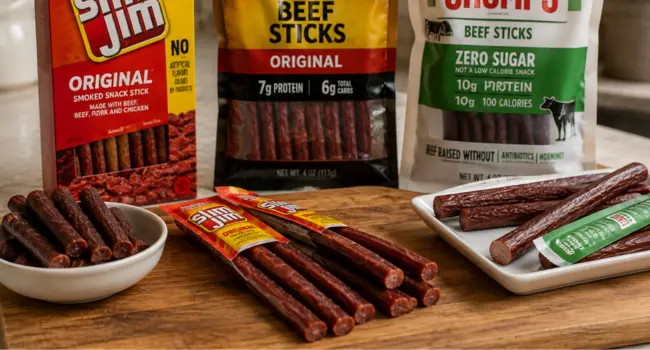
Slim Jims and traditional beef sticks: When people ask can pregnant women eat slim jims or can you eat meat sticks while pregnant, the answer follows the same logic as jerky — these are cured, smoked, or dried meat sticks, and the same Listeria and sodium concerns apply. Are beef sticks safe during pregnancy is really the same question as the jerky one, just with a different product name.
Chomps and similar “clean” meat sticks: Newer brands like Chomps market themselves as healthier, with fewer additives and lower sugar. This has led many pregnant women to ask are chomps pregnancy safe or is chomps safe for pregnancy, hoping the cleaner ingredient list makes a difference. Unfortunately, ingredient quality doesn’t change the core issue — these are still dried, cured meat products, and the manufacturing process (not the recipe) is what creates the Listeria concern. So the cautious answer stays the same even for “cleaner” brands.
Deer jerky and deer meat: Can pregnant women eat deer meat comes up often among hunting families. Wild game jerky carries the same drying-related risks as beef jerky, plus an added concern: wild venison has a higher chance of carrying parasites if not properly processed. If you want venison during pregnancy, make sure it’s cooked to a safe internal temperature rather than dried into jerky.
Is Beef Safe During Pregnancy? A Quick Guide
| Food | Can You Eat It During Pregnancy? | What You Should Know |
|---|---|---|
| Beef jerky | No | Because it’s dried rather than fully cooked, there’s a small risk of harmful bacteria like Listeria. It’s also very high in sodium. |
| Beef sticks | No | These are processed and cured in a similar way to jerky, so the same food safety concerns apply. |
| Slim Jims | No | They’re highly processed, salty, and made using curing methods that aren’t considered the safest during pregnancy. |
| Chomps meat sticks | Not Recommended | Even though they’re made with simpler ingredients, they’re still cured meat products, so experts generally recommend avoiding them. |
| Freshly cooked steak | Yes | Enjoy it as long as it’s cooked thoroughly and isn’t served rare or undercooked. |
| Hot corned beef | Yes | Freshly cooked corned beef is generally considered safe when served hot. |
| Cold deli corned beef | Heat it first | Reheat it until it’s steaming hot before eating to reduce the risk of Listeria. |
| Fully cooked smoked brisket | Yes | Safe if it’s been cooked all the way through and served hot. |
| Cold-smoked meats | No | Since they’re not fully cooked, they may carry bacteria that can be harmful during pregnancy. |
| Deer jerky | No | It has the same concerns as beef jerky and may carry an additional parasite risk if not prepared properly. |
| Fully cooked venison | Yes | Venison is fine during pregnancy when it’s cooked thoroughly to a safe internal temperature. |
What About Other Cured or Smoked Meats?
The keyword list of questions pregnant women ask extends well beyond jerky, and it’s worth addressing the most common ones together, since the underlying food-safety logic is the same across most of them.
Corned beef: Can pregnant women eat corned beef is a common one, especially around Lent or St. Patrick’s Day. Good news here — corned beef is fully cooked before serving (usually simmered or boiled), which kills harmful bacteria. Freshly cooked, hot corned beef is generally considered safe. The caution applies more to cold deli-style corned beef that’s been sitting out or sliced at a deli counter, where cross-contamination risk is higher.
Smoked meats: Can you eat smoked meat while pregnant depends heavily on the method. Meat that’s smoked and then fully cooked to a safe internal temperature (like a properly smoked brisket) is fine. Meat that’s “cold smoked” and not cooked through — closer to how jerky is made — carries the same risks discussed above.
Bratwurst: Can you eat bratwurst when pregnant — yes, as long as it’s cooked thoroughly until it’s steaming hot all the way through, just like any other sausage.
Brisket and roast beef: Both are safe during pregnancy when fully cooked and served hot. Deli-sliced roast beef, however, falls into the same category as other deli meats and should be heated until steaming before eating, due to Listeria risk at the deli counter.
Steak: Is it safe to eat steak during pregnancy — yes, but it should be cooked to at least medium (an internal temperature of 145°F/63°C or higher, with no pink in the center for extra caution), rather than rare or medium-rare.
Beef sausage: Same rule as bratwurst — fully cooked and hot is the safe standard.
Non-Meat Cravings Often Grouped With This Question
A few unrelated snack questions often show up alongside jerky searches, so it’s worth a quick note:
- Mozzarella sticks and string cheese: Are generally safe during pregnancy as long as they’re made from pasteurized cheese, which the vast majority of commercial brands in grocery stores are.
- Fish sticks: Are safe when cooked thoroughly, as the cooking process eliminates the bacterial concerns associated with raw fish.
- Ranch dressing/dip: Is safe if it’s a commercially prepared, pasteurized product, which covers nearly all store-bought ranch.
Safe Alternatives If You’re Craving Jerky
If the salty, chewy, protein-packed craving is real (and pregnancy cravings often are), you don’t have to white-knuckle it through nine months. Here are some genuinely satisfying swaps:
- Homemade jerky, cooked properly: If you make it yourself, cook the meat to a safe internal temperature (160°F/71°C for beef) before dehydrating it, rather than relying on the dehydrating process alone to kill bacteria.
- Freshly cooked, thinly sliced roast beef or steak: Seasoned and even lightly dried in the oven, can mimic the texture without the raw-cure risk.
- Roasted chickpeas or edamame: For a salty, crunchy protein snack.
- Nut and seed mixes: With a bit of sea salt for that savoury crunch.
- Pasteurized turkey or beef sticks: That are explicitly labelled as fully cooked and pasteurized — some specialty brands now offer this and clearly state it on the packaging.
- Hard cheeses paired with whole-grain crackers: For a protein-and-salt combination that satisfies a similar craving.
How to Make Jerky Safer If You Really Want Some
If avoiding it entirely isn’t realistic for you, a few precautions can lower the risk:
- Choose large, reputable, well-known commercial brands with strong quality control rather than small-batch, homemade, or gas-station jerky.
- Check that the packaging confirms the product was cooked to a safe temperature during processing (some brands state this on the label).
- Store it properly and don’t eat it past its expiration date.
- Keep portions occasional rather than a daily snack, mainly due to the sodium content.
The Bottom Line
So what’s the takeaway? If you want to play it safe, it’s best to skip beef jerky during pregnancy and choose fully cooked protein sources instead. It’s only a temporary change, and there are plenty of satisfying alternatives that can help curb the craving. The most balanced answer most healthcare providers give is: it’s best avoided or limited to occasional small amounts from trusted, reputable brands, mainly because of Listeria risk and high sodium content, not because beef itself is unsafe. The same logic extends to beef sticks, Slim Jims, Chomps, and deer jerky — the drying and curing process, not the specific brand or recipe, is the deciding factor.
If you’ve already eaten some, don’t panic — just watch for symptoms and reach out to your provider if anything feels off. And if the craving hits again, there are plenty of satisfying, lower-risk alternatives that can scratch that salty, chewy itch without the same level of concern.
Every pregnancy and every provider’s comfort level is a little different, so if you’re unsure, the best move is always to ask your OB or midwife directly — they know your specific health history and can give you personalized guidance.
Frequently Asked Questions
Is beef jerky safe during pregnancy?
Generally, no — most providers recommend avoiding or limiting beef jerky during pregnancy due to the risk of Listeria contamination from the curing and drying process, along with its high sodium content.
Can pregnant women eat beef jerky occasionally?
An occasional small amount from a reputable, well-known commercial brand carries a low risk, but it’s not considered a “safe” food category the way fully cooked meat is. Many providers suggest limiting it rather than eating it regularly.
What happens if I accidentally ate beef jerky while pregnant?
In most cases, nothing happens. Watch for flu-like symptoms such as fever, chills, or muscle aches over the following weeks, and contact your healthcare provider if any appear.
Why can’t you eat beef jerky while pregnant?
Because the drying and curing process used to make jerky doesn’t reliably kill Listeria bacteria, and pregnancy makes you more susceptible to the infection this bacteria causes.
Can you eat beef jerky in the first trimester?
The same caution applies throughout pregnancy, including the first trimester. Many women choose to be extra careful during this period since it’s when major fetal development occurs.
Are beef sticks or Slim Jims safer than regular beef jerky?
No — beef sticks and Slim Jims go through a similar curing process and carry the same general risks as traditional beef jerky.
Are Chomps meat sticks pregnancy-safe?
Chomps and similar “cleaner” meat stick brands have fewer additives, but they’re still cured and dried rather than cooked through, so the same caution applies as with regular jerky.
Can pregnant women eat corned beef?
Yes, as long as it’s freshly cooked and served hot. Cold deli-style corned beef should be reheated until steaming before eating.
Can you eat smoked meat while pregnant?
Smoked meat that has been fully cooked to a safe internal temperature is fine. Cold-smoked meat that isn’t cooked through carries the same risks as jerky.
Is it safe to eat deer jerky or deer meat while pregnant?
Deer jerky carries the same drying-related risks as beef jerky, along with a slightly higher parasite risk from wild game. Fully cooked venison, rather than dried jerky, is the safer option.
What can I eat instead of beef jerky while pregnant?
Good alternatives include freshly cooked and sliced beef or roast beef, roasted chickpeas, nut mixes, hard cheese with crackers, or pasteurized meat sticks specifically labeled as fully cooked.

Dr. Tania Adib is a Board Certified OB/GYN based in the northern suburbs of Chicago. She earned her undergraduate degree from the University of Notre Dame and her medical degree from Georgetown University in Washington, D.C., before completing her residency in Obstetrics and Gynecology at Magee-Womens Hospital, University of Pittsburgh Medical Center. Her clinical interests include full-spectrum obstetrics and gynecology, from the first period through the menopausal years, contraception, and abnormal bleeding.