
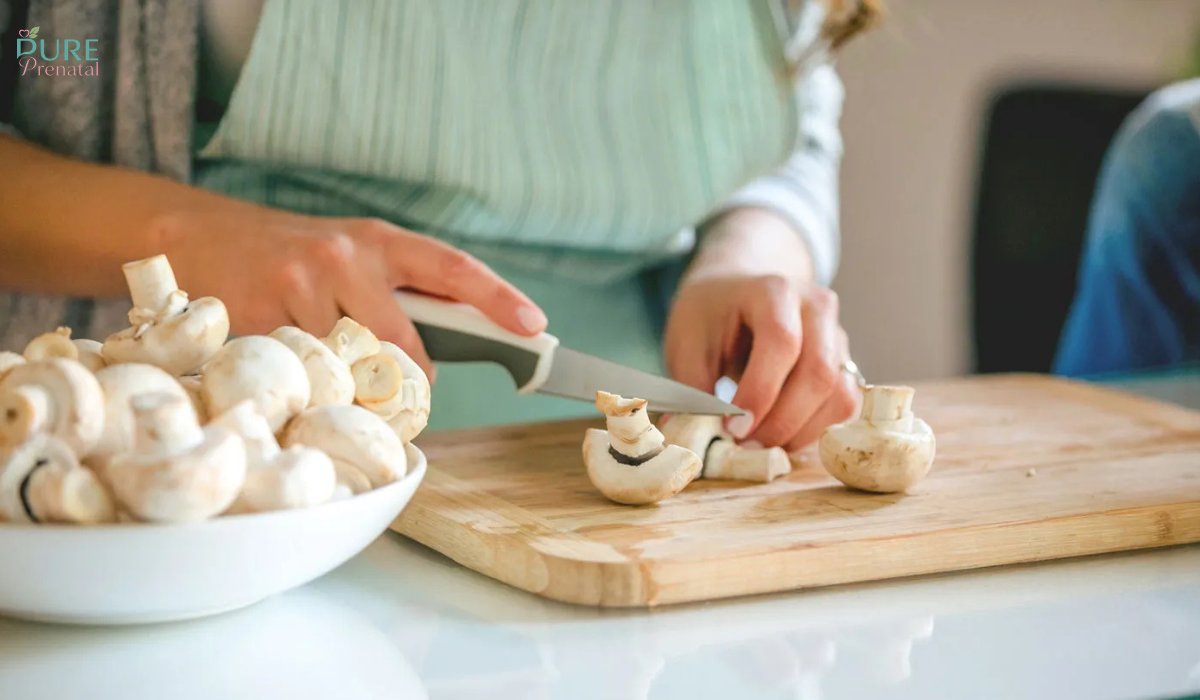
There’s a strange thing that happens once you find out you’re pregnant: foods you’ve eaten your whole life suddenly feel suspicious. Mushrooms are a classic example. You’re halfway through cooking dinner, mushrooms sizzling away in the pan, and out of nowhere you stop and think wait, am I even allowed to eat these?
Good news first: in most cases, yes. Cooked mushrooms from the supermarket button, chestnut, portobello, shiitake, and the like re a safe, genuinely useful addition to a pregnancy diet. But “mushroom” covers a lot of ground, and the answer changes depending on which kind you mean. Raw mushrooms, wild ones, medicinal supplements like lion’s mane or reishi, mushroom coffee each of these comes with its own set of considerations, and lumping them all together is where most of the online confusion starts.
Below is a proper breakdown: what’s fine, what’s worth avoiding, how much is reasonable, and why mushrooms are actually worth keeping on the menu.
So, Can You Eat Mushrooms While Pregnant?
Yes. Cooked, shop-bought mushrooms are one of the more pregnancy-friendly foods out there mild, versatile, and nutritionally useful. It doesn’t matter much whether you’re three weeks along and Googling “can I eat mushroom during pregnancy,” or nine months in and wondering whether that’s still true in the third trimester the guidance doesn’t really shift across the nine months. Thoroughly cooked culinary mushrooms are fine throughout.
Where people trip up is treating every type of mushroom as interchangeable. A punnet of button mushrooms from Tesco, a mushroom you’d spot growing wild in a hedgerow, a lion’s mane capsule from a health shop, and a psilocybin mushroom are four entirely different things. Same word, wildly different safety profiles.
What Mushrooms Actually Do for You Nutritionally
It’s easy to think of mushrooms as filler something you add to bulk out a dish without much thought. That undersells them a bit.
They’re a decent source of fibre, largely thanks to a polysaccharide called beta-glucan, which acts as a prebiotic in the gut. In plain terms, it feeds the good bacteria living in there, and a healthier gut microbiome during pregnancy tends to mean smoother digestion and better nutrient absorption genuinely useful when constipation and bloating are already unwelcome guests.
There’s also a reasonable amount of B vitamins in mushrooms, including riboflavin and niacin, which help with energy metabolism at a point when your body could use the extra support. Less well known is that mushrooms grown under UV light are one of the only plant-based sources of vitamin D, a nutrient that matters for bone development in both you and the baby. On top of that, you’re getting selenium, copper, and zinc trace minerals tied to immune function along with antioxidant compounds like ergothioneine that support overall immune activity.
One study worth mentioning followed just over a thousand pregnant women who ate roughly 100 grams of white button mushrooms daily, starting before conception and continuing to 20 weeks. The women in that group had lower rates of gestational hypertension, gestational diabetes, and preeclampsia compared with those who didn’t. It’s one study, not gospel, but it’s a reassuring data point if mushrooms are already part of your routine.
What About the First Trimester?
If you’re asking specifically about mushroom during pregnancy first trimester safety, nothing changes here cooked culinary mushrooms are fine from week one. What often does change is your appetite. A lot of women go off mushrooms entirely during early nausea, put off by the smell or the texture, and that’s completely normal. It has nothing to do with safety. If they’re not appealing right now, skip them and try again once the first-trimester fog lifts.
Which Mushrooms Are Safe to Eat While Pregnant?
The mushrooms sold in supermarkets, once properly cooked, are generally considered safe throughout pregnancy:
- White button mushrooms: The everyday variety, mild and easy to cook with
- Chestnut (cremini) mushrooms: A slightly more mature button mushroom, a bit more flavour
- Portobello mushrooms: Fully grown chestnuts, meaty enough to stand in for a burger
- Shiitake mushrooms: Earthy and savoury, common in Asian cooking
- Oyster mushrooms: Delicate, slightly higher in protein than most other types
- Wood ear mushrooms: Cften used in soups and stir-fries
- Maitake mushrooms: Sometimes sold as “hen of the woods”
- Chestnut cap or field mushrooms: Firmer and nuttier
Any of these can be eaten fairly regularly, as long as they’re properly cooked and come from somewhere reliable a supermarket, a trusted greengrocer, or a farmer’s market stall you know and trust.
Edible morel mushrooms come up a lot too, and they’re a genuinely well-regarded culinary variety. The caveat is that morels are often foraged, and foraged morels carry the same risk as any wild mushroom (more on that in a second). If you’re buying morels, get them from a proper supplier rather than someone selling them out of a bag by the roadside.
Mushrooms Worth Avoiding During Pregnancy
This is where most of the actual caution belongs.
Raw or Undercooked Mushrooms
Even the everyday, perfectly safe varieties should be cooked while you’re pregnant skip them raw. Raw mushrooms can carry trace bacteria, and cooking them properly kills that off while also making the nutrients easier for your body to absorb. If a recipe wants raw mushrooms sliced over a salad, swap in a cooked alternative instead, or leave them out for now.
Wild or Foraged Mushrooms
Foraging is having a moment, but pregnancy is not the time to get into it. The issue isn’t the mushrooms themselves it’s identification. Several toxic species look almost identical to edible ones, and getting it wrong can be genuinely dangerous. There’s also the risk of environmental contamination from soil, pollution, or pesticides. Unless you know for certain a mushroom has come from a verified, cultivated source, it’s not worth the gamble right now.
Magic Mushrooms (Psilocybin)
If you’ve landed here searching something like “magic mushrooms while pregnant,” the honest answer is that they’re not considered safe at any point during pregnancy. They’re a psychoactive substance with no established safe use in pregnancy, and beyond the direct effects disorientation, nausea, impaired coordination anything that alters your awareness puts both you and the baby at risk. If this applies to you, the best next step isn’t more googling it’s a straightforward, judgement-free conversation with your midwife or doctor.
Medicinal Mushrooms: Lion’s Mane, Reishi, Chaga, and Cordyceps
This is a genuinely different category from the mushrooms above, and it deserves its own explanation.
Medicinal mushrooms usually turn up as powders, capsules, tinctures, or coffee blends rather than whole food. They’re marketed for things like focus, immunity, stress, and energy. The concern isn’t that they’ve been shown to cause harm it’s that pregnancy-specific research on them barely exists, and a concentrated extract behaves very differently in the body than a mushroom you’ve sautéed for dinner.
Lion’s mane during pregnancy: Popular for cognitive support, and some early research in non-pregnant adults looks promising. But is lion’s mane safe during pregnancy specifically? There’s no dedicated study to say either way, so most healthcare providers suggest holding off on concentrated supplements until there’s more evidence.
Reishi and pregnancy: Reishi tends to get recommended for immunity, sleep, and stress relief. It also has mild blood-thinning properties, which matters as you get closer to delivery. Between the lack of pregnancy data and the clotting consideration, most guidance points towards avoiding reishi supplements while pregnant.
Chaga during pregnancy: Chaga is mostly valued for its antioxidant content. As with the others, there’s simply not enough pregnancy-specific research to give it a confident green light, so the same caution applies.
Cordyceps and pregnancy: Usually taken for energy and stamina, cordyceps sits in exactly the same boat no meaningful safety data for pregnancy, so better to wait.
The pattern across all four is the same: it’s not that anything’s been flagged as dangerous, it’s that nobody’s really studied it in pregnant women. Most obstetricians take the cautious route and suggest getting your mushroom nutrition from the whole, cooked culinary varieties instead, and leaving the supplements for later.
Is Mushroom Coffee Safe During Pregnancy?
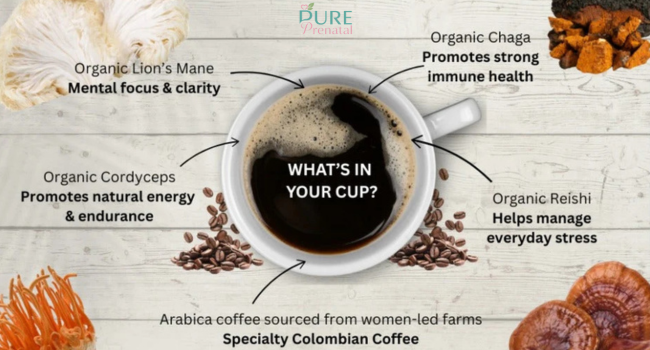
Mushroom coffee — regular coffee blended with mushroom powders like reishi, chaga, lion’s mane, or cordyceps — has picked up a lot of popularity lately. There are really two separate things to think about here: the caffeine, and the mushrooms.
Caffeine-wise, most mushroom coffee blends contain noticeably less than a standard cup sometimes as little as a third. Pregnancy guidelines generally recommend staying under 200mg of caffeine a day, so an occasional cup should sit well within that.
The mushroom side is where the same caution from earlier applies. Because these blends usually contain concentrated extracts rather than whole mushrooms, it’s the lack of pregnancy research that’s the sticking point, not the caffeine content. If you enjoy it and want to keep drinking it, it’s worth checking exactly which mushrooms are in the blend and mentioning it to your midwife, particularly if you’re having it daily.
What About Breastfeeding?
Once the baby’s here, much the same logic applies. Cooked culinary mushrooms are considered safe and nutritious while breastfeeding, offering the same fibre and B vitamin benefits as during pregnancy. Medicinal mushrooms and mushroom coffee stay in the “not enough research yet” category, so it’s still worth a quick check with your provider if you’re using them regularly.
Preparing and Cooking Mushrooms Safely
A handful of habits make a real difference:
- Buy from somewhere you trust. Supermarkets, decent greengrocers, and known farmer’s market stalls are all fine. Skip anything of unclear origin.
- Check they’re firm. Avoid anything slimy, discoloured, or visibly bruised.
- Keep them refrigerated and use them within a few days of buying.
- Give them a quick rinse or wipe before cooking.
- Cook them properly sautéed, roasted, grilled, or simmered until soft, never raw or barely warmed through.
As for how to actually use them: stirred into an omelette, added to a soup or stew, roasted with other vegetables for a grain bowl, blended finely into mince for extra moisture in burgers, or grilled and piled onto a sandwich. There’s no shortage of ways to work them in.
Fresh, Dried, or Canned Does It Matter?
Fresh mushrooms tend to get all the attention, but dried and tinned varieties are worth a mention too. Dried mushrooms shiitake and porcini are common ones are perfectly fine during pregnancy once rehydrated and cooked through; the drying process doesn’t introduce any pregnancy-specific risk, it’s just concentrated flavour. Tinned or jarred mushrooms are also fine, though they tend to be higher in sodium, so it’s worth keeping an eye on that if you’re already watching your salt intake. The one thing to skip either way is anything that looks or smells off a slimy texture or sour smell is a sign to bin it rather than risk it, pregnant or not.
A Quick Word on Mushroom Allergies
Mushroom allergies aren’t especially common, but they do exist, and pregnancy is not the time to test your luck with a food you’ve never tried before. If you’ve eaten mushrooms regularly before pregnancy without any issues, there’s no reason to stop now. But if mushrooms are new to you, it’s sensible to start with a small amount and see how you feel, the same way you might introduce any new food. Symptoms of a genuine allergy — itching, swelling, difficulty breathing — need urgent medical attention regardless of whether you’re pregnant, so don’t wait it out if something feels seriously wrong.
How Many Mushrooms Is Safe During Pregnancy?
There’s no hard ceiling here. Cooked culinary mushrooms can be part of your regular diet without needing to count portions carefully — the study mentioned earlier used around 100 grams a day (a bit over half a cup, cooked), which is a fair benchmark if you want one. Beyond that, the usual pregnancy nutrition advice applies: variety matters more than precision.
The Bottom Line
Cooked, shop-bought mushrooms — button, chestnut, portobello, shiitake, oyster, and similar — are safe and nutritious throughout pregnancy, first trimester through to delivery. What’s worth avoiding is raw or undercooked mushrooms, wild or foraged ones you can’t verify, and psilocybin mushrooms. Medicinal mushroom supplements and extracts — lion’s mane, reishi, chaga, cordyceps — along with mushroom coffee containing them, sit in a more cautious middle ground simply because the research hasn’t caught up yet.
If you’re ever unsure about a specific product, the answer is the same one you’d get for almost any pregnancy question: ask your midwife or doctor directly, especially if you’re managing another health condition or taking medication.
Frequently Asked Questions
Can I eat mushrooms every day during pregnancy?
Yes — cooked varieties like button, chestnut, and shiitake can be eaten daily as part of a varied diet. Around 100 grams a day is a reasonable amount, based on the research mentioned above.
Are mushrooms safe in the first trimester?
They are. Cooked culinary mushrooms are fine throughout every trimester. If nausea puts you off them early on, there’s no need to force it — just reintroduce them once your appetite comes back.
Can pregnant women eat raw mushrooms?
Better not to. Raw or undercooked mushrooms carry a small risk of bacterial contamination, so cook them thoroughly first.
Are wild mushrooms safe to eat while pregnant?
No — steer clear. Misidentifying a wild mushroom can be genuinely dangerous, since some toxic species look almost identical to edible ones. Stick to mushrooms from a source you trust.
Is lion’s mane safe during pregnancy?
There isn’t enough dedicated research to say for certain, so most providers recommend holding off on concentrated supplements and checking with your doctor first.
Is reishi mushroom safe during pregnancy?
Probably best avoided. Reishi has mild blood-thinning properties and hasn’t been studied specifically in pregnancy, so most guidance leans towards caution, especially near your due date.
Can I drink mushroom coffee while pregnant?
An occasional cup is likely fine caffeine-wise, since most blends have less caffeine than regular coffee. The bigger question is the medicinal mushroom content — worth a chat with your midwife if you’re drinking it regularly.
What happens if I’ve already eaten mushrooms I probably shouldn’t have?
A single small serving of a culinary mushroom is unlikely to cause any harm. If it involved a wild mushroom, a supplement, or anything psychoactive, it’s worth contacting your healthcare provider rather than waiting it out.
Are mushrooms actually good for pregnancy nutrition?
Yes — they offer fibre, B vitamins, vitamin D in UV-exposed varieties, selenium, and antioxidants, all of which support a healthy pregnancy diet.
Can I eat mushrooms while breastfeeding?
Yes, cooked culinary mushrooms are considered safe while breastfeeding. As during pregnancy, it’s worth checking with your provider before using concentrated medicinal mushroom supplements.
Are dried or tinned mushrooms safe during pregnancy?
Both are fine once properly cooked or rehydrated. Tinned varieties tend to be higher in salt, so that’s worth factoring in if you eat them often, but there’s no pregnancy-specific risk beyond that.
Can I eat mushrooms if I’ve never eaten them before I got pregnant?
Generally yes, but it’s worth introducing any brand-new food gradually and in a small amount, the same way you would outside of pregnancy, just to rule out an allergy before making it a regular part of your meals.

Dr. Tania Adib is a Board Certified OB/GYN based in the northern suburbs of Chicago. She earned her undergraduate degree from the University of Notre Dame and her medical degree from Georgetown University in Washington, D.C., before completing her residency in Obstetrics and Gynecology at Magee-Womens Hospital, University of Pittsburgh Medical Center. Her clinical interests include full-spectrum obstetrics and gynecology, from the first period through the menopausal years, contraception, and abnormal bleeding.