

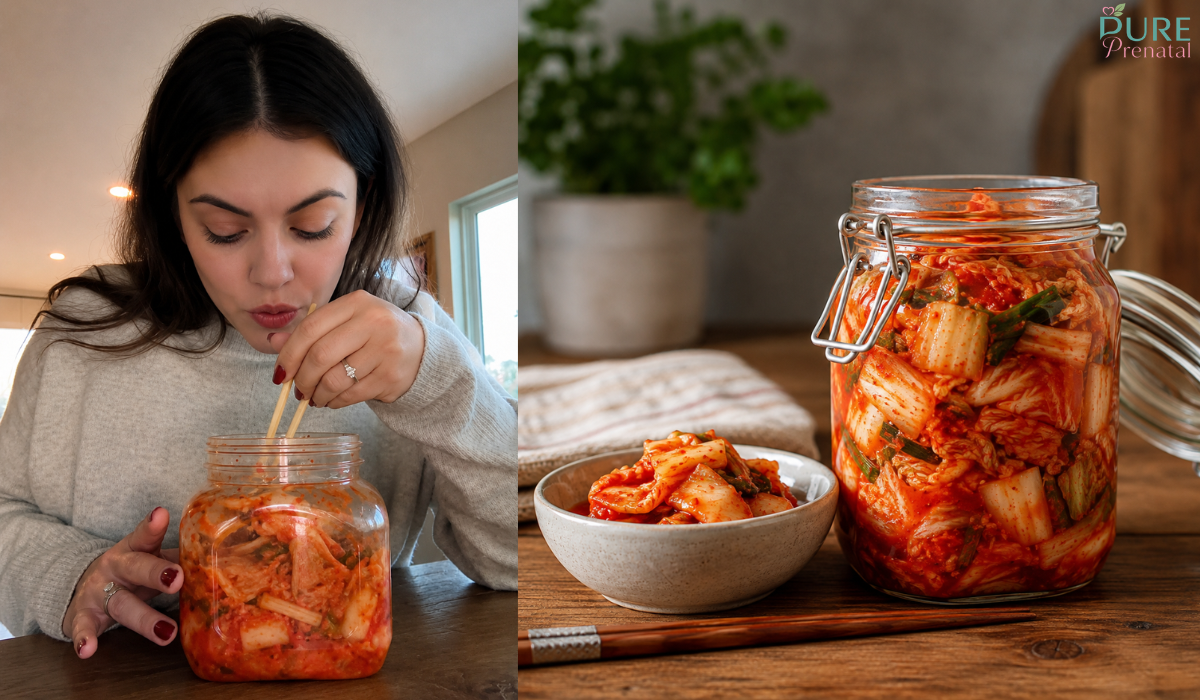
Jar of kimchi in the fridge. A craving that won’t quit. And that little voice asking, can you eat kimchi while pregnant? Sound familiar? Kimchi’s everywhere these days, it’s on menus, it’s in every grocery store, so of course pregnant women start second-guessing it. Short answer: kimchi is generally fine during pregnancy. The longer answer is really about how it’s made, what’s actually in the jar, and how much you’re piling onto your plate. Let’s break it down properly.
What Is Kimchi, Really?
Salted cabbage, mostly. Or radish. Left to sit and ferment with garlic, ginger, chili flakes, spring onion. Some recipes throw in fish sauce or salted shrimp for extra punch. As it ferments, bacteria that occur naturally on the vegetables start breaking down sugars, and that’s what produces the lactic acid behind kimchi’s sour bite.
That puts it in the same category as sauerkraut, miso, kefir, yogurt. Fermented stuff. And that’s probably why it gets side-eyed during pregnancy in the first place, fermented foods have a reputation, some of it fair, a lot of it just leftover caution nobody’s questioned.
Is Kimchi Actually Safe During Pregnancy?
For most healthy pregnancies? Yes. Kimchi that’s been properly fermented and stored is considered safe. Here’s the twist though: fermentation is working for you here, not against you. As the vegetables ferment, things get more acidic, and that acidity is a rough environment for bacteria like listeria, which is really the main thing pregnant women get warned about with unpasteurized or mishandled food.
Doesn’t mean every jar automatically gets a pass. A few things change the equation:
- How it was made. Commercial kimchi from a real brand is usually fermented under way more controlled, hygienic conditions than a jar someone whipped up at home without much thought.
- What’s in it. Some recipes use raw seafood, salted shrimp especially, or fish sauce. Worth checking if you’re already avoiding raw seafood.
- How it’s been stored. Left out on the counter for hours versus kept properly refrigerated, that’s a completely different risk.
- Your own health picture. Blood pressure problems, gestational diabetes, that kind of thing can change how much kimchi actually makes sense for you specifically.
So “is it safe to eat kimchi while pregnant” boils down to: generally, yes, use some common sense.
Why Do Fermented Foods Get This Much Side-Eye in Pregnancy?
Pregnancy diets already come with a huge list of stuff to avoid, so fermented foods getting lumped into that same worried category isn’t surprising. But the actual concern traces back to a few specific things, not fermentation itself.
Unpasteurized dairy, certain soft cheeses, those carry a real listeria risk. Somewhere along the way that caution got smeared across anything labeled “fermented,” kimchi included, even though vegetable ferments don’t carry the same risk at all. Homemade batches also vary a lot, hygiene-wise, compared to what a regulated kitchen puts out. And then there’s sodium. Fermented vegetable dishes tend to be salty, kimchi very much included, and that’s a fair thing to watch if blood pressure is already a concern.
Worth remembering: vegetable ferments don’t behave like unpasteurized dairy. The acidity that builds up while kimchi ferments is one of its built-in safety features. Not a red flag.
What Kimchi Actually Does Nutritionally
Eaten in sensible amounts, kimchi isn’t just harmless, it can genuinely add something.
Probiotics, for one. Fermentation produces beneficial bacteria, mostly Lactobacillus strains, and those support gut health. A healthier gut has been tied to better digestion, and some research points to a role in immune function too. Both useful things to have going for you right now.
Then there’s the vitamin side. Napa cabbage and radish carry vitamin C, vitamin K, folate, plus a bunch of antioxidant compounds. Folate especially, that’s already on every pregnant woman’s radar.
Fiber too, from the vegetable base, which can genuinely help with constipation, something a lot of women deal with throughout pregnancy.
And it’s low calorie for how much flavor it packs in. If you’re watching weight gain or blood sugar, that’s a plus.
Is kimchi good for pregnancy, nutritionally speaking? For most women, yeah. It’s a solid addition to a varied diet, not something to avoid out of habit.
Where the Real Risks Actually Sit
“Generally safe” doesn’t mean zero thought required. A handful of things are worth actually paying attention to.
Raw seafood. Some traditional recipes call for salted shrimp or fish sauce, raw or fermented seafood essentially. If you’re already steering clear of raw seafood, check the label, especially with homemade or small-batch kimchi where recipes aren’t standardized at all. Most big commercial brands use small amounts that go through their own fermentation process. Seafood-free and vegan kimchi exists too, if you’d rather skip the question entirely.
Sodium. Salt is baked into how kimchi is made. It adds up faster than people expect. If you’re watching blood pressure, dealing with preeclampsia risk, or told to cut sodium, keep portions modest instead of cutting kimchi out completely.
Spice, and the heartburn that comes with it. Most kimchi brings some heat, and pregnancy tends to bring heartburn along too, especially second and third trimester. If spicy food already bothers you, that’s not going to magically change.
Histamines. Fermented foods naturally contain them, and not everyone’s gut handles them the same. Bloated or gassy after kimchi? Might just be your gut reacting differently right now, which happens a lot in pregnancy, even with foods you’ve always tolerated fine before.
Storage, honestly, is the biggest one. It’s not kimchi itself that’s risky, it’s how it was handled. Left out too long, made with vegetables that weren’t washed well, prepared somewhere less than clean, that’s where the real risk of bacterial growth comes from. Pregnant or not.
What About the First Trimester Specifically?
This question comes up a lot, probably because first trimester is exactly when nausea and food aversions and general worry are all peaking at once. But there’s no special rule that kicks in here. Same guidance the whole way through: pick kimchi that’s been properly fermented and stored, pay attention to how your body actually reacts.
Funny thing is, some women find the sour tang of kimchi actually calms mild nausea, kind of like pickles or citrus do for some people. Others find spice makes morning sickness worse. No way to predict which camp you’ll land in, so just go with what your own body tells you.
How to Eat It Without Overthinking Every Bite
If you want to keep kimchi around, here’s how to do it without stressing every time you open the jar.
Stick with a reputable, store-bought brand when you can. Commercial kimchi tends to come from far more consistent conditions than a random homemade jar.
Check the ingredients if raw seafood worries you. Vegan and fish-sauce-free versions are easy to find now.
Fridge, not counter. Refrigeration keeps fermentation stable and slows down anything you don’t want growing.
Treat it like a side dish, not the main event, especially if sodium’s a concern. A couple of forkfuls does the flavor job without loading up on salt.
New to kimchi? Start small. See how your gut handles it before making it a daily thing.
Cooking it in helps too, kimchi fried rice, kimchi stew, stirred into soup. Mellows the spice and the sodium per bite, and some women find the brief cooking step reassuring on its own.
Making your own? Be deliberate about it. Clean equipment, well-washed vegetables, a fermentation process you’ve actually tested rather than winged.
Where Kimchi Sits Among Other Fermented Foods
Zoom out and kimchi isn’t really special here. Yogurt, kefir, miso, tempeh, sauerkraut, they all get treated roughly the same in pregnancy: fine when made and stored properly, useful for probiotics, and only a real concern around unpasteurized dairy or sketchy homemade batches. If you’re already eating yogurt or sauerkraut without thinking twice, there’s no real reason kimchi should sit differently in your head.
When It’s Worth Mentioning to Your Doctor
Kimchi doesn’t need a permission slip most of the time. But it’s still worth bringing up at a prenatal visit if any of this applies to you:
- History of high blood pressure or preeclampsia
- Managing gestational diabetes or watching blood sugar closely
- Sensitive digestion, or something like IBS
- Known reaction to fermented or histamine-heavy foods
A doctor who actually knows your history will always beat general advice from an article. This one included.
Frequently Asked Questions
Is it okay to eat kimchi while pregnant? For most healthy pregnancies, yes. Fermentation makes it more acidic, which is bad news for harmful bacteria, and in reasonable amounts it can add real value to a pregnancy diet.
Can pregnant women eat kimchi every day? Probably don’t need to rule it out, but watch the portions. It’s salty, so a small regular amount makes more sense than a huge serving every night, especially with blood pressure already something to watch.
Is kimchi safe for pregnant women with gestational diabetes? Mostly, yes. Low in sugar and carbs, so it doesn’t spike blood sugar the way a lot of sides do. Still worth checking with your doctor or dietitian for numbers specific to you.
Can I eat spicy kimchi while pregnant, or should I go mild? Either’s fine safety-wise. Comes down to your own tolerance and whether heartburn’s already an issue this pregnancy.
Is homemade kimchi safe during pregnancy? Can be, sure. Comes down to how it’s made, not the fact it’s homemade. Clean hands, clean equipment, well-washed vegetables, a fermentation process that’s actually been tested rather than eyeballed.
Does kimchi contain alcohol from fermentation? Not in any way that matters. It’s producing lactic acid, not alcohol. Not something to worry about here.
Can eating kimchi during pregnancy help with morning sickness? For some women, yes, that sour tang settles a queasy stomach, similar to pickles or lemon. For others, the spice makes things worse. No real way to know in advance, just pay attention to how you actually feel.
Is kimchi good for pregnant women who are constipated? Can help, honestly. Fiber from the vegetables plus the probiotic effect, kimchi’s one of the more useful foods for keeping things moving, which is a pretty common complaint throughout pregnancy.
Should I avoid kimchi with fish sauce or shrimp paste while pregnant? Not necessarily. But if you’d rather not think about it, seafood-free or vegan kimchi is widely available and takes the whole question off the table.

Dr. Tania Adib is a Board Certified OB/GYN based in the northern suburbs of Chicago. She earned her undergraduate degree from the University of Notre Dame and her medical degree from Georgetown University in Washington, D.C., before completing her residency in Obstetrics and Gynecology at Magee-Womens Hospital, University of Pittsburgh Medical Center. Her clinical interests include full-spectrum obstetrics and gynecology, from the first period through the menopausal years, contraception, and abnormal bleeding.