

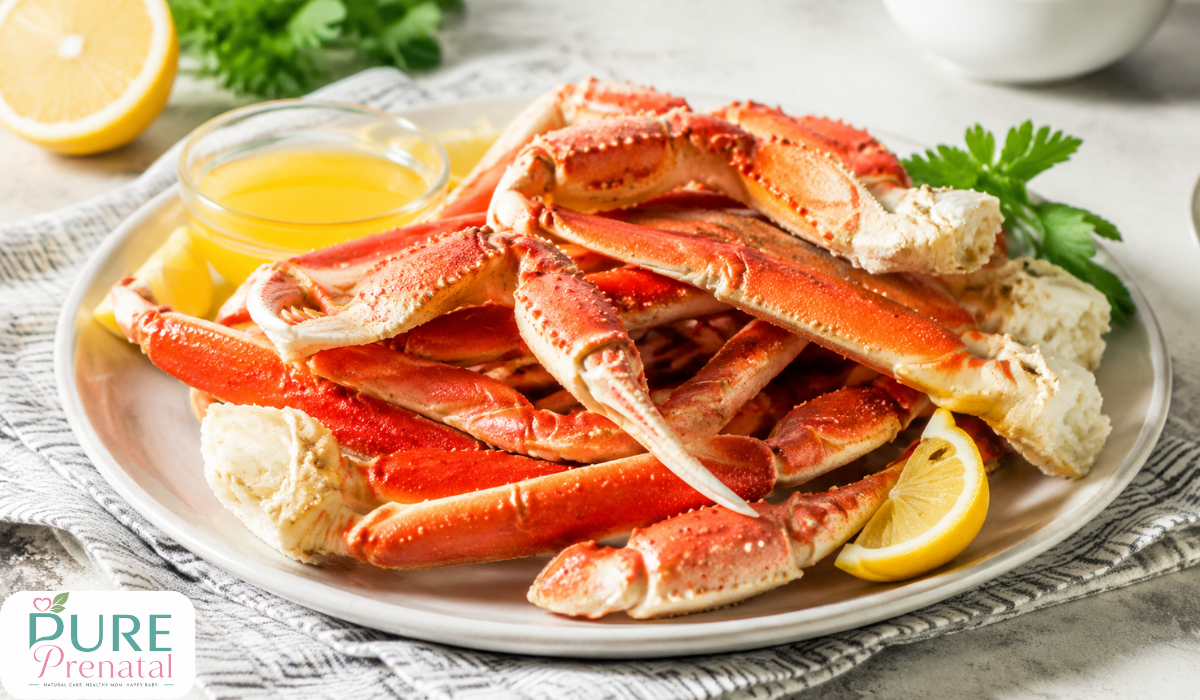
There’s something oddly divisive about crab. Ask around and you’ll find people who save it for special occasions — a proper platter of legs and claws with melted butter and people who barely think about it, because to them “crab” just means the pink sticks in a supermarket sandwich. If you’re pregnant, both versions probably feel like they deserve a second look before you tuck in.
So, can you actually eat crab while pregnant? Yes, for the most part you can. But it helps to understand what you’re eating first, because real crab and imitation crab aren’t the same thing at all, and the safety advice for each is slightly different. This guide covers both, plus the mercury question everyone worries about, how to handle crab safely at home, and what to watch for if you’re ordering it out.
Real Crab and Crab Sticks Are Not the Same Food
This trips a lot of people up. Someone sees “crab sticks” on a sandwich label or notices imitation crab in a sushi roll and assumes it’s some kind of processed, artificial filler they should probably avoid while pregnant. It’s an understandable assumption — the name doesn’t do it any favours but it isn’t accurate.
Crab sticks are made from surimi, which is simply white fish, usually Alaskan pollock, minced into a paste. That paste gets rinsed a few times to strip out fat and any strong fishy smell, then mixed with a bit of starch, egg white and crab flavouring, before being shaped and cooked. It’s not chemical trickery. It’s fish that’s been processed to look and taste like something else.
The bit that matters for pregnancy is this: because surimi goes through heat during manufacturing, crab sticks are already fully cooked when you buy them. You’re not relying on anyone to cook them properly later they’re safe straight out of the packet.
Real crab is a different story, in a good way. Species like brown crab, spider crab and blue crab are crustaceans, not fish, and they live on the seabed scavenging for food. Because they don’t live especially long and aren’t high up the food chain, they don’t build up much mercury in their flesh which brings us to the question most pregnant women actually want answered.
Is Crab Safe During Pregnancy? (Yes, Here’s the Mercury Bit)
Mercury is usually the reason someone hesitates over seafood while pregnant, and it’s a fair concern in general but crab isn’t really where that concern applies. NHS advice on fish during pregnancy singles out shark, swordfish and marlin as fish to avoid because of their mercury levels. Crab doesn’t come up on that list, and for good reason.
To give you a sense of scale, here’s roughly how it compares:
| Seafood | Mercury Level | Pregnancy Advice |
|---|---|---|
| Brown or blue crab | Low | Fine, cooked |
| Spider crab | Low | Fine, cooked |
| Crab sticks | Very low | Fine |
| Marlin | High | Avoid |
| Swordfish | High | Avoid |
| Shark | High | Avoid |
You’d have to eat a genuinely impractical amount of crab to get anywhere close to the mercury levels in a single portion of swordfish. It’s just not the same category of risk.
What Actually Matters More Than Mercury
If mercury isn’t the real concern, what is? Cooking, mostly. Raw or undercooked shellfish can carry bacteria that cause food poisoning, and pregnancy makes you more vulnerable to that kind of thing than usual. So the rule with crab is fairly simple: cooked, yes; raw, no.
Steamed or boiled crab, crab legs, dressed crab, crab cakes cooked through — all fine. Raw crab, which does turn up occasionally in some sushi styles, isn’t worth the risk.
There’s also a smaller, easily overlooked risk around cross-contamination, particularly at sushi counters. If the same board or knife used for raw salmon ends up touching your crab stick roll, there’s a small chance of picking up bacteria even though the crab stick itself was already cooked. It’s a perfectly normal thing to ask about — most places dealing with pregnant customers are used to the question and won’t think twice about it.
What About Crab Legs, Dressed Crab and Seafood Platters?
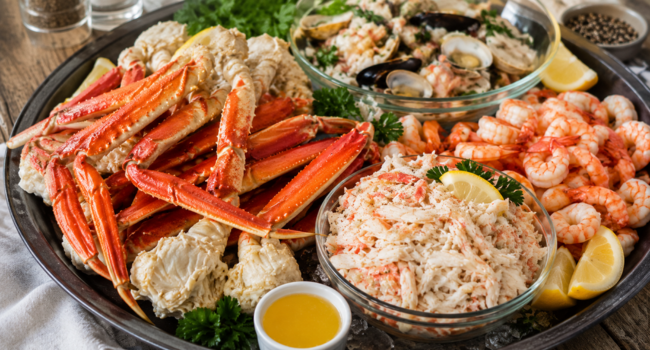
Crab legs are about as low-fuss as it gets — steamed, boiled, fully cooked, and a decent hit of protein without much else to think about.
Dressed crab picked up from a fish counter is fine too, as long as it’s properly chilled and eaten within its use-by window. Don’t let it sit out on the side while you finish cooking everything else.
Seafood platters are where it gets slightly more complicated, not because of the crab itself, but because platters usually mix several types of shellfish together. If you’ve got any kind of shellfish sensitivity, that mixing is worth bearing in mind regardless of how well the crab was handled.
Crab stick sushi, like a basic California-style roll, tends to be one of the easier sushi choices during pregnancy precisely because the filling is already cooked.
Why It’s Actually Worth Eating
It’s easy to focus purely on what’s “allowed” and forget that crab is genuinely good for you during pregnancy, not just tolerated.
Zinc is one of the bigger reasons. It plays a role in cell division, which matters a lot when a baby is growing as fast as they do in the womb, and crab is one of the better sources of it. Vitamin B12 is another — a single serving can easily cover what you need for the day, and it’s important for your baby’s developing nervous system and red blood cells. Then there’s selenium, which acts as an antioxidant and supports thyroid function, something that’s working harder than usual throughout pregnancy anyway.
There’s also a small but interesting link with iodine. If you’ve noticed yourself craving something salty, that’s sometimes tied to your thyroid working overtime, since it depends on iodine. Crab is a natural source of it, so reaching for crab instead of crisps isn’t just a healthier swap — it might actually be answering the craving more directly.
Trimester by Trimester
Early on, when nausea is at its worst, heavy or buttery crab dishes can be a hard sell. A cold crab stick sandwich tends to go down easier — mild smell, light texture, nothing overwhelming.
By the second trimester, appetite usually picks back up, and this happens to line up with a major growth phase for the baby. Real crab, especially something like a good dressed crab or a plate of crab legs, gives you the protein and zinc that growth spurt needs.
Later on, heartburn tends to creep in, and rich butter-based dips are a common trigger. A squeeze of lemon over your crab does the same flavour job without setting off reflux.
Not All Crab Sticks Are Equal
Worth knowing: cheaper crab stick brands often lean harder on starch and stabilisers, while the better ones use a higher proportion of actual pollock. Look for the blue MSC label if sustainability matters to you — it’s a decent shorthand for “responsibly sourced.”
For what it’s worth, the higher-quality versions also tend to sit better if you’ve got a sensitive stomach, since they usually contain less sorbitol, a sugar alcohol some brands use as a stabiliser that can cause bloating in larger amounts.
Checking the ingredients list takes ten seconds and tells you a lot. If “Alaska pollock” or “whitefish” is near the top, you’re getting a decent product. If it’s buried under a list of starches and flavourings, you’re probably not.
A Word on Shellfish Allergies
Being pregnant doesn’t change an existing shellfish allergy — if you already know you react to crab or shellfish generally, that hasn’t gone away, and crab sticks aren’t necessarily a safe workaround either, since surimi is often processed alongside real shellfish and can carry cross-contact risk.
If you’ve simply never tried crab and happen to be pregnant now, there’s no particular reason to hold off, though plenty of women prefer to ease into new foods during pregnancy just to be cautious. A small first portion, then keeping an eye out for anything unusual itching, swelling, an upset stomach is a sensible way to go about it.
Keeping It Safe at Home
If you’re buying and cooking crab yourself, keep it in the fridge at 4°C or below and use fresh crab within a day or two. When reheating anything pre-cooked, make sure it’s piping hot all the way through rather than just warmed. Leftovers should go into the fridge within two hours of cooking and get eaten within a few days and if you’re ever unsure how long something’s been sitting out, it’s not worth the gamble. That’s true of most food during pregnancy, not just crab.
Fresh crab, wherever you buy it, should smell clean and faintly of the sea, never sharp or sour. If it doesn’t smell right, don’t second-guess yourself; leave it.
A Quick Word on Shellfish Generally
Crab often gets tangled up with broader worries about shellfish during pregnancy, so it’s worth untangling the two. Raw oysters, undercooked mussels, that sort of thing that’s where the real caution belongs, because those are more commonly eaten raw or barely cooked. Crab, on the other hand, is almost always sold and served fully cooked, which puts it in a different category entirely. The advice to avoid raw shellfish isn’t really about crab specifically; it just happens to get swept up in the same general warning because it’s shellfish too.
This is a small distinction, but it matters when you’re standing in the supermarket trying to decide what’s safe and what isn’t. Not every seafood warning applies equally to every type of seafood, and lumping crab in with raw oysters just because they’re both “shellfish” isn’t especially helpful.
Where to Actually Buy Good Crab
If you fancy the real thing rather than crab sticks, you don’t have to go far. Most supermarket fish counters carry dressed crab or whole cooked crab, and it’s usually decent quality if you catch it fresh in. Coastal spots do it better, unsurprisingly Cromer on the Norfolk coast and Whitstable in Kent are both well known for crab, and if you happen to be near either, it’s worth picking some up direct from a fishmonger rather than settling for the supermarket version.
Whichever you go for, trust your nose over anything else. Good crab smells faintly of the sea and not much else. If it smells sharp, sour, or overly “fishy,” that’s your answer leave it on the shelf, no matter how good the price looks.
The Bottom Line
Crab, real or imitation, tends to get lumped in with all the seafood advice pregnant women hear and worry about, when actually it’s one of the more straightforward choices. It’s naturally low in mercury, it isn’t on the NHS’s list of fish to avoid, and it brings genuinely useful nutrients to the table. Crab sticks, despite the name putting people off, are just cooked white fish shaped to look like the real thing.
Cook it properly, be a little careful about cross-contamination when eating out, don’t go overboard on the buttery versions, and factor in any allergies you already know about. Beyond that, there’s no real reason to avoid crab during pregnancy it can just be dinner, the same as it was before you were expecting.
Frequently Asked Questions
Can you eat imitation crab while pregnant?
Yes. Crab sticks are made from cooked white fish, usually pollock, and are fully cooked during manufacturing safe during pregnancy, hot or cold.
Is imitation crab safe to eat during pregnancy in sushi?
Generally yes, since the surimi filling is already cooked. It’s worth asking about cross-contamination with raw fish if you want to be extra careful.
Is crab safe during pregnancy overall?
Yes. Crab is low in mercury and isn’t on the NHS list of fish to avoid, unlike shark, swordfish and marlin.
Can pregnant women eat crab legs?
Yes, as long as they’ve been properly steamed or boiled, which is the standard way they’re sold.
Does imitation crab have mercury?
Barely any. It’s made from pollock, a naturally low-mercury fish.
Can I eat a seafood platter while pregnant?
Yes, provided everything’s fully cooked. The main thing to think about is cross-contact between different shellfish if you have an allergy.
Can pregnant women eat dressed crab or crab cakes?
Yes, as long as they’re properly cooked and, if bought chilled, eaten within their use-by date.
Is real crab or crab sticks better during pregnancy?
Both are safe. Real crab has more protein and zinc; crab sticks are milder and often easier to manage if you’re feeling nauseous.
Can blue crab be eaten during pregnancy?
Yes, it’s in the same low-mercury category as brown and spider crab.

Dr. Tania Adib is a Board Certified OB/GYN based in the northern suburbs of Chicago. She earned her undergraduate degree from the University of Notre Dame and her medical degree from Georgetown University in Washington, D.C., before completing her residency in Obstetrics and Gynecology at Magee-Womens Hospital, University of Pittsburgh Medical Center. Her clinical interests include full-spectrum obstetrics and gynecology, from the first period through the menopausal years, contraception, and abnormal bleeding.