

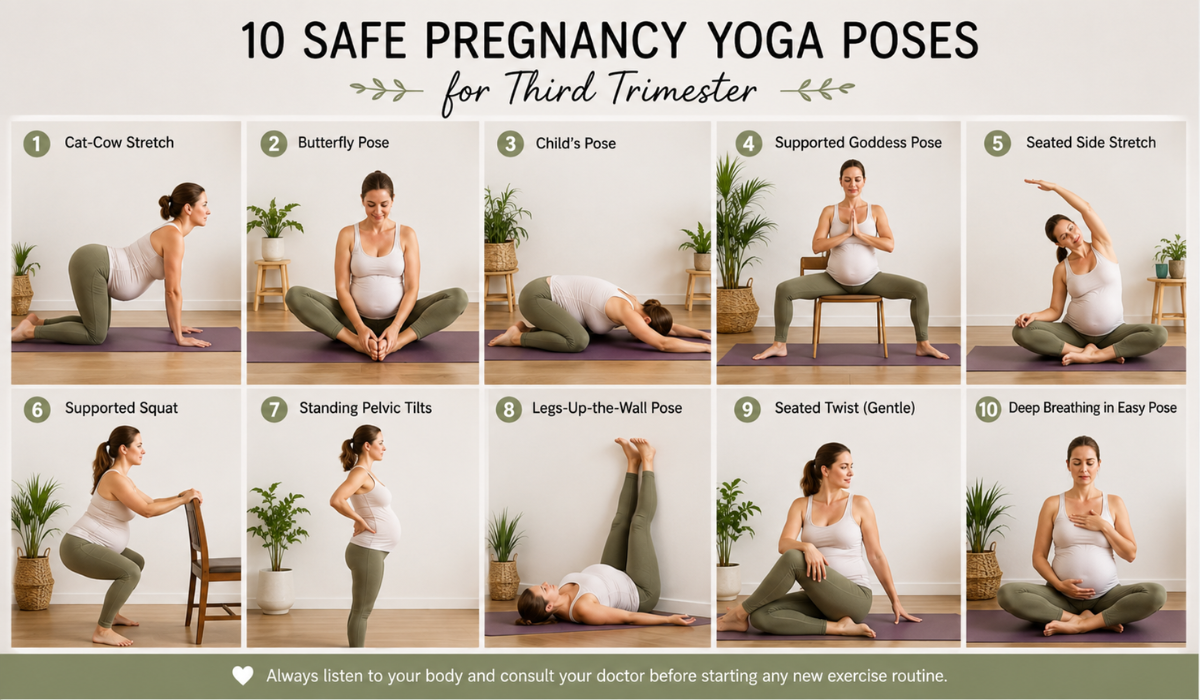
As your pregnancy enters the third trimester, your body is working harder than ever to support your growing baby. You may notice increased back pain, swollen feet, tight hips, poor sleep, or simply feel less comfortable moving around than before. Gentle movement can make a significant difference during these final weeks, and pregnancy yoga poses for the third trimester are one of the safest ways to stay active.
Prenatal yoga combines gentle stretching, breathing exercises, relaxation, and balance work designed specifically for pregnancy. Unlike traditional yoga, it focuses on movements that accommodate your changing body while helping prepare your muscles and mind for labour.
It is not the purpose to get more flexible or do hard positions. It’s about comfort, relieving the usual discomforts of pregnancy, improving your posture and making you feel more confident as your due date near.
Doctor-reviewed note: Every pregnancy is different. If you have placenta previa, preeclampsia, signs of preterm labour, heavy bleeding, or your healthcare provider has advised against exercise, speak with your midwife or obstetrician before beginning prenatal yoga.
Why Practice Prenatal Yoga in the Third Trimester?
During the third trimester, your centre of gravity shifts as your baby grows. Hormonal changes also loosen your ligaments, making joints less stable. Gentle prenatal yoga helps your body adapt safely to these changes.
Regular third trimester yoga may help:
- Relieve lower back pain
- Reduce hip and pelvic tightness
- Improve posture
- Ease swelling in the legs and ankles
- Encourage healthy circulation
- Reduce pregnancy-related stress
- Improve sleep quality
- Strengthen muscles used during labour
- Increase body awareness and breathing control
Many women also find that yoga provides valuable time to slow down, connect with their baby, and prepare mentally for childbirth.
Is Yoga Safe During the Third Trimester?
For most healthy pregnancies, yes. The key is choosing safe pregnancy yoga poses that avoid excessive strain or loss of balance.
General safety guidelines include:
- Move slowly between positions.
- Avoid lying flat on your back for long periods.
- Skip deep twists and intense backbends.
- Use blocks, cushions, or a chair for support.
- Stay hydrated.
- Never stretch until it hurts.
- Stop immediately if you feel dizzy, short of breath, or experience contractions, bleeding, or leaking fluid.
Remember, pregnancy yoga is about comfort—not pushing your limits.
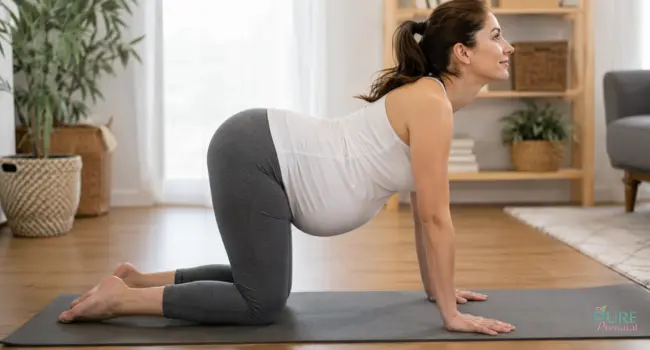
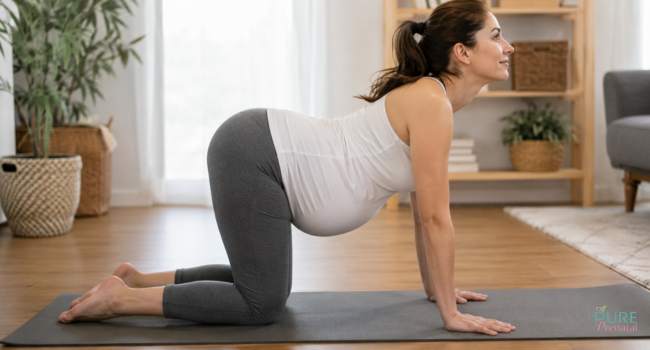
1. Cat-Cow Stretch
Benefits
Cat-Cow is one of the safest prenatal yoga poses because it gently mobilises the spine without putting pressure on your abdomen.
It helps:
- Reduce lower back pain
- Relieve pelvic pressure
- Improve spinal flexibility
- Encourage your baby into an optimal position
How to Do It
- Start on hands and knees.
- Keep wrists below shoulders.
- Knees should be hip-width apart.
- Inhale while lifting your head and tailbone.
- Exhale while gently rounding your back.
- Repeat slowly for 8–10 breaths.
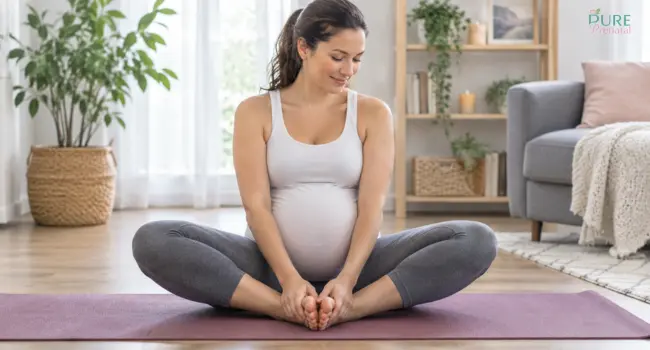
2. Butterfly Pose (Bound Angle Pose)
Benefits
As your due date approaches, your hips naturally prepare for birth. Butterfly Pose gently opens the hips without forcing them.
Benefits include:
- Improved hip flexibility
- Reduced inner thigh tightness
- Better posture
- Relaxation of pelvic muscles
How to Practice
- Sit comfortably.
- Bring the soles of your feet together.
- Allow knees to fall outward naturally.
- Sit tall without forcing your knees down.
- Hold for 30–60 seconds while breathing slowly.
3. Child’s Pose (Wide-Knee Variation)
Traditional Child’s Pose may become uncomfortable later in pregnancy, but widening the knees creates room for your bump.
Benefits
- Relieves lower back tension
- Stretches hips gently
- Encourages relaxation
- Reduces shoulder stiffness
Instructions
- Kneel on a mat.
- Separate knees comfortably.
- Bring your big toes together if comfortable.
- Lower your chest between your knees.
- Rest your forehead on a cushion or yoga block.
Hold for 30–60 seconds.
4. Supported Goddess Pose
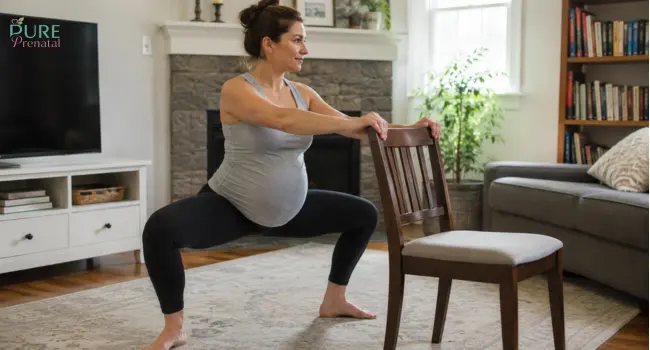
This standing pose strengthens your legs while gently opening your hips.
Benefits
- Strengthens thighs
- Improves circulation
- Builds endurance
- Encourages pelvic mobility
Steps
- Stand with feet wider than shoulder-width.
- Turn toes slightly outward.
- Hold onto a chair if needed.
- Bend knees gently.
- Lower only halfway.
- Hold for a few breaths before standing.
Avoid squatting deeply if it feels uncomfortable.
5. Seated Side Stretch
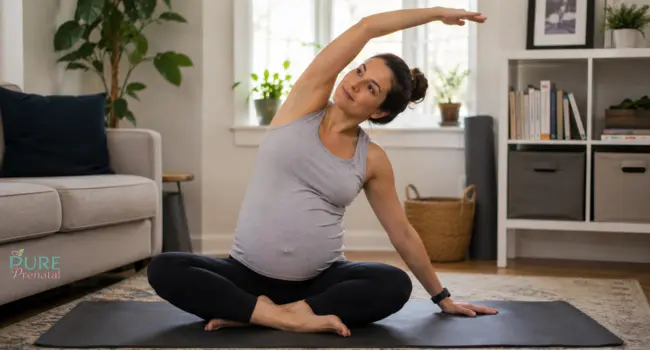
As your uterus expands, your ribs may feel tight. This gentle stretch creates space through the sides of the body.
Benefits
- Reduces rib discomfort
- Improves breathing
- Lengthens side muscles
- Encourages better posture
How to Perform
- Sit cross-legged or on a cushion.
- Raise one arm overhead.
- Lean gently to the opposite side.
- Keep both sitting bones grounded.
- Repeat on both sides.
Continue for 5–8 breaths per side.
6. Supported Squat (Malasana Variation)
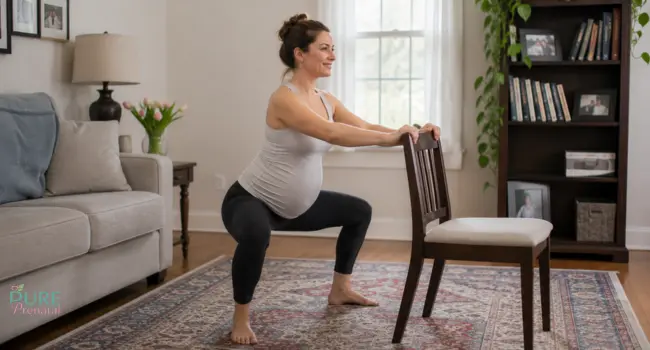
A supported squat helps open the pelvis while strengthening the lower body. It can also encourage your baby into an ideal position for birth. Because balance changes in late pregnancy, always use a sturdy chair, wall, or partner for support.
Benefits
- Opens the pelvic floor
- Strengthens the legs
- Improves hip mobility
- May help prepare the body for labour
How to Do It
- Stand with your feet wider than hip-width apart.
- Hold onto a chair or stable surface.
- Slowly bend your knees into a comfortable squat.
- Keep your heels on the floor if possible.
- Hold for 15–30 seconds while breathing deeply.
- Slowly return to standing.
Skip this pose if your healthcare provider has advised against squatting.
7. Standing Pelvic Tilts
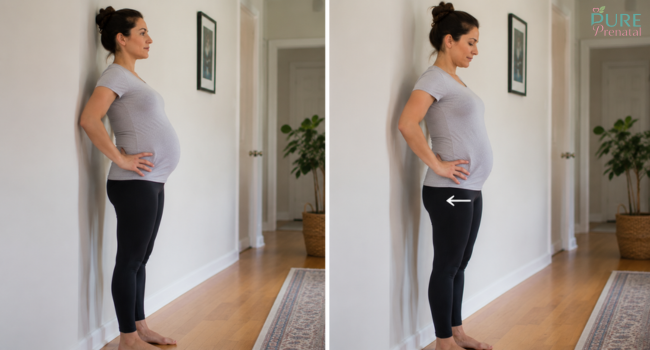
Standing pelvic tilts are a simple yet effective exercise for easing lower back discomfort and improving posture during the third trimester.
Benefits
- Relieves back pain
- Strengthens core support muscles
- Reduces pelvic tension
- Encourages good posture
Instructions
- Stand with your back against a wall.
- Bend your knees slightly.
- Gently tilt your pelvis forward and backward.
- Move slowly without forcing the motion.
- Repeat 10–15 times.
8. Supported Warrior II
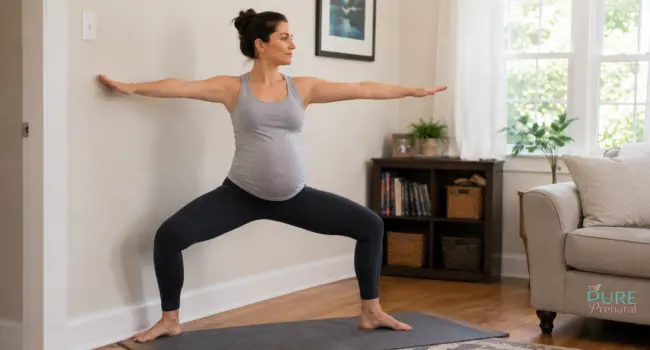
Warrior II helps build strength and stability without placing pressure on your growing abdomen. Use a wall or chair if you need extra balance.
Benefits
- Strengthens legs
- Improves balance
- Opens the hips
- Builds stamina for labour
Steps
- Stand with your feet wide apart.
- Turn one foot outward.
- Bend the front knee slightly.
- Stretch your arms comfortably.
- Keep your shoulders relaxed.
- Hold for 20–30 seconds before switching sides.
Avoid bending the front knee too deeply.
9. Legs Up on a Chair
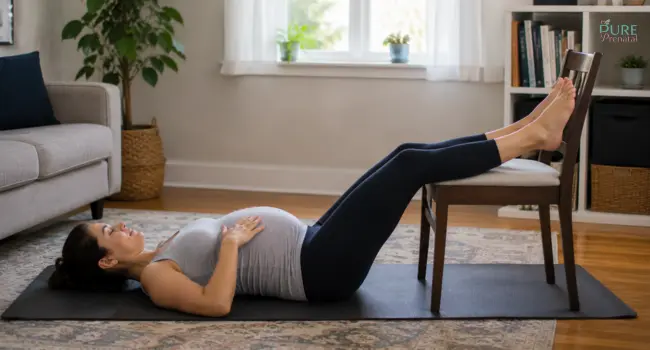
Unlike the traditional Legs-Up-the-Wall pose, using a chair provides gentle support without requiring you to lie flat against a wall.
Benefits
- Helps reduce swollen feet
- Encourages healthy circulation
- Relaxes tired legs
- Promotes relaxation
How to Practice
- Sit on the floor with your calves resting on a chair.
- Support your head with a pillow.
- Keep your upper body slightly elevated.
- Relax for 5–10 minutes while breathing slowly.
10. Easy Pose with Deep Breathing
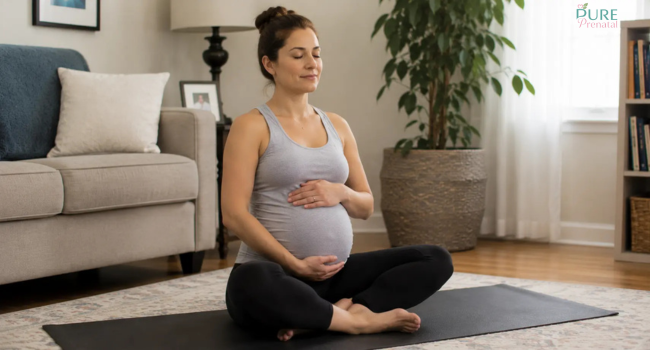
Breathing exercises are just as valuable as physical poses. Practising controlled breathing during pregnancy may help you stay calm and focused during labour.
Benefits
- Reduces stress
- Encourages relaxation
- Improves oxygen flow
- Helps prepare for labour breathing techniques
Instructions
- Sit comfortably on a cushion.
- Rest your hands on your knees or bump.
- Inhale slowly through your nose for four counts.
- Exhale gently through your mouth for six counts.
- Continue for 5–10 minutes.
A Simple Third Trimester Yoga Routine
If you’re new to prenatal yoga, try this gentle 20-minute routine:
- Deep breathing – 3 minutes
- Cat-Cow Stretch – 2 minutes
- Butterfly Pose – 2 minutes
- Seated Side Stretch – 2 minutes
- Standing Pelvic Tilts – 3 minutes
- Supported Warrior II – 2 minutes each side
- Supported Squat – 2 minutes
- Child’s Pose – 2 minutes
- Relaxation with deep breathing – 2 minutes
Listen to your body and rest whenever needed.
Safety Tips for Third Trimester Yoga
Although prenatal yoga is generally safe, keep these precautions in mind:
- Wear supportive, comfortable clothing.
- Practise on a non-slip yoga mat.
- Avoid overheating.
- Drink water before and after your session.
- Use props such as blocks, bolsters, or folded blankets.
- Avoid jumping or sudden movements.
- Don’t hold your breath during any pose.
- Stop immediately if something feels painful or unusual.
Your balance changes as pregnancy progresses, so don’t hesitate to use a wall or chair for support.
When Should You Avoid Pregnancy Yoga?
Speak with your healthcare provider before exercising if you have:
- Placenta previa after 26 weeks
- Severe preeclampsia
- Heavy vaginal bleeding
- Leaking amniotic fluid
- Signs of preterm labour
- Cervical insufficiency
- Severe anaemia
- Significant heart or lung conditions
If you experience dizziness, chest pain, severe headache, reduced baby movements, or regular contractions during exercise, stop immediately and seek medical advice.
Frequently Asked Questions
Can I start prenatal yoga in the third trimester?
Yes. If your pregnancy is uncomplicated and your healthcare provider agrees, many women begin gentle prenatal yoga during the third trimester. Start slowly and choose beginner-friendly poses.
How often should I do pregnancy yoga?
Most healthy pregnant women can practise gentle prenatal yoga 2 to 4 times per week. Even 15 to 20 minutes per session can provide noticeable benefits.
Which yoga poses should I avoid during the third trimester?
Avoid deep twists, intense backbends, hot yoga, inversions, poses that compress your abdomen, and exercises requiring prolonged lying flat on your back.
Can yoga help prepare for labour?
Prenatal yoga cannot guarantee an easier labour, but it may improve breathing control, stamina, flexibility, and relaxation, all of which can help you feel more prepared for childbirth.
Is it safe to squat during pregnancy?
Supported squats are safe for many women with healthy pregnancies, but they aren’t suitable for everyone. Follow your healthcare provider’s advice, especially if you’ve been told to avoid squatting.
Does prenatal yoga help with back pain?
Many women find that gentle stretching, improved posture, and strengthening exercises help reduce lower back discomfort during the third trimester.
Final Thoughts
The final weeks of pregnancy can be physically demanding, but gentle movement often makes daily life more comfortable. These pregnancy yoga poses for the third trimester are designed to help ease common aches, improve flexibility, encourage relaxation, and prepare your body for labour without placing unnecessary strain on you or your baby.
Remember that every pregnancy is unique. Focus on slow, controlled movements, use support whenever needed, and never push beyond your comfort level. Combined with regular prenatal care and guidance from your healthcare provider, a gentle yoga routine can be a valuable part of staying active and feeling your best as you prepare to welcome your baby.

Dr. Tania Adib is a Board Certified OB/GYN based in the northern suburbs of Chicago. She earned her undergraduate degree from the University of Notre Dame and her medical degree from Georgetown University in Washington, D.C., before completing her residency in Obstetrics and Gynecology at Magee-Womens Hospital, University of Pittsburgh Medical Center. Her clinical interests include full-spectrum obstetrics and gynecology, from the first period through the menopausal years, contraception, and abnormal bleeding.