
If you searched “Cellulogia” expecting to land on some official skin-science field, I get why. The word sounds like it belongs in a textbook. “Cellulo-” for cell or cellulite, “-logia” from the Greek for study — put them together and you’ve got something that reads like a legitimate discipline. It’s not one. There’s no dermatology department teaching it, no board certifying it, no body of peer-reviewed research sitting behind the name. It’s a term that started showing up on a handful of wellness sites fairly recently, used as a kind of umbrella label for cellulite-focused skincare content.
That’s not necessarily a knock against it. Plenty of useful, accurate information gets published under invented labels — the label just isn’t the substance. So let’s set the name aside and talk about what people actually want to know when they land on a page like this: what causes cellulite, and what, if anything, actually helps with it.
Why Skin Dimples the Way It Does
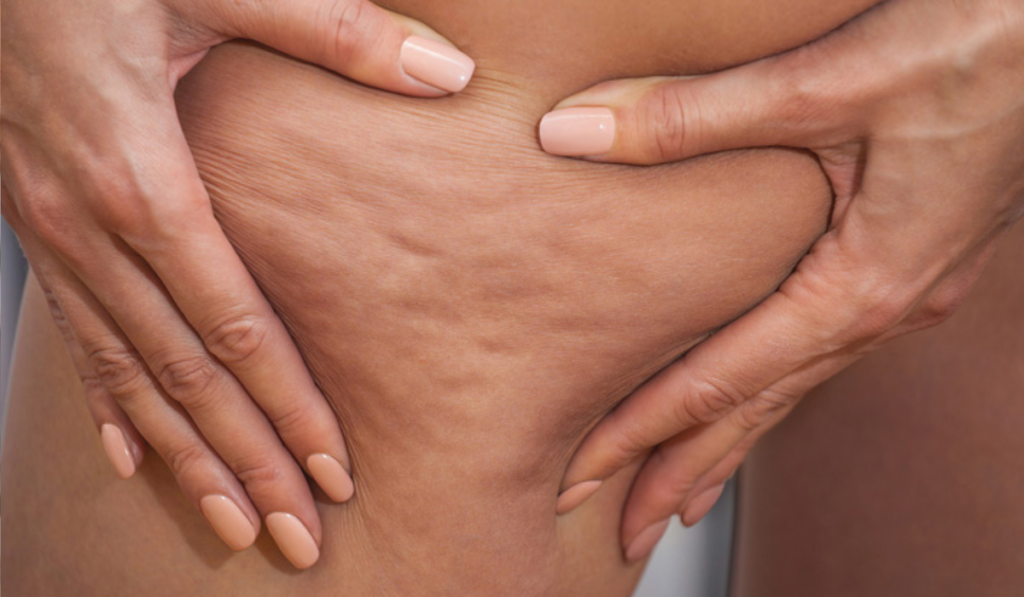
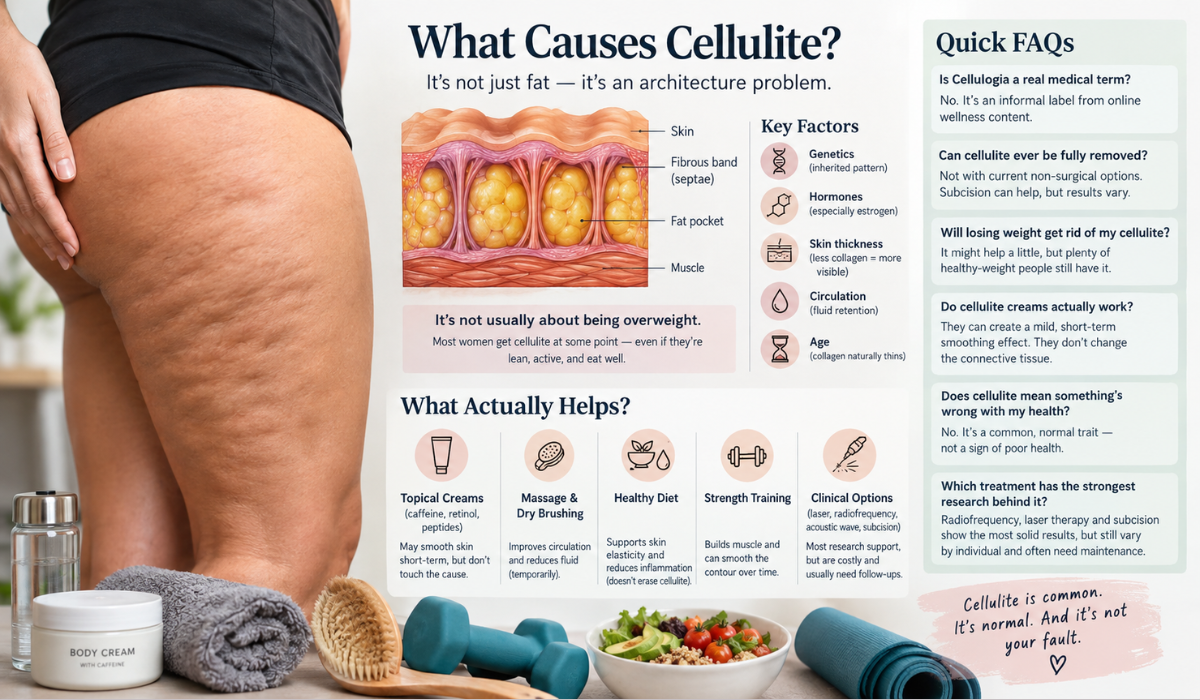
Cellulite isn’t fat behaving badly. It’s more of an architecture problem. Under the skin, there are fibrous bands — septae, if you want the technical word — that anchor skin down to the muscle beneath it. Fat sits in little pockets between those bands. When the fat pushes up and the bands pull down, you end up with that dimpled, mattress-like texture on the thighs, hips, or backs of the arms.
A few things decide how visible this gets, and honestly, most of them aren’t things you can control with a cream. Genetics plays a huge role — your connective tissue pattern is basically inherited. Hormones matter too, particularly estrogen, which seems to influence how fat and blood vessels behave in these zones and probably explains why cellulite shows up so much more in women than men. Skin thickness matters, since thinner skin with less collagen has a harder time smoothing over the bumps underneath. Circulation plays a part as well — poor lymphatic drainage can add fluid retention on top of everything else. And age is in there too, because collagen naturally thins out over time, making cellulite more visible even without any weight change at all.
Here’s the thing that tends to surprise people: this has almost nothing to do with being overweight. Most adult women experience cellulite at some point in their lives, including plenty who are lean, active, and eat well. If you’ve spent years quietly assuming it was something you were doing wrong, it probably wasn’t.
What the Advice Usually Says — And What’s Actually True
Content built around this term tends to lump advice into a handful of categories. Some of it’s genuinely useful. Some of it’s oversold. Worth going through honestly.
Topical creams get mentioned constantly — caffeine, retinol, peptides, that sort of thing. Caffeine can tighten skin briefly by pulling fluid out of the tissue, which is why it shows up in so many “quick fix before the beach” products. It wears off fast. Retinol is a slower play; used consistently for months, it can thicken the outer skin layer just enough to make dimpling a bit less obvious. Neither one touches the fibrous bands actually causing the texture, though, so don’t expect either to be transformative on its own.
Massage and dry brushing come up a lot too. They genuinely do improve circulation and can temporarily reduce fluid buildup, which smooths skin right after you do it. The catch is that it doesn’t last — stop the routine for a couple of days and things tend to drift back to where they were.
Diet gets brought up as well, and there’s something to it, though maybe not in the dramatic way it’s usually pitched. Cutting back on processed food and staying hydrated supports skin elasticity and lowers inflammation generally. That’s good for your skin overall. It’s just not going to erase cellulite by itself, no matter how clean the eating plan is.
Strength training might be the most underrated item on this list. Building muscle underneath the fat layer can genuinely smooth out the contour of the area, especially around the thighs and glutes. It’s slow, it takes consistency, but it’s one of the few approaches with a real mechanism behind it.
Then there are the clinical options — laser therapy, radiofrequency, acoustic wave therapy, and subcision, which is a procedure where a dermatologist physically releases those tight fibrous bands. These have the most solid research behind them out of everything on this list. They’re also the most expensive, and results still vary quite a bit from person to person, often needing follow-up sessions to maintain.
Where That Leaves You
If there’s one thing worth taking from all this, it’s not a specific product recommendation — it’s a shift in expectation. Cellulite is an incredibly common, entirely normal variation in human skin. Most women have it. Treating it as something to soften or manage, rather than something to eliminate completely, lines up a lot better with what any of these methods can realistically do.
Before spending real money on anything, it’s worth treating the claims the same way you’d treat any skincare pitch — look for actual evidence behind it, be skeptical of guarantees, and check with a dermatologist before committing to anything more invasive than a cream.
Frequently Asked Questions
Is Cellulogia a real medical term?
No. It doesn’t appear in dermatology literature or medical training. It’s an informal label that surfaced in online wellness content as a way to group cellulite-related skincare topics together.
Can cellulite ever be fully removed?
Not with current non-surgical options, no. Subcision can offer a longer-lasting improvement by cutting the connective bands responsible for the dimpling, but even that doesn’t guarantee it won’t come back eventually.
Will losing weight get rid of my cellulite?
It might help somewhat, since there’s less fat pushing against the tissue, but plenty of people at a healthy weight still have visible cellulite. It’s driven more by skin structure and hormones than by body fat percentage.
Do cellulite creams actually work?
They can create a mild, short-term smoothing effect through hydration and slight tightening. They don’t change the connective tissue underneath, which is the actual source of the texture.
Does cellulite mean something’s wrong with my health?
No, not at all. It’s an extremely common cosmetic trait that shows up across body types and fitness levels — not a sign of poor health.
Which treatment has the strongest research behind it?
Right now, that’s probably energy-based treatments like radiofrequency and laser therapy, along with subcision. Results still depend heavily on the individual and usually need upkeep over time.

 Dr. Tania Adib