

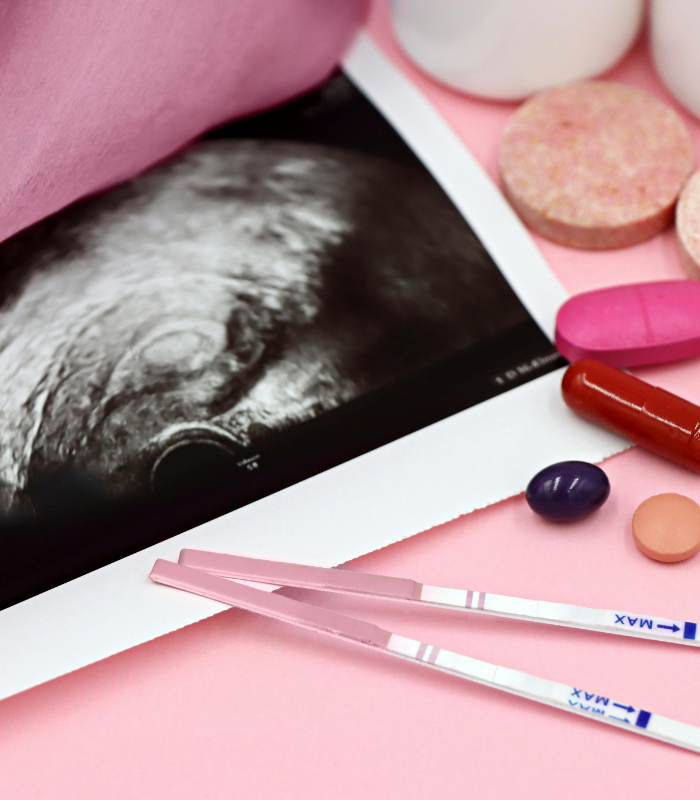
You’ve stared at the test window under three different lights, tilted it toward the window, and maybe even asked a partner to look at it too. If you’re seeing a very very faint line on pregnancy test almost invisible, you’re not imagining things, and you’re definitely not alone. This is one of the most common reasons people end up searching for answers at 11pm with a test stick in one hand and their phone in the other.
The short answer is that a faint line, even one that’s barely there, usually means there is some hCG (human chorionic gonadotropin) in your urine. In most cases, that points to an early pregnancy. But there are a few other explanations worth knowing about too, and this guide walks through all of them.
What a Faint Line Actually Means
Pregnancy tests work by detecting hCG, a hormone your body starts producing once a fertilised egg implants in the uterine lining. As hCG levels rise, the test line gets darker. Very early in pregnancy, levels are still low, so the line that forms can be thin, pale, or hard to see without good lighting.
A clear faint line on pregnancy test results, or what some people describe as a faint clear line on pregnancy test, typically means the test has picked up a small but real amount of hCG. As long as the line appeared within the test’s recommended reading time (usually within 3 to 5 minutes, check your specific test’s instructions), a clear faint line pregnancy test result is generally considered a positive, not a negative.
This catches a lot of people off guard, because we tend to picture a positive test as two bold, unmistakable lines. In reality, especially in the first days after a missed period, a positive line can be genuinely faint.
Why the Line Can Be So Hard to See
A few things influence how visible that second line is:
- How early you’re testing. Testing before your missed period, or even a day or two after, often means hCG hasn’t built up enough to produce a strong line.
- Urine concentration. Testing with diluted urine, for example after drinking a lot of water, can weaken the line even if you’re further along.
- Time of day. First morning urine tends to have the most concentrated hCG, which is why it’s usually recommended for early testing.
- The test’s sensitivity. Not all tests detect hCG at the same threshold. Some brands are designed to pick up very low levels, which can mean an earlier but fainter line compared to a test with lower sensitivity.
- Brand and dye type. This is where a pregnancy test faint line clear blue result often comes up. Digital-style dye tests can sometimes show a clearblue faded line or a clear blue faded line that’s technically there but not vivid, particularly on early or rapid-detection versions of the test.
None of these factors mean anything is wrong. They simply reflect how sensitive early testing can be.
Could It Be a Negative Very Very Faint Line?
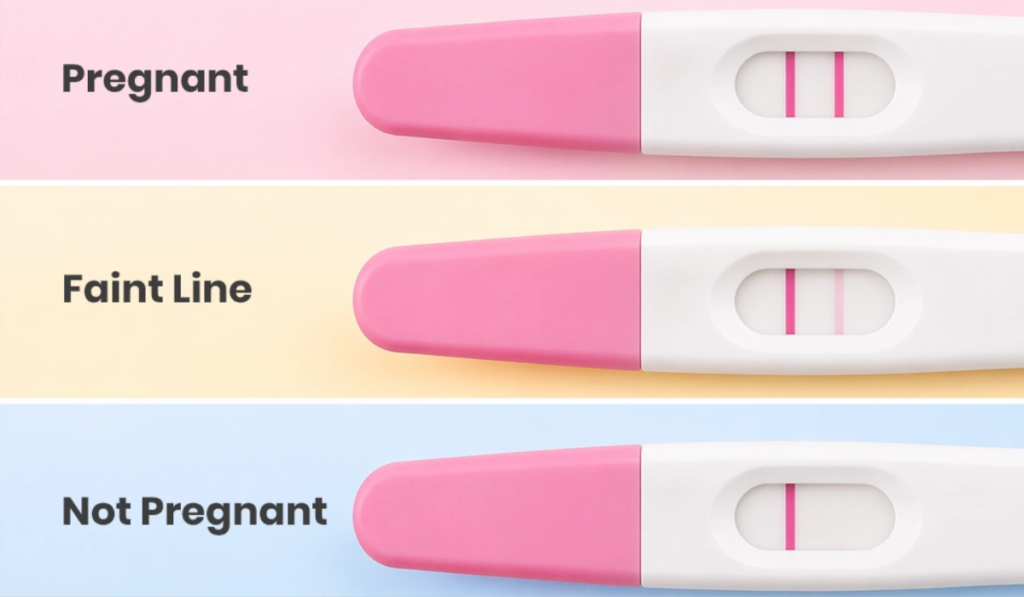
This is where things get genuinely confusing, and it’s a fair question to ask. Could a negative very very faint line on pregnancy test almost invisible situation actually exist, where what you’re seeing isn’t a real line at all?
Yes, it can happen, and there are two main culprits:
- Evaporation lines. These appear after the test’s reading window has passed, usually once the urine has dried. They form because of the way dye or urine residue settles on the strip, not because of hCG. Evaporation lines are often colourless or grey rather than the pink or blue tint of a true positive, and they show up outside the recommended time frame.
- Indent lines. These are grooves in the test strip itself, visible even before any liquid touches it, and they’re just a manufacturing artefact rather than a result.
A true faint positive, by contrast, appears within the test’s timing window and usually has some colour to it, even if it’s very light.
Barely Visible Lines and What to Do Next
If you’re dealing with a barely visible line on pregnancy test, or what feels like an extremely faint line, here’s a practical way to work out what’s going on rather than staring at the stick for another twenty minutes.
- Retest in 48 hours with first morning urine. hCG levels typically double roughly every 48 to 72 hours in early pregnancy, so a genuinely faint positive line should get noticeably darker within a couple of days.
- Use the same brand and, ideally, the same batch of tests. This keeps sensitivity consistent so you’re comparing like with like.
- Avoid over-analysing wet lines. Look at the result within the time stated in the instructions, not after it has dried.
- Try a digital test if you want a clearer answer. Digital tests remove the guesswork of reading line darkness, since they simply display “pregnant” or “not pregnant.”
- Consider a blood test. A GP or midwife can arrange a blood hCG test, which is more sensitive and can also give a quantitative number if needed.
A barely visible pregnancy test line that gets darker on repeat testing is a strong sign of an ongoing early pregnancy. A line that stays the same or fades away over several days may indicate a very early pregnancy loss, sometimes called a chemical pregnancy, though only a healthcare professional can properly assess this.
Faint Line Scenarios at a Glance
| What you’re seeing | Likely explanation | What to do |
|---|---|---|
| Thin but coloured line, within test’s time window | Early positive, low hCG | Retest in 48 hours to confirm rising trend |
| Grey or colourless line, appeared after drying | Evaporation line | Don’t count this as a result, retest fresh |
| Faint line, tested before missed period | Testing too early | Wait a few days or use first morning urine |
| Line fades on repeat tests over several days | Possible chemical pregnancy or hormone fluctuation | Contact your GP or midwife for guidance |
| Faint line despite negative digital test | Sensitivity mismatch between tests | Try a blood test for a definitive answer |
When to Speak With a Healthcare Professional
It’s a good idea to contact your GP, midwife, or pharmacist if:
- You get faint or inconsistent results over more than a week of testing.
- You experience heavy bleeding, significant pain, or symptoms alongside a faint or fading line.
- You’ve had a faint positive followed by a negative test days later.
- You simply want confirmation through a blood test rather than relying on urine testing alone.
None of these situations are emergencies on their own, but a healthcare professional can offer testing and reassurance that a home test can’t.
FAQs
Is a very faint line still a positive pregnancy test?
In most cases, yes. If a line appears within the recommended reading time and has some colour to it, it usually reflects a real, if low, level of hCG rather than a false result.
Why does my Clearblue test show a faded line instead of a clear one?
A clearblue faded line often comes down to testing very early, diluted urine, or the natural variation in how dye tests display low hCG levels. It doesn’t necessarily mean anything is wrong.
Can a faint line turn into a negative later?
It’s possible. If hCG levels don’t continue rising as expected, a line that was faintly positive can fade on later tests. This is one reason retesting after 48 hours is useful, and it’s worth discussing with a healthcare professional if it happens.
How soon should I retest after seeing a faint line?
Waiting about two days and using first morning urine gives hCG levels time to rise enough for a noticeable difference, if the pregnancy is progressing as expected.
Are digital tests more reliable than line tests for faint results?
Digital tests remove the subjectivity of reading a faint line, but they generally aren’t more sensitive to low hCG levels than a good quality line test. They’re just easier to interpret.
Should I worry if the line is barely visible but got darker the next day?
A line that darkens over a day or two is usually a reassuring sign, as it suggests hCG is rising as expected in early pregnancy.
The Bottom Line
Seeing a very very faint line on pregnancy test almost invisible can feel unsettling, but in most cases it simply reflects how early you’re testing rather than anything concerning. The most reliable next step is to retest in a couple of days using first morning urine and see whether the line gets darker. If results stay unclear, fade, or you’d simply rather have a definitive answer, a blood test through your GP or midwife will settle it far more precisely than staring at a test strip ever can.

Dr. Tania Adib is a Board Certified OB/GYN based in the northern suburbs of Chicago. She earned her undergraduate degree from the University of Notre Dame and her medical degree from Georgetown University in Washington, D.C., before completing her residency in Obstetrics and Gynecology at Magee-Womens Hospital, University of Pittsburgh Medical Center. Her clinical interests include full-spectrum obstetrics and gynecology, from the first period through the menopausal years, contraception, and abnormal bleeding.