

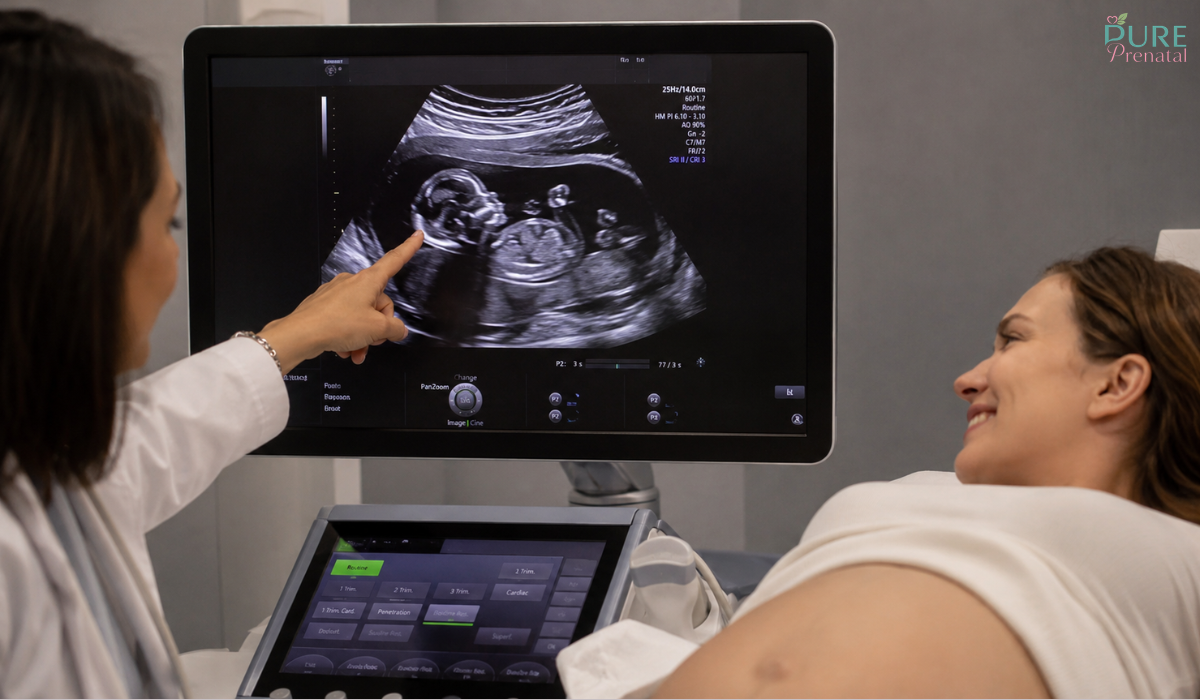
If you’re wondering how much is an ultrasound without insurance, the answer depends heavily on where you live, what type of ultrasound you need, and whether you visit a hospital, imaging center, or private clinic. In the United States, a pregnancy ultrasound can commonly cost a few hundred dollars when paid out of pocket, with published cash-price data showing substantial variation between providers and locations.
In the UK, the situation is different. Routine NHS pregnancy care, including standard ultrasound scans offered as part of antenatal care, is generally provided without a separate charge to eligible patients.
Quick Answer
For someone in the United States without health insurance, a pregnancy ultrasound may cost roughly $200 to $600 or more, depending on the examination and facility. Some self-pay providers advertise lower prices, while hospital-based or more detailed scans can cost considerably more.
For example, Sidecar Health reports estimated average cash prices for prenatal ultrasounds ranging from about $227 in Iowa to $322 in Alaska among the states listed, while Turquoise Health reports an average cash price of about $461 for pregnancy ultrasound services across facilities. These figures are estimates, not guaranteed prices for a particular clinic.
The most useful step is to ask the provider for the self-pay or cash price before booking and find out whether the quoted amount includes the ultrasound, interpretation of the images, facility fees, and any related appointment.
Key Takeaways
- A pregnancy ultrasound without insurance in the U.S. can cost a few hundred dollars, but prices vary widely.
- A routine ultrasound may cost less than a detailed anatomy scan or other specialized examination.
- Hospital-based imaging can be more expensive than some independent imaging centers.
- Ask for a written Good Faith Estimate if you’re uninsured or paying without insurance in the U.S.
- In England, routine NHS pregnancy ultrasound scans offered as part of antenatal screening are free.
Why Does an Ultrasound Cost So Much Without Insurance?
The price of an ultrasound isn’t determined by the scan alone. Several charges may be involved.
A provider may charge separately for:
- The ultrasound examination
- A sonographer or technician
- A radiologist or other clinician who interprets the images
- A facility or hospital fee
- A doctor’s consultation
- Additional imaging
- Specialized testing
This is one reason two people can receive quotes that look very different for what they think is the same ultrasound.
For example, one current self-pay provider lists diagnostic obstetric ultrasounds from $225 to $400, depending on the type of examination, while another price database reports an average cash price of $461 for pregnancy ultrasound services.
The quoted price should therefore be treated as a starting point rather than a universal national rate.
How Much Is a Pregnancy Ultrasound Without Insurance in the U.S.?
There isn’t one standard uninsured price across the country.
Published cash-price estimates can help give you a general idea:
| Type of ultrasound | Approximate self-pay range |
|---|---|
| Basic pregnancy ultrasound | About $200 to $500+ |
| First-trimester ultrasound | About $200 to $550+ |
| Anatomy scan | About $300 to $600+ |
| Transvaginal pregnancy ultrasound | About $300 to $600+ |
| Elective 3D/4D ultrasound | Often $100 to $350+ |
These are broad estimates rather than fixed medical prices. Actual charges may be lower or higher depending on the provider, location, complexity of the scan, and whether additional services are included. Current pricing databases show average cash prices around $524 for pregnancy transvaginal ultrasound and $542 for first-trimester pregnancy ultrasound, illustrating how much prices can vary by procedure.
Why the Same Ultrasound Can Have Different Prices
The biggest factors usually include:
Location: Healthcare prices vary considerably between states and cities.
Type of facility: A hospital may charge more than an independent imaging center.
Type of scan: A simple pregnancy scan isn’t necessarily priced the same as a detailed fetal anatomy examination.
Gestational age: Early pregnancy scans may involve different imaging techniques than later scans.
Transvaginal versus abdominal imaging: Some early pregnancy assessments use a transvaginal approach when more detailed views are needed.
Doctor interpretation: Find out whether a physician’s interpretation is included in the quoted price.
Additional services: A consultation, blood tests, or follow-up imaging may create separate charges.
Does a Pregnancy Ultrasound Cost Less at an Imaging Center?
It can, although there’s no guarantee.
Independent imaging centers sometimes publish self-pay prices, making it easier to compare costs before scheduling. Some facilities may offer a straightforward cash price that is lower than a hospital’s standard charge.
For example, one U.S. ultrasound provider currently lists diagnostic first-trimester obstetric ultrasound at $300, transvaginal obstetric ultrasound at $275, and second- or third-trimester obstetric ultrasound at $400.
That doesn’t mean every imaging center will be cheaper. The important point is to compare the complete price for the same service, rather than comparing two numbers that include different things.
What Should You Ask Before Booking?
If you’re paying without insurance, a quick phone call can prevent an unexpected bill.
Ask:
- What is your cash price for the pregnancy ultrasound?
- Does that price include the radiologist or clinician’s interpretation?
- Is the doctor’s appointment included?
- Are there separate facility fees?
- Is this a diagnostic ultrasound or an elective keepsake scan?
- Will I need a referral or doctor’s order?
- What type of ultrasound will I receive?
- Can you give me the total expected cost in writing?
If you’re in the U.S. and don’t have insurance, or choose not to use it, federal rules generally require providers to provide a Good Faith Estimate when you request one or schedule care at least three business days in advance.
How to Get a Lower-Cost Ultrasound Without Insurance
If the price is difficult to afford, don’t assume that your only option is to pay the first quote you receive.
Compare self-pay prices
Call several clinics and ask specifically for their self-pay pregnancy ultrasound price. Make sure you’re comparing the same type of scan.
Ask about financial assistance
Some hospitals and healthcare organizations offer financial assistance to people who have difficulty paying medical bills.
CMS recommends asking the facility’s billing department about financial assistance if you’re concerned about the cost.
Look for community health centers
In the U.S., HRSA-supported health centers provide care to people with or without insurance, with fees based on the patient’s ability to pay.
However, not every health center performs pregnancy ultrasounds on site. You may need to ask whether they provide prenatal care or can refer you to an affordable imaging service.
Check whether you qualify for public coverage
If you are pregnant and uninsured in the U.S., it may be worth checking whether you qualify for Medicaid or other coverage options before paying entirely out of pocket.
Eligibility varies by state and personal circumstances.
What About the UK?
If you’re asking how much is an ultrasound without insurance in the UK, the answer is very different from the U.S.
In England, NHS pregnancy care includes ultrasound scans as part of antenatal care. The NHS states that hospitals offer at least two routine pregnancy ultrasound scans, generally around 11 to 14 weeks and 18 to 21 weeks.
NHS pregnancy screening tests are free, including the ultrasound scans offered through the screening programme.
You may still encounter charges for private ultrasound services, optional photographs, or non-NHS scans. For example, some NHS hospitals charge a small fee for printed ultrasound pictures even though the medical scan itself is part of NHS care.
So if you’re ordinarily eligible for NHS maternity care, you generally don’t need private health insurance simply to receive the routine pregnancy scans offered through the NHS.
Does Every Pregnancy Need an Ultrasound?
Ultrasound can provide useful information about pregnancy, but the number and timing of scans depend on your healthcare system, pregnancy, symptoms, and medical circumstances.
In England, routine NHS care includes a dating scan and a 20-week screening scan. Additional scans may be offered when there is a clinical reason, such as concerns about fetal growth or certain pregnancy complications.
In other healthcare systems, the schedule can be different.
If you’re considering an ultrasound simply because you want reassurance, it’s reasonable to discuss the timing and purpose with your midwife, doctor, or obstetrician. A scan performed for a medical concern is different from an elective keepsake ultrasound.
What About 3D and 4D Ultrasounds?
3D and 4D ultrasounds are generally different from diagnostic pregnancy scans.
A diagnostic ultrasound is performed to assess pregnancy or investigate a medical question. A 3D or 4D scan may instead be offered as an elective service to produce additional images or moving images of the baby.
Because these services are often elective, they may not be covered by insurance and may have their own separate pricing.
If you need an ultrasound because of bleeding, pain, concerns about fetal growth, or another medical issue, don’t substitute an elective keepsake scan for a medical evaluation.
What If I Already Had an Ultrasound and Can’t Afford the Bill?
If you’ve already had the scan and receive a bill that is higher than expected, don’t ignore it.
First, compare the bill with any estimate you received. Check whether the services listed are actually the services you received and whether there are duplicate charges.
If you were uninsured or chose not to use insurance in the U.S., keep your Good Faith Estimate. Under the federal No Surprises Act, you may have the right to dispute a bill if a provider charges at least $400 more than the Good Faith Estimate for that provider or facility, subject to the applicable rules.
You can also contact the billing department and ask whether:
- The bill contains an error
- A self-pay discount is available
- A payment plan is available
- Financial assistance is available
- The charge can be reviewed
Don’t assume that the first bill is the final amount you have to accept without question.
When Should You Contact Your Healthcare Provider?
Cost shouldn’t stop you from seeking medical attention when you have symptoms that could indicate a pregnancy complication.
Contact your healthcare provider promptly if you have concerns such as vaginal bleeding, significant abdominal or pelvic pain, leaking fluid, or a noticeable change in your baby’s movements later in pregnancy.
If symptoms are severe or you believe you may have a medical emergency, seek urgent medical care rather than delaying care to find the cheapest ultrasound.
An ultrasound is a diagnostic tool. The appropriate type and timing depend on what your healthcare professional is trying to assess.
Frequently Asked Questions
How much is an ultrasound without insurance?
In the U.S., a pregnancy ultrasound commonly costs a few hundred dollars when paid out of pocket. Published cash-price data varies substantially, with examples ranging from the low $200s to more than $500 depending on the examination and location.
How much is a 6-week ultrasound without insurance?
A six-week scan may be priced as a first-trimester or early pregnancy ultrasound. The cost varies by provider and whether the examination is abdominal, transvaginal, or part of a broader medical visit. Current published cash prices for first-trimester pregnancy ultrasounds can exceed $500 at some facilities.
Is a transvaginal ultrasound more expensive?
It can be. Current pricing data from Turquoise Health lists an average cash price of about $524 for pregnancy transvaginal ultrasound, although actual prices differ substantially between providers.
Can I get a free pregnancy ultrasound without insurance?
Possibly, depending on where you live and your eligibility for public or community healthcare services. In the U.S., some community health centers offer services on a sliding fee scale, while some organizations may provide limited services at reduced cost.
In England, routine NHS pregnancy screening, including offered ultrasound scans, is free.
How can I find the cheapest ultrasound without insurance?
Call several providers and ask for their complete self-pay price for the exact ultrasound you need. Ask whether the price includes the interpretation, facility fee, and consultation. A lower advertised price isn’t necessarily cheaper if additional charges are added later.
Can I use a pregnancy ultrasound center without a doctor’s referral?
That depends on the facility, the type of ultrasound, and local rules. Some non-diagnostic services may not require an order, while a diagnostic pregnancy ultrasound may require a referral or medical order. Ask the provider before making an appointment.
Is an elective 3D ultrasound the same as a medical ultrasound?
No. A diagnostic ultrasound is performed for medical assessment, while an elective 3D or 4D scan may primarily provide additional images of the baby. If you have symptoms or a pregnancy concern, speak with your healthcare provider rather than relying on an elective scan.
Can I ask for a Good Faith Estimate?
Yes, if you’re in the U.S. and are uninsured or paying for care yourself. Providers and facilities generally must provide a Good Faith Estimate when you request one or schedule the service at least three business days in advance.
Bottom Line
If you’re asking how much is an ultrasound without insurance, expect the U.S. price to vary from roughly a couple hundred dollars to $500 or more for many pregnancy ultrasounds, with specialized examinations potentially costing more. Always ask for the complete self-pay price and a written Good Faith Estimate before a planned scan.
If you’re in England and eligible for NHS maternity care, routine pregnancy ultrasounds offered through NHS antenatal screening are generally free.

Dr. Tania Adib is a Board Certified OB/GYN based in the northern suburbs of Chicago. She earned her undergraduate degree from the University of Notre Dame and her medical degree from Georgetown University in Washington, D.C., before completing her residency in Obstetrics and Gynecology at Magee-Womens Hospital, University of Pittsburgh Medical Center. Her clinical interests include full-spectrum obstetrics and gynecology, from the first period through the menopausal years, contraception, and abnormal bleeding.