
There’s a specific kind of panic that hits you at the Starbucks counter once you’re pregnant. You used to order without thinking — same drink, same size, done. Now you’re standing there scrolling through your phone while the barista waits, trying to remember if you read somewhere that Refreshers have caffeine in them, or if that was a different drink, or a different app, or your sister’s advice from three years ago.
If that sounds familiar, you’re far from the only one. “Starbucks drinks for pregnant women” is one of those searches people do at 8am from the drive-thru line, phone propped against the steering wheel. So let’s actually go through the menu properly, drink by drink, so you’re not guessing next time.
The 200mg Rule (and Why It’s Not Just a Suggestion)
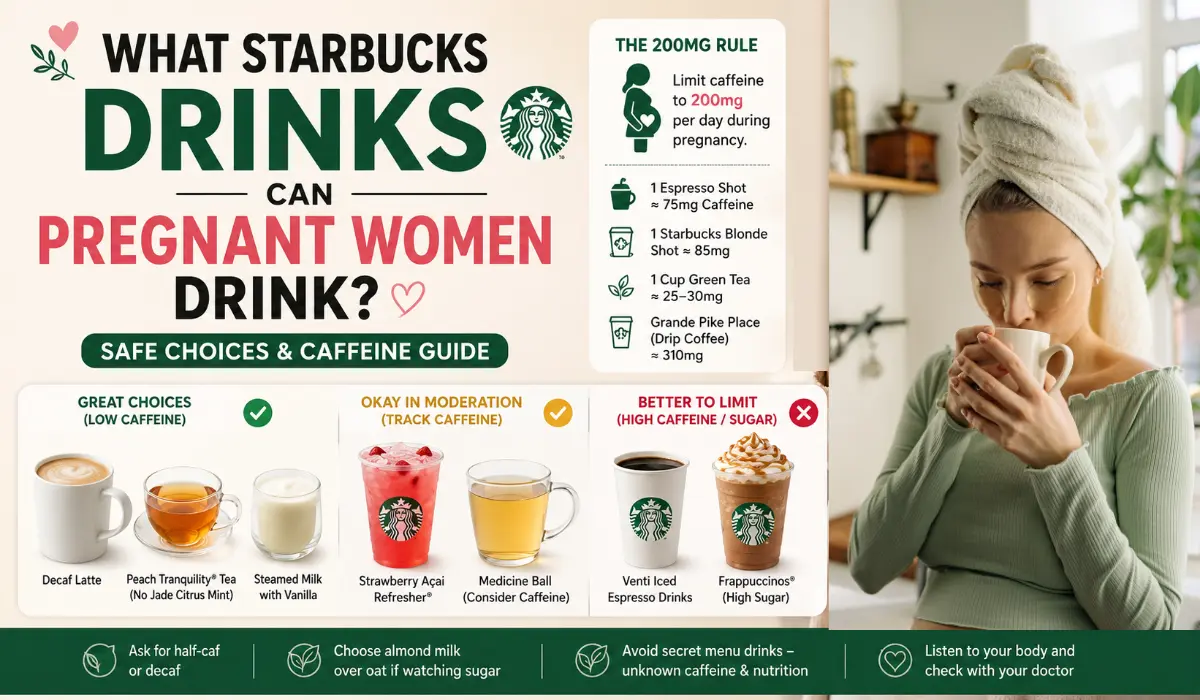
The American College of Obstetricians and Gynecologists puts the daily caffeine limit at 200mg during pregnancy. That number comes from real research studies have connected higher caffeine intake with a greater risk of low birth weight, and in some cases, pregnancy loss.
Here’s the part most people don’t realize, though: your body clears caffeine much slower once you’re pregnant. The enzyme that breaks it down basically takes its time. So a coffee at 8am isn’t gone by lunch the way it used to be — it can still be circulating well into the afternoon, and yes, it crosses the placenta.
That doesn’t mean cutting caffeine out entirely. It means knowing what’s actually in your cup, because Starbucks doesn’t exactly make that obvious.
Refreshers Are Not Just Fruit Juice
This is the one that trips people up constantly. The Strawberry Açaí, the Mango Dragonfruit, the Pineapple Passionfruit — they’re bright, fruity, don’t taste anything like coffee, and get marketed as this refreshing summer thing. So it’s easy to assume they’re caffeine-free.
They’re not. Every Refresher is made with green coffee extract, which is exactly what it sounds like — caffeine pulled from unroasted coffee beans, just without the coffee flavor.
Roughly speaking:
- A Grande (16 oz) runs about 45–55mg of caffeine
- A Trenta (30 oz), the big one, can hit around 90mg
On its own, 90mg is fine. The problem shows up later — you have a Trenta Refresher at noon thinking it’s basically juice, then a cup of tea at 4pm, and suddenly you’ve gone over 200mg without ever having what you’d call “a coffee.”
So: Refreshers are okay. Just count them the same way you’d count a cup of black tea, not the way you’d count water.
The Medicine Ball, Honey and Green Tea, Explained
Once you’re pregnant, your immune system takes a hit, and most cold medicine is off the table. So naturally, a lot of people reach for the Medicine Ball — that honey citrus mint tea everyone swears by when they’re sick. It’s steamed lemonade, hot water, honey, and two tea bags: Jade Citrus Mint and Peach Tranquility.
Two things about it tend to worry people.
First, the honey. There’s a widely repeated warning that pregnant women should avoid honey — but that warning is actually about infants under one, whose digestive systems can’t handle the botulism spores honey sometimes carries. Your stomach, as an adult, handles that just fine. The honey isn’t the issue here at all.
The actual thing worth knowing about is the Jade Citrus Mint tea bag — it’s green tea, and it adds around 16mg of caffeine to a Grande Medicine Ball. Not much. But not nothing either.
If you’d rather skip it completely, just ask for two Peach Tranquility bags instead of one Peach Tranquility and one Jade Citrus Mint. Tastes basically the same, zero caffeine.
Lattes and Espresso, This Is Just Math
If coffee is your thing and you’re not willing to give it up (fair enough), ordering during pregnancy comes down to knowing your shot counts.
A shot of Starbucks’ dark roast espresso is about 75mg of caffeine. Their blonde roast is actually higher — around 85mg per shot, because lighter roasts hold onto more caffeine than dark ones do, which surprises most people.
The sizing breaks down like this:
- Tall (12 oz) — one shot, ~75mg
- Grande (16 oz) — two shots, ~150mg
- Venti hot (20 oz) — two shots, ~150mg
- Venti iced (24 oz) — three shots, ~225mg
That last line matters. An iced Venti gets an extra shot compared to the hot version of the same drink, and that third shot alone can push you over your entire day’s limit before lunch.
Drip coffee is worse, honestly. A Grande Pike Place is around 310mg — more than your whole daily allowance in one cup.
The easy fix is asking for half-caf, or going full decaf. Starbucks decaf shots still carry a small amount of caffeine, around 10mg each, but that’s a fraction of the regular amount, and it means you don’t have to give up your morning latte entirely.
Frappuccinos: It’s Really About the Sugar, Not the Caffeine
People worry about caffeine in Frappuccinos, but honestly the sugar is the bigger issue. A Grande Caramel Ribbon Crunch can have around 60 grams of sugar in it. That’s a lot for one drink.
When that hits your system on an empty stomach, your blood sugar spikes fast, your body overproduces insulin trying to handle it, and then you crash — tired, shaky, sometimes nauseous. Pregnancy already pushes your body toward a bit of natural insulin resistance, so a sugar load like that adds real strain on top of what’s already happening.
If you’ve got gestational diabetes, or you’re already dealing with nausea, it’s genuinely worth skipping Frappuccinos altogether — the sugar swing tends to make nausea worse.
If you want one occasionally, going Tall with just one pump of syrup, and pairing it with something protein-based like a hard-boiled egg, takes some of the edge off the spike.
Is the Milk Actually Safe?
Yes, and you can stop worrying about this one specifically. Every dairy product at Starbucks, the whole milk, the cream, the sweet cream cold foam, the whipped cream, all of it is commercially pasteurized. There’s no listeria risk.
If you’re dealing with lactose intolerance, which tends to show up or get worse during pregnancy, oat, almond, and soy milk are all fine substitutes. One small note: oat milk has more carbs than almond milk, so if you’re watching blood sugar because of gestational diabetes, almond milk tends to be the gentler option.
Skip the Secret Menu, At Least for Now
TikTok’s Starbucks secret menu drinks look fun — layered syrups, weird cold foam combos, drinks that taste like cereal or candy. But they’re built off-menu, which means there’s no published caffeine or nutrition info for any of it.
That’s the actual problem. When you’re trying to stay under a specific caffeine number, or watch your sugar intake, you can’t do that with a drink nobody has data on. Sticking to the regular menu means you can always ask your barista for the exact numbers on whatever you’re ordering.
Decaf Isn’t All Made the Same Way
Quick thing worth knowing: not every decaf process is identical. A lot of roasters strip caffeine using chemical solvents — methylene chloride or ethyl acetate are common ones. The FDA says trace residue from that is safe, but plenty of pregnant women would rather avoid it if there’s an easy alternative.
That alternative is the Swiss Water Process — caffeine removed using just water, temperature, and time, no chemicals involved.
Starbucks’ standard Decaf Pike Place and their decaf espresso shots use the direct-contact method with trace chemicals. Their Decaf Sumatra, though, uses the Swiss Water Process. If that distinction matters to you, Decaf Sumatra is the one to ask for.
The Short Version
- Lowest caffeine, easiest picks: decaf lattes, Peach Tranquility tea on its own, steamed milk with vanilla
- Fine, but track it: Refreshers, the Medicine Ball, a regular latte
- Better to limit: Venti iced espresso drinks, Grande or Venti drip coffee, Frappuccinos (especially with GD)
- Small hacks that help: ask for half-caf, swap Jade Citrus Mint for a second Peach Tranquility bag, pick almond milk over oat if you’re watching sugar
Frequently Asked Questions
Can I still get coffee at Starbucks while pregnant?
Yes. Just keep total daily caffeine under 200mg. A Tall latte or a half-caf drink fits into that easily.
Do Starbucks Refreshers have caffeine?
Yes, from green coffee extract — around 45–55mg in a Grande, even though it tastes nothing like coffee.
Is honey in Starbucks drinks safe during pregnancy?
Yes. The honey warning is about infants under one year old, not pregnant women. It’s completely fine for you.
What’s the lowest-caffeine hot drink at Starbucks?
A decaf latte, or Peach Tranquility tea with no Jade Citrus Mint added.
Are Frappuccinos okay during pregnancy?
Occasionally, sure. But the sugar content is high enough that it’s worth limiting, especially with gestational diabetes or nausea.
Is Starbucks milk pasteurized?
Yes, all of it — milk, cream, whipped cream — so there’s no listeria concern there.
Should I order off the Starbucks secret menu while pregnant?
Better not to. There’s no published caffeine or nutrition info for those drinks, which makes them hard to track.

Dr. Tania Adib is a Board Certified OB/GYN based in the northern suburbs of Chicago. She earned her undergraduate degree from the University of Notre Dame and her medical degree from Georgetown University in Washington, D.C., before completing her residency in Obstetrics and Gynecology at Magee-Womens Hospital, University of Pittsburgh Medical Center. Her clinical interests include full-spectrum obstetrics and gynecology, from the first period through the menopausal years, contraception, and abnormal bleeding.