

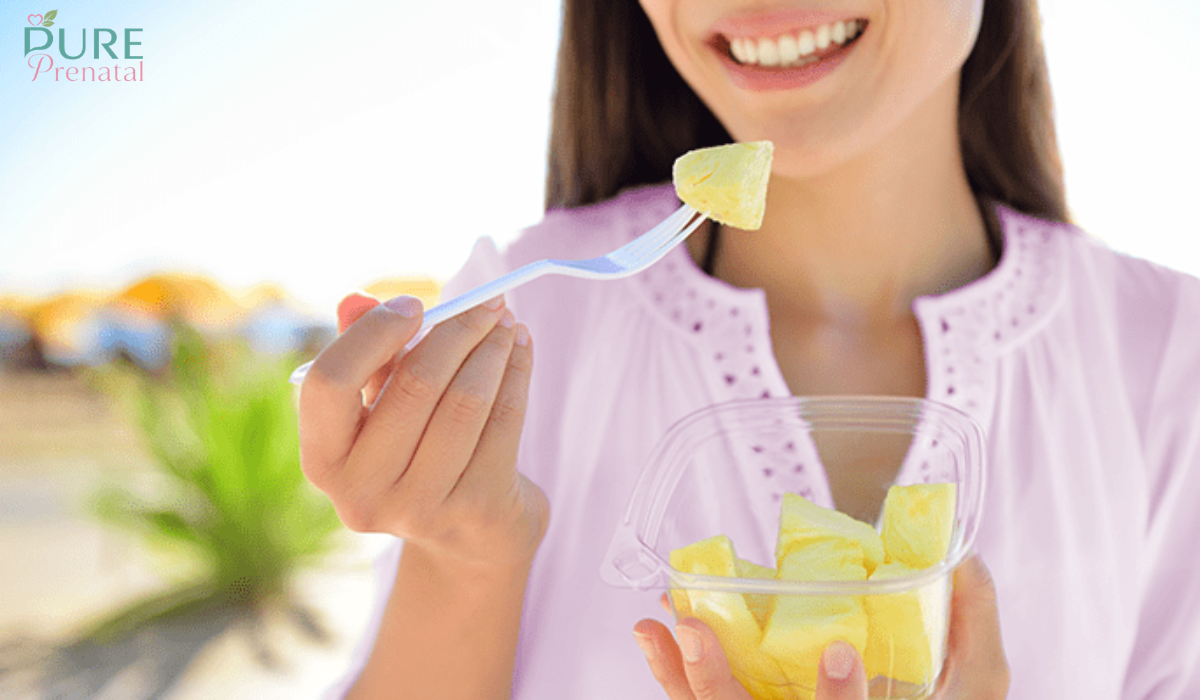
Pregnancy comes with a long list of food questions, and pineapple somehow ends up being one of the most confusing ones. If you’ve typed “can I eat pineapple while pregnant” or “can you eat pineapple while pregnant” into Google at 11 PM after a sudden craving, you’re not alone — this is one of the most searched pregnancy food questions out there. Old wives’ tales, a well-meaning aunt, a random forum post — somehow all of it adds up to real anxiety over something as simple as fruit.
Should a pregnant woman eat pineapple? Is it ok to eat pineapple while pregnant, or does eating pineapple in pregnancy actually carry some hidden risk nobody’s told you about? Let’s clear this up properly. This article looks at where the pineapple myth actually came from, what the science says now, and answers the specific questions pregnant women tend to ask about this fruit.
Why Do People Worry About Pineapple in Pregnancy?
It almost always comes back to one word: bromelain. This is a group of enzymes found mostly in the stem and core of the pineapple plant, and it’s known for breaking down protein. Somewhere along the way, that protein-breaking property turned into a belief that pineapple could soften the cervix, trigger contractions, or even cause a miscarriage.
That idea has been passed around for generations — through households, group chats, pregnancy forums — until it just became “common knowledge” for a lot of women, even though nobody ever really checked whether it was true. Repetition isn’t evidence though. Once you actually look at how much bromelain is in a normal serving of pineapple, the picture changes quite a bit.
Does Pineapple Cause Miscarriage? The Truth About Bromelain
Here’s what most of these warnings conveniently skip: the amount of bromelain in a fresh pineapple, or even a full glass of pineapple juice, is tiny. Most of the concentrated bromelain actually sits in the core and the stem — parts almost nobody eats.
To get anywhere near a dose that could realistically affect your body the way a bromelain supplement might, you’d have to eat an unrealistic number of pineapples in one go. Not one or two — many more than that. A normal serving, whether it’s fresh, canned, or juiced, just doesn’t carry enough bromelain to influence labor, soften the cervix, or cause pregnancy loss.
For what it’s worth, health authorities including the NHS don’t list pineapple as a food to avoid in pregnancy. There’s no solid clinical evidence tying moderate pineapple consumption to miscarriage or early labor. Pineapple causing labor is a myth, not a medical fact, and it shouldn’t be the reason you skip out on a fruit you’re craving.
Bromelain supplements, though, are a different conversation entirely. Capsules and tablets deliver a much more concentrated, isolated dose than you’d ever get from the fruit itself, and most doctors advise against them during pregnancy unless specifically cleared.
Is Pineapple Safe in the First Trimester?
A lot of women ask specifically about early pregnancy, since the first trimester tends to feel like the most fragile stretch. Can a pregnant woman eat pineapple at an early stage without any risk? Based on current medical understanding — yes, in normal food-sized amounts, it’s considered safe for most healthy pregnancies.
If you’re newly pregnant and craving pineapple, there’s usually no reason to cut it out. Can pregnant women eat pineapple right from the start? For most healthy pregnancies, the answer is yes. That said, if you have pre-existing conditions or a history of complications, it’s worth a quick check-in with your doctor — not because pineapple is risky, but because your situation might call for individual advice.
Can Pregnant Women Eat Pineapple in the Second Trimester?
The guidance doesn’t really change as pregnancy moves forward. Can pregnant women eat pineapple in the second trimester safely? Yes — once you’re past the first twelve weeks, pineapple remains a safe, refreshing option, and honestly a lot of women find their appetite and cravings shift around this time anyway.
Can Pregnant Women Eat Pineapple in the Third Trimester?
As your due date gets closer, you might start wondering whether pineapple in the third trimester could somehow speed things along — or cause a problem. It won’t do either, at least not based on anything doctors currently recommend. Some women actually crave pineapple more in the later months, probably because of how refreshing and sweet it is.
There’s a popular idea that eating pineapple close to your due date can “kick-start” labor naturally. It shows up constantly in pregnancy forums and social media, but there’s no real scientific backing behind it. If pineapple genuinely worked as a natural induction method, doctors would be recommending it by now — and they’re not.
Is Pineapple Good for Pregnancy? The Benefits
Setting the myths aside, pineapple can genuinely be a good addition to a pregnancy diet in moderation. Is pineapple good for pregnant ladies? Is it good for a pregnant lady specifically dealing with fatigue or low appetite? Is pineapple healthy for pregnant women in general? The nutritional case is mostly a “yes.”
Vitamin C Pineapple is a solid source of vitamin C, which supports your immune system and helps your body absorb iron more efficiently — useful, since iron needs go up during pregnancy.
Manganese It also provides manganese, a mineral tied to bone development and metabolism, both relevant while your body is building another human.
Hydration and fiber Pineapple is mostly water, so it can help with hydration, and its fiber content may ease digestion — something plenty of pregnant women struggle with once hormones start shifting things around.
Mild nausea relief Some women say the tangy taste helps settle mild nausea, particularly in the earlier weeks.
Folate There’s also a small amount of folate in pineapple, which plays a role in early fetal development — though it’s not a replacement for the prenatal folic acid your doctor has likely already recommended.
How Much Pineapple Can You Safely Eat While Pregnant?
Moderation applies here just like it does with most foods in pregnancy. Most healthcare guidance points to around one to two servings a day — roughly one to two cups of fresh chunks — as a reasonable amount for most pregnant women without complications.
There’s a real difference between eating pineapple occasionally in normal portions and going overboard, or relying on concentrated bromelain supplements. Balance is really the whole story here.
Pineapple Juice When Pregnant: Is It Safe?

Pineapple juice for pregnant women is generally fine too, as long as it’s pasteurized. Unpasteurized or fresh-pressed juice from unregulated sources carries a bacterial risk — and that’s true of pretty much any juice, not just pineapple. Store-bought, pasteurized pineapple juice in reasonable amounts is a safe way to enjoy the flavor.
Just keep in mind juice doesn’t have the fiber that whole pineapple does, and it tends to be more concentrated in natural sugars, so smaller portions make sense compared to eating the fruit whole.
Tips for Eating Pineapple Safely During Pregnancy
- Go for fresh, ripe pineapple, or canned pineapple in juice rather than heavy syrup
- Wash the outer skin properly before cutting into it
- Keep portions moderate rather than eating large amounts at once
- Skip concentrated bromelain supplements unless your doctor has specifically approved them
- Choose pasteurized juice over unpasteurized versions
- Notice how your body reacts — acidic fruits like pineapple can sometimes bring on heartburn
Frequently Asked Questions
Can pineapple bring on labor?
Not in any way that’s been scientifically shown. The belief comes from bromelain, but the amount in a normal serving is far too low to have that kind of effect.
Is it safe to eat pineapple during pregnancy every day?
Generally, yes, in moderate daily amounts — think a cup of fresh chunks rather than several pineapples a week. Variety in your overall diet still matters more than any single food.
Can pregnant women eat pineapple in the first trimester?
Yes. Pineapple in normal portions is considered safe across all three trimesters, including the first, for most healthy pregnancies.
Is pineapple juice safe during pregnancy?
As long as it’s pasteurized, yes. Unpasteurized juice is best avoided because of the higher risk of foodborne bacteria.
Is it bad to eat pineapple while pregnant?
Not really — eating pineapple in normal amounts isn’t considered harmful during pregnancy, and the myths around it don’t hold up against actual medical evidence.
Does pineapple bring on labour, according to the NHS?
No. The NHS doesn’t list pineapple as something that induces labor, or as a food to avoid during pregnancy at all.
Should a pregnant woman eat pineapple?
There’s no medical reason she shouldn’t. It can be a perfectly normal part of a balanced pregnancy diet, minus supplements or excessive amounts.
Can a pregnant woman eat pineapple at an early stage of pregnancy?
Yes — pineapple is considered safe even in the earliest weeks, so long as it’s the actual fruit and not a concentrated bromelain product.
Is pineapple good for pregnant ladies?
It can be. Between the vitamin C, manganese, and fiber, pineapple offers real nutritional value when eaten in moderation.
Is giving pineapple to pregnant women recommended by doctors?
Most doctors don’t discourage it. It’s generally treated as a safe, ordinary fruit choice rather than something needing special caution.
Final Thoughts
The idea that pineapple is somehow dangerous in pregnancy is one of those food myths that’s stuck around far longer than it deserves to. Whether you’re in your first, second, or third trimester, eating pineapple in normal, moderate amounts is considered safe — and it even brings some real nutritional value along with it, from vitamin C to hydration to digestive support.
As always, individual pregnancies vary, so if you have specific concerns or health conditions, it’s worth running your diet by your healthcare provider rather than relying on general guidance alone.

Dr. Tania Adib is a Board Certified OB/GYN based in the northern suburbs of Chicago. She earned her undergraduate degree from the University of Notre Dame and her medical degree from Georgetown University in Washington, D.C., before completing her residency in Obstetrics and Gynecology at Magee-Womens Hospital, University of Pittsburgh Medical Center. Her clinical interests include full-spectrum obstetrics and gynecology, from the first period through the menopausal years, contraception, and abnormal bleeding.