

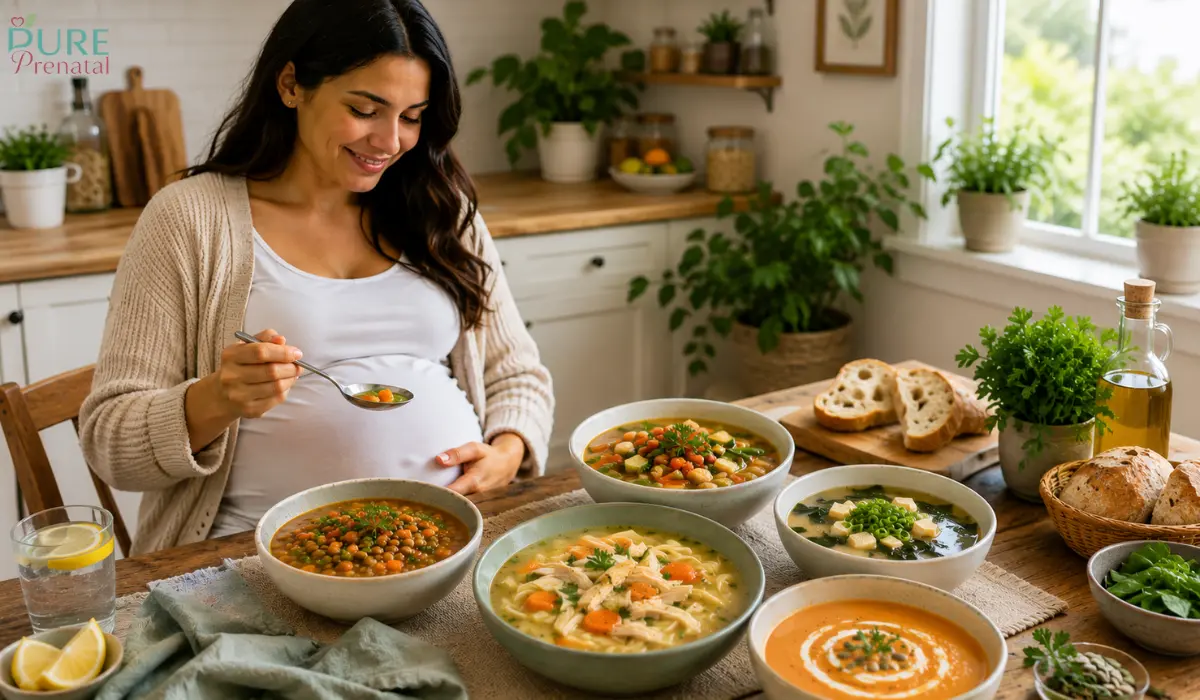
Pregnancy changes the way your body responds to food. Some meals that once felt ordinary suddenly seem unappetizing, while others become exactly what your body craves. Soup often falls into the second category. It’s warm, gentle on the stomach, easy to digest, and can be packed with the nutrients you and your growing baby need.
If you’ve been searching for the best soups for pregnant women, you’re probably looking for something comforting that also supports your health. The good news is that soup can be one of the most pregnancy-friendly meals out there, as long as you know which ingredients to choose and which ones to approach with caution.
This guide walks you through which soups are good for pregnant women, what makes them beneficial, and what soups are safe during pregnancy so you can enjoy a warm bowl with confidence.
Why Soup Can Be a Great Choice During Pregnancy
Soup isn’t just comforting it can genuinely support your body through the physical demands of pregnancy. Here’s why many healthcare providers consider it a smart addition to a prenatal diet.
It’s easy on digestion. Pregnancy hormones slow down digestion for many women, which can lead to bloating or discomfort after heavier meals. A well-made soup, especially one with softened vegetables and light broth, tends to sit more comfortably than fried or heavily processed foods.
It helps with hydration. Staying hydrated is important throughout pregnancy, particularly as blood volume increases to support the baby. Broth-based soups contribute to your daily fluid intake in a way that feels satisfying rather than just drinking plain water.
It’s a flexible way to pack in nutrients. A single bowl of soup can combine vegetables, lean protein, whole grains, and healthy fats many of the nutrient groups you need during pregnancy in one simple dish.
It can help settle nausea. Many women going through morning sickness find that warm, mild-flavored soups are easier to tolerate than heavier meals, particularly in the first trimester.
Which Soup Is Good for Pregnant Woman? Top Options to Consider
Not all soups offer the same benefits, and some require a bit more care in preparation. Below are some of the most commonly recommended options.
1. Vegetable Soup
Vegetable soup is often considered one of the safest and most nutritious choices during pregnancy, and for good reason.
Benefits of vegetable soup during pregnancy include a strong source of fiber, which can help manage the constipation many women experience due to hormonal changes. Vegetables like carrots, spinach, sweet potatoes, and squash also provide folate, vitamin A, vitamin C, and potassium — nutrients that ACOG identifies as important during pregnancy for supporting fetal development and maintaining your own energy levels.
Because vegetable soup is naturally low in fat and can be made with a simple vegetable or low-sodium broth base, it’s gentle on digestion while still being filling. It’s also easy to customize depending on what sounds appealing that day, which is helpful when taste preferences shift during pregnancy.
For the best results, cook vegetables thoroughly and avoid adding excessive salt, since managing sodium intake is generally recommended during pregnancy.
2. Chicken Soup or Chicken Noodle Soup
Chicken soup has long been considered a comfort food, and many women wonder specifically: is chicken noodle soup good for pregnant women?
The short answer is yes, when it’s prepared with fully cooked chicken and made at home or from a trusted source. Chicken is a lean protein that supports the baby’s tissue and muscle development, and the broth adds hydration along with minerals like sodium and potassium in moderate amounts.
Chicken noodle soup also tends to be gentle on an unsettled stomach, which is part of why it’s a go-to meal during illness or early pregnancy nausea. Whole grain noodles can add a bit of fibre, and adding vegetables like carrots and celery boosts the nutritional value even further.
The main thing to watch for is ensuring the chicken is cooked all the way through, with no pink remaining. CDC food safety guidance for pregnant women recommends thoroughly cooking all meat and poultry and that the broth used is low in sodium where possible.
3. Lentil or Bean Soup
Lentil soup is an excellent plant-based option that’s rich in iron, folate, and plant protein three nutrients that become especially important during pregnancy. Iron helps prevent pregnancy-related anemia, which is common as blood volume increases, while folate supports healthy neural tube development in the baby.
Pairing lentil soup with a source of vitamin C, such as tomatoes or a squeeze of lemon, can help your body absorb the iron more effectively.
4. Pumpkin or Sweet Potato Soup
These naturally sweet, creamy soups are rich in beta-carotene, which your body converts into vitamin A. Vitamin A supports the baby’s eye development, immune system, and skin, though it’s best obtained through food sources like this rather than high-dose supplements during pregnancy.
Pumpkin and sweet potato soups are also naturally gentle on the stomach and tend to be well tolerated even when appetite is low.
5. Miso Soup With a Few Precautions
Miso soup for pregnant women is a topic that comes up often, especially for those who enjoy Japanese cuisine. Miso soup can be a light, nutrient-containing option, offering some protein and beneficial bacteria from the fermented soybean paste.
However, there are a few things to keep in mind. Traditional miso soup is often made with dashi stock, which may contain fish. If the soup includes seafood, it’s important to be mindful of the type and amount, since some fish are higher in mercury and should be limited during pregnancy according to FDA and EPA guidance. Miso soup also tends to be higher in sodium, so it’s best enjoyed occasionally rather than daily, and ideally from a source where you know the ingredients.
If you’re eating miso soup at a restaurant, it’s reasonable to ask what type of stock and fish are used, so you can make an informed choice.
What Soups Are Safe During Pregnancy?
Beyond specific recipes, there are some general guidelines that apply to soup as a category during pregnancy.
- Choose fully cooked ingredients. Meat, poultry, seafood, and eggs used in soup should be thoroughly cooked, with no undercooked or raw components.
- Be cautious with unpasteurized dairy. Creamy soups made with unpasteurized milk or cheese should be avoided, as these can carry a risk of Listeria, a germ that pregnant women are significantly more likely to get sick from.
- Watch sodium levels. Many canned or restaurant soups are high in sodium, which can contribute to water retention and elevated blood pressure. Homemade soup allows you to control salt content more easily.
- Reheat leftovers properly. Soups containing meat or dairy should be reheated until steaming hot all the way through, since previously cooked foods can develop bacteria if stored or reheated incorrectly.
- Limit high-mercury seafood. If a soup includes fish, stick to low-mercury varieties and keep portions within the FDA/EPA seafood guidance for pregnancy.
- Be mindful of raw sprouts or unwashed produce. According to FoodSafety.gov’s guidance for pregnant women, raw or undercooked sprouts should be cooked thoroughly, as they carry a higher risk of bacterial contamination.
Following these basic practices allows most classic soups from vegetable to chicken to lentil to remain a safe, nourishing part of a pregnancy diet.
Tips for Making Pregnancy-Friendly Soup at Home
Making your own soup gives you the most control over ingredients and safety. A few practical tips:
- Use low-sodium broth or make your own broth from scratch so you can control the salt content.
- Add a variety of colorful vegetables to increase the range of vitamins and minerals in each bowl.
- Include a protein source, such as lentils, beans, chicken, or tofu, to help keep you fuller for longer.
- Store leftovers in the refrigerator and use them within a few days, reheating thoroughly before eating.
- If nausea is an issue, milder flavors and simpler ingredient combinations are often easier to tolerate than heavily spiced soups.
Final Thoughts
Soup can be one of the most comforting, nourishing, and adaptable meals during pregnancy. From nutrient-dense vegetable soup to protein-rich chicken noodle soup, lentil soup, and even miso soup enjoyed with a few precautions, there are plenty of warm, satisfying options that align with a healthy pregnancy diet.
The key is choosing well-cooked, properly sourced ingredients, being mindful of sodium and mercury levels, and preparing soup in a way that feels good for your body. When in doubt about a specific ingredient or recipe, it’s always worth checking with your healthcare provider, especially if you have any dietary restrictions or pregnancy complications.
Frequently Asked Questions
Is it safe to eat soup every day during pregnancy?
Yes, soup can generally be eaten regularly during pregnancy, especially when it’s homemade and includes a balance of vegetables, protein, and moderate sodium. Variety is helpful to make sure you’re getting a wide range of nutrients.
Which soup is good for pregnant woman experiencing nausea?
Mild, broth-based soups like chicken noodle soup or simple vegetable soup are often easier to tolerate during nausea, since they’re gentle on the stomach and provide hydration without heavy or greasy ingredients.
Can I eat canned soup while pregnant?
Canned soup can be eaten during pregnancy, but it’s a good idea to check the sodium content and ingredient list. Choosing low-sodium versions and heating the soup thoroughly is recommended.
Is miso soup safe every day during pregnancy?
Miso soup can be enjoyed occasionally, but daily consumption isn’t generally recommended due to its sodium content and the possibility of fish-based stock. Checking the ingredients can help you make an informed decision.
What soups should I avoid during pregnancy?
Soups made with unpasteurized dairy, undercooked meat or seafood, or raw sprouts are best avoided. It’s also wise to limit soups that are very high in sodium or made with high-mercury fish.
Are creamy soups safe during pregnancy?
Creamy soups are generally safe as long as they’re made with pasteurized dairy and properly cooked ingredients. If you’re eating out, it’s reasonable to ask how a creamy soup was prepared.

Dr. Tania Adib is a Board Certified OB/GYN based in the northern suburbs of Chicago. She earned her undergraduate degree from the University of Notre Dame and her medical degree from Georgetown University in Washington, D.C., before completing her residency in Obstetrics and Gynecology at Magee-Womens Hospital, University of Pittsburgh Medical Center. Her clinical interests include full-spectrum obstetrics and gynecology, from the first period through the menopausal years, contraception, and abnormal bleeding.