
Choosing a prenatal vitamin can feel overwhelming, especially when you’re standing in the supplement aisle staring at dozens of bottles, each one claiming to be the “best.” The truth is, there isn’t a single universal winner. What matters more than any brand name is understanding which nutrients your body actually needs before, during, and after pregnancy and why.
This guide walks you through the 10 best prenatal vitamins in terms of the nutrients that matter most, along with practical answers to the questions women ask most often: when to start taking them, whether they can affect fertility, and whether they cause weight gain.
What Do Prenatal Vitamins Do?
Before diving into the list, it helps to understand what prenatal vitamins are actually for. A prenatal multivitamin is designed to fill nutritional gaps that a regular diet may not cover, especially during a time when your body’s demand for certain vitamins and minerals rises sharply.
Pregnancy places extra demands on your body to support the development of a baby’s brain, spine, bones, and organs. Even women who eat a balanced diet often fall short on a few key nutrients, which is why healthcare providers routinely recommend a daily prenatal supplement rather than relying on food alone.
In short, prenatal vitamins don’t replace healthy eating; they support it, covering nutritional gaps at a stage when your body needs more than usual.
When to Start Taking Prenatal Vitamins
One of the most common questions is when to start taking prenatal vitamins. Many healthcare providers suggest starting at least one to three months before trying to conceive, since a baby’s neural tube (which becomes the brain and spinal cord) forms in the very first weeks of pregnancy, often before a woman even knows she’s pregnant.
That said, it’s never too late to start. If you find out you’re pregnant and haven’t been taking a prenatal vitamin, beginning immediately is still valuable. Women who aren’t actively trying to conceive but are of reproductive age are also often encouraged to consider a folic acid supplement, simply because roughly half of all pregnancies are unplanned.
The 10 Best Prenatal Vitamins and Nutrients to Look For
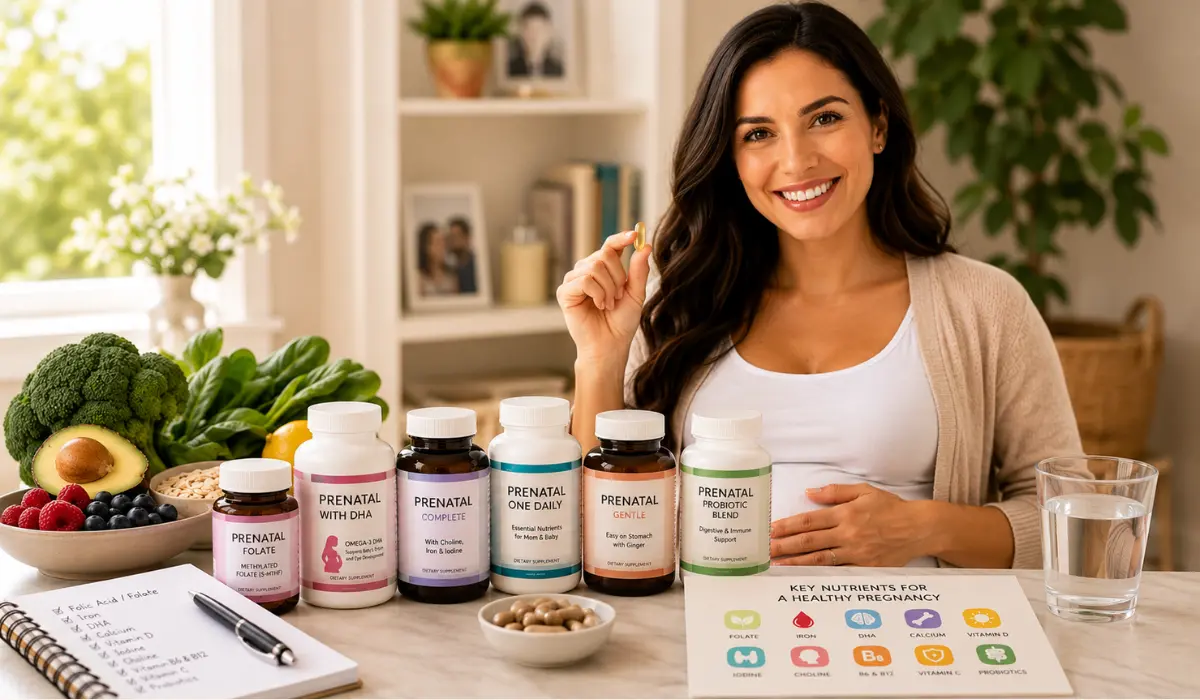
Rather than chasing a specific brand, look for a high-quality prenatal vitamin that includes these ten essential components.
1. Folic Acid (or Folate)
This is arguably the most important nutrient in any prenatal multivitamin. Folic acid helps prevent neural tube defects, which affect the brain and spine. Many high-quality prenatal vitamins now use methylated folate (5-MTHF), which some women’s bodies absorb more efficiently than synthetic folic acid.
2. Iron
Iron supports the increased blood volume of pregnancy and helps prevent anemia, a condition that can leave you feeling exhausted and short of breath. However, iron is also one of the most debated ingredients some women are specifically advised to look for prenatal vitamins without iron, which we’ll cover in more detail below.
3. DHA (Docosahexaenoic Acid)
Prenatal vitamins and DHA go hand in hand because DHA, an omega-3 fatty acid, plays a critical role in fetal brain and eye development. Not every multivitamin includes DHA by default, so many women choose to pair their prenatal with a separate DHA or fish oil supplement.
4. Calcium
Calcium supports the development of your baby’s bones and teeth. If your intake is too low, your body may pull calcium from your own bones to meet the baby’s needs, so adequate calcium intake protects both of you.
5. Vitamin D
Vitamin D works alongside calcium to support bone development and also plays a role in immune function. Many people are naturally low in vitamin D, particularly those with limited sun exposure, making it an important addition to any prenatal formula.
6. Iodine
Iodine supports healthy thyroid function, which is essential for your baby’s brain development. It’s an easy nutrient to overlook, but a genuinely high-quality prenatal vitamin should include it.
7. Choline
Choline has gained more attention in recent years for its role in brain and spinal cord development. Many older prenatal formulas didn’t include meaningful amounts of choline, so it’s worth checking the label if this nutrient matters to you.
8. Vitamin B6 and B12
These B vitamins support red blood cell formation and nervous system development. Vitamin B6 is also sometimes recommended for easing nausea in early pregnancy.
9. Vitamin C
Vitamin C supports immune health and helps your body absorb iron more effectively when the two are taken together.
10. Probiotics (in Some Formulas)
Some modern prenatal vitamins now include probiotics to support digestive health and reduce common pregnancy complaints like bloating and constipation. This isn’t essential in every formula, but it’s a helpful addition for many women.
Can Prenatal Pills Help You Get Pregnant?
This is a question many women ask before conception: can prenatal pills help you get pregnant, or will prenatal pills help you get pregnant faster? It’s important to set realistic expectations here.
Prenatal vitamins are not a fertility treatment, and they don’t directly cause pregnancy. However, they do create a healthier internal environment that may support conception. For example, correcting nutrient deficiencies, supporting hormone regulation, and improving egg quality are all areas where good nutrition plays a supporting role.
So, can prenatal vitamins make you more fertile? Not in a direct, guaranteed way but by addressing deficiencies in nutrients like folate, vitamin D, and B12, they may help create better conditions for conception. Think of them as preparation for a healthy pregnancy rather than a way to induce one.
Prenatal Vitamins Without Iron
Iron is essential for most pregnant women, but it isn’t right for everyone. Some women are advised to choose prenatal vitamins without iron if they have certain blood conditions, such as hemochromatosis, or if they experience severe constipation or nausea from iron supplements.
If you fall into this category, your healthcare provider may recommend a low-iron or iron-free prenatal formula, paired with dietary iron sources or a separate, adjusted supplement if bloodwork shows you need it later in pregnancy.
Do Prenatal Vitamins Make You Gain Weight?
Prenatal vitamins and weight gain is another frequently searched topic, and it’s understandable why. The vitamins themselves contain minimal calories and don’t directly cause weight gain.
That said, some women report increased appetite or bloating after starting a prenatal supplement, which can create the impression of weight gain. In most cases, this is temporary and related to digestive adjustment, water retention, or the natural appetite increase that comes with early pregnancy not the vitamin itself.
If you notice significant or sudden weight changes, it’s worth discussing with your healthcare provider to rule out other causes.
Choosing a High-Quality Prenatal Vitamin
When comparing options, a genuinely high-quality prenatal vitamin typically has a few things in common:
- Third-party testing for purity and potency
- Methylated folate rather than only synthetic folic acid
- Adequate (not excessive) doses that align with recommended daily values
- Minimal unnecessary fillers or additives
- Clear labeling of iron content, so you can choose accordingly
Reading the supplement label carefully, rather than relying on marketing claims, is the most reliable way to judge quality.
Final Thoughts
There’s no single “best” prenatal vitamin that works for every woman. The right choice depends on your individual health history, dietary habits, and any specific needs, such as avoiding iron or prioritizing DHA. What matters most is understanding the nutrients your body needs and choosing a formula that covers them responsibly.
Frequently Asked Questions
1. When should I start taking prenatal vitamins?
Most healthcare providers recommend starting one to three months before trying to conceive, since key developmental processes begin very early in pregnancy.
2. What do prenatal vitamins actually do?
They help fill nutritional gaps in your diet, supporting your baby’s development and your own health during pregnancy.
3. Can prenatal vitamins help you get pregnant?
They don’t directly cause pregnancy, but by correcting nutrient deficiencies, they may support a healthier reproductive environment.
4. Can prenatal vitamins make you more fertile?
There’s no guarantee, but addressing deficiencies in nutrients like folate and vitamin D may indirectly support fertility.
5. Why would someone need prenatal vitamins without iron?
Certain medical conditions or side effects, such as severe constipation, may lead a healthcare provider to recommend a low-iron or iron-free formula.
6. Do prenatal vitamins cause weight gain?
Not directly. Any perceived weight gain is usually linked to appetite changes or digestion, not the vitamin itself.
7. Is DHA necessary in a prenatal vitamin?
DHA supports brain and eye development, and many women take it as part of their prenatal formula or as a separate supplement.
8. How do I know if a prenatal vitamin is high quality?
Look for third-party testing, methylated folate, appropriate dosing, and transparent labeling.

Dr. Tania Adib is a Board Certified OB/GYN based in the northern suburbs of Chicago. She earned her undergraduate degree from the University of Notre Dame and her medical degree from Georgetown University in Washington, D.C., before completing her residency in Obstetrics and Gynecology at Magee-Womens Hospital, University of Pittsburgh Medical Center. Her clinical interests include full-spectrum obstetrics and gynecology, from the first period through the menopausal years, contraception, and abnormal bleeding.