

That first positive test brings a strange mix of feelings: joy, nerves, maybe a hundred questions all at once. And one of the earliest ones is usually pretty practical: what actually happens at these prenatal appointments everyone talks about?
I get this question a lot, and honestly, it’s a good one to ask. Prenatal care isn’t just a box to tick. It’s how your provider keeps an eye on you and your baby, catches small issues before they become big ones, and gives you a regular chance to voice whatever’s on your mind. Once you know roughly what to expect, the appointments themselves tend to feel a lot less intimidating.
So let’s walk through it, trimester by trimester.
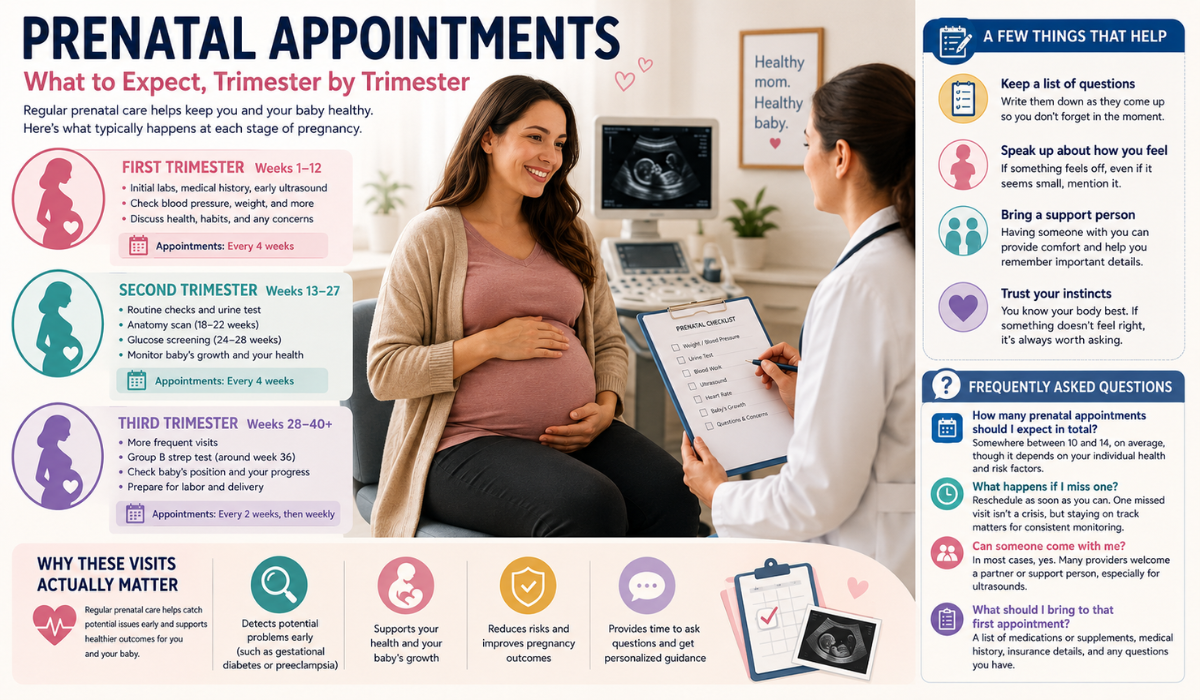
Why These Visits Actually Matter
It’s easy to think of prenatal appointments as routine, with weigh-ins, blood pressure cuffs, and a bit of small talk. But there’s more going on under the surface. These visits are how conditions like gestational diabetes or preeclampsia get caught early, often before you’d notice anything was wrong yourself.
There’s also good evidence that women who attend regular prenatal care tend to have smoother pregnancies and better outcomes overall. It’s one of those things where a little consistency goes a long way.
First Trimester: Weeks 1–12
The First Appointment
Set aside a bit more time for this one. It’s usually the longest visit you’ll have and typically happens somewhere between weeks 6 and 10, depending on your provider’s preference.
Expect a fairly thorough once-over:
- A run-through of your medical history, including any past pregnancies
- The basics: weight, blood pressure, and sometimes a pelvic exam
- Blood work to check your blood type, iron levels, immunity to certain infections, and general health
- A urine sample, mainly to rule out infection
- An early ultrasound, often to confirm how far along you are
- A conversation about day-to-day habits, including diet, exercise, any medications, alcohol, or smoking
If you’ve been saving up questions, this is the appointment to bring them. Nothing is too small to ask.
The Follow-Up
A couple of weeks later, around 10–12 weeks, you’ll usually go back for a shorter visit. Your provider will typically check for a heartbeat, go over your earlier test results with you, and talk through whether you’d like any optional genetic screening.
Second Trimester: Weeks 13–27
Most women describe this stretch as the easiest part of pregnancy. Morning sickness tends to fade, energy comes back, and appointments settle into a steady monthly rhythm.
What These Visits Look Like
- The usual checks: weight, blood pressure, and urine at nearly every appointment
- Fundal height measurements, which are simply a way to track how your uterus and baby are growing
- Listening for the heartbeat, which somehow never stops being a nice moment
- The anatomy scan, usually between 18–22 weeks. This detailed ultrasound looks at your baby’s organs and development, and it’s often the appointment where you can find out the sex if you want to.
- Glucose screening around 24–28 weeks to check for gestational diabetes
This is also a natural point to bring up anything new you’re feeling, whether it’s round ligament pain, backaches, or low energy. Most of it is completely normal, but it’s always worth mentioning to your provider rather than wondering about it on your own.
Third Trimester: Weeks 28–40+
Appointments pick up pace here. You’ll likely move to every two weeks from 28–36 weeks, then weekly from 36 weeks right up until delivery.
What’s Being Checked
- A Group B strep swab around week 36. It’s quick, simple, and checks for bacteria that can affect newborns.
- Your provider checking your baby’s position, particularly whether they’re head-down yet
- Cervical checks as you get closer to your due date, which help gauge how things are progressing
- Non-stress tests if needed, especially if you go past your due date or your pregnancy is being monitored more closely
These later appointments are also a good time to talk through your birth plan, pain relief preferences, and anything about labor that’s been on your mind.
A Few Things That Help
Over the years, I’ve noticed a few habits that make prenatal appointments go more smoothly.
Keep a running note on your phone of questions as they come up. It’s far too easy to forget them by the time you’re actually in the room. If something feels off physically, even something small like unusual swelling or a headache that won’t quit, mention it rather than waiting to see if it passes. Bring your partner or a support person along if that helps you feel steadier, especially for the bigger milestone scans. And trust your instincts. If something doesn’t feel right, it’s always worth raising, even if it turns out to be nothing.
Frequently Asked Questions
How many prenatal appointments should I expect in total?
Somewhere between 10 and 14, on average, though it really depends on your individual health and whether your pregnancy is considered higher risk.
What happens if I miss one?
Try not to worry too much. Just get it rescheduled as soon as you can. One missed visit isn’t a crisis, but staying on track matters for consistent monitoring.
Can someone come with me?
In most cases, yes. Many providers are happy to have a partner or support person in the room, particularly for ultrasounds.
What should I bring to that first appointment?
A list of any medications or supplements you’re taking, your medical history, insurance details, and whatever questions you’ve been holding onto.

Dr. Tania Adib is a Board Certified OB/GYN based in the northern suburbs of Chicago. She earned her undergraduate degree from the University of Notre Dame and her medical degree from Georgetown University in Washington, D.C., before completing her residency in Obstetrics and Gynecology at Magee-Womens Hospital, University of Pittsburgh Medical Center. Her clinical interests include full-spectrum obstetrics and gynecology, from the first period through the menopausal years, contraception, and abnormal bleeding.