
If you’ve just found out you’re expecting, or you’re trying to figure out if that sudden urge for pickles at midnight means something, you’re probably wondering: when do pregnancy cravings start, exactly? It’s one of the most talked-about parts of pregnancy, yet it’s also one of the most misunderstood. Some women notice cravings before they even get a positive test. Others don’t experience them until well into the second trimester. And some go through an entire pregnancy without a single unusual food urge.
There’s no single “correct” timeline, but there is a pattern most women fall into, and understanding it can help you feel a little more prepared for what’s ahead.
When Do Cravings Start in Pregnancy?
For most women, food cravings begin somewhere between weeks 5 and 8 of pregnancy, right around the same time other early symptoms like nausea, fatigue, and breast tenderness show up. This lines up with the sharp rise in hormones — particularly human chorionic gonadotropin (hCG), estrogen, and progesterone — that happens in the first trimester.
That said, the honest answer is that it varies quite a bit from person to person. Some women report craving specific foods within the first two weeks after conception, even before a missed period. Others don’t notice anything unusual until they’re 10 or 12 weeks along. A smaller group doesn’t experience strong cravings at all, and that’s entirely normal too. Cravings are not a required symptom of pregnancy, and their absence doesn’t say anything about the health of your pregnancy.
When Do Food Cravings Start in a Pregnancy — Trimester by Trimester
Breaking it down by trimester can help you understand what’s typical at each stage.
First trimester (weeks 1–12): This is when hormone levels shift the most dramatically, and it’s also when most women first notice changes in their sense of smell and taste. Cravings often appear alongside nausea, which is why some women crave bland, starchy foods like crackers or toast during this window.
Second trimester (weeks 13–27): For many women, this is when cravings become the strongest and most specific. Morning sickness usually eases up by now, appetite tends to increase, and this is often when people start craving very particular things — a certain brand of ice cream, a specific fruit, or an oddly specific combination of foods.
Third trimester (weeks 28–40): Cravings often continue but may shift again as the baby grows and puts pressure on the stomach, sometimes making large meals uncomfortable. Some women find their cravings become smaller and more frequent rather than intense.
When Do Weird Pregnancy Cravings Start?
“Weird” cravings — the kind that make you laugh at yourself later — tend to show up a bit later than general food cravings, often in the second trimester. This is also when a condition called pica can appear, which involves craving non-food items like chalk, dirt, ice, or laundry starch. Pica cravings are different from typical food cravings and are worth mentioning to your healthcare provider, since they can sometimes be linked to iron deficiency or other nutrient gaps.
Unusual cravings in pregnancy don’t always mean something is medically wrong, but persistent urges to eat non-food items should always be checked out rather than dismissed as quirky pregnancy behavior.
When Does a Pregnant Woman Start Craving Food in General?
It’s worth separating two different things: an overall increase in appetite, and specific, intense cravings. Appetite increases are common from the second trimester onward, once nausea (if you had it) starts to fade and your body’s calorie needs rise to support the growing baby. Specific cravings, on the other hand, can come and go throughout pregnancy and aren’t necessarily tied to actual nutritional need — though researchers have theories about why they happen anyway.
Why Do Pregnancy Cravings Happen at All?
There’s no single confirmed explanation, but a few theories are widely discussed among healthcare providers:
- Hormonal shifts affect taste and smell sensitivity, which can make certain foods suddenly more appealing or repulsive.
- Nutrient needs may play a role in some cravings, though the connection isn’t always direct or predictable.
- Emotional and psychological factors, including stress relief or comfort-seeking, can influence what sounds appealing.
- Cultural and social expectations around pregnancy cravings may shape how women interpret and respond to hunger or taste changes.
None of these theories fully explains every craving, and that’s okay. Pregnancy cravings are complex, and most are harmless as long as they’re part of a generally balanced diet.
Common Cravings When Pregnant
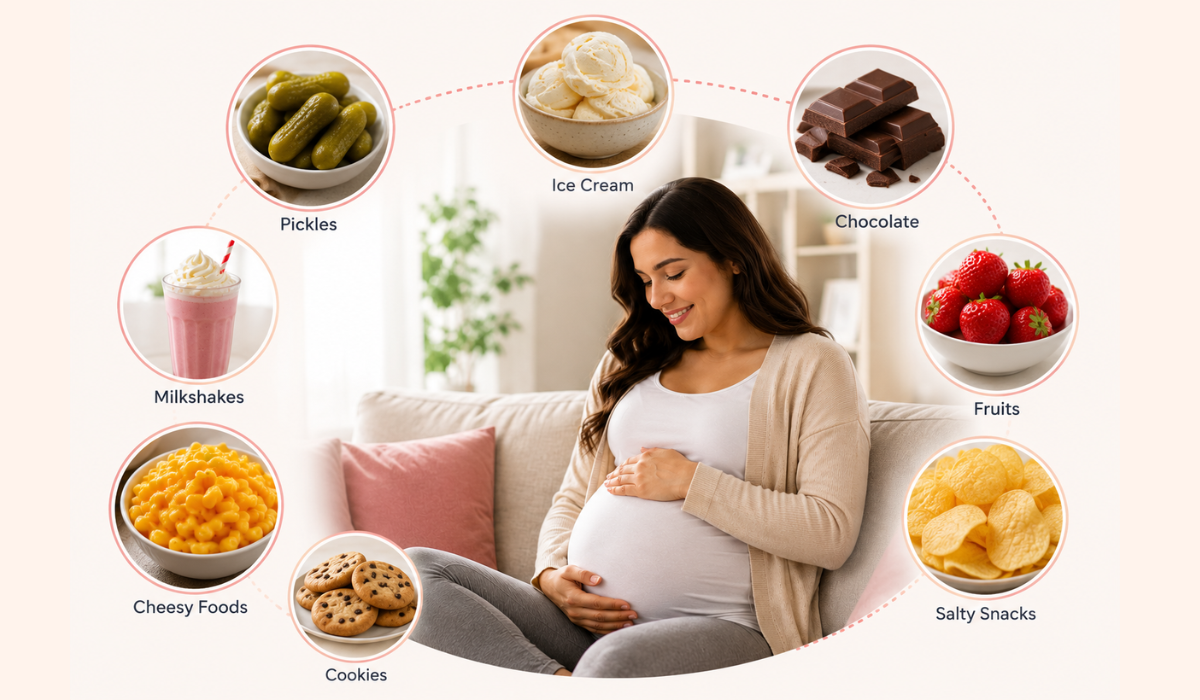
Some cravings show up again and again across different women and pregnancies. Here are a few of the most common ones, and what might be behind them.
Why Am I Craving Milk?
Craving milk or other dairy products during pregnancy is often linked to your body’s increased need for calcium and protein to support your baby’s developing bones and teeth. It can also simply be a comfort craving, since milk is often associated with warmth and ease of digestion.
Craving Salt During Pregnancy
A craving for salty foods is extremely common and is often connected to the increase in blood volume that happens during pregnancy, which affects sodium levels in the body. Occasional salty cravings are usually nothing to worry about, but consistently very high salt intake is worth discussing with your provider, especially if you have blood pressure concerns.
Craving Sweet Food During Pregnancy
Many women notice a stronger pull toward sweet foods, particularly in the first and second trimesters. This may be tied to the body’s increased energy demands, since sugar provides a quick source of fuel. Moderation is key here, as is pairing sweet cravings with more balanced snacks when possible.
Why Am I Craving Eggs?
Eggs are a common craving because they’re rich in protein and choline, both of which are important for your baby’s brain development. If you find yourself wanting eggs often, it may simply reflect your body signaling a need for more protein.
Why Am I Craving Milkshakes?
Milkshakes combine two common pregnancy cravings — dairy and sugar — into one, which is part of why they’re such a popular craving. They can also feel soothing if you’re dealing with nausea, since cold, smooth textures are often easier to tolerate than heavier meals.
Craving Ice During Pregnancy
Wanting to chew on ice is one of the more distinctive pregnancy cravings, and it’s actually one that healthcare providers pay closer attention to. Craving ice specifically has been associated with iron deficiency anemia in some women, so if this craving is strong or persistent, it’s worth mentioning at your next prenatal appointment.
Craving Sweets While Pregnant
Similar to general sugar cravings, a pull toward sweets like candy or baked goods is common and generally harmless in moderation. Pairing sweet cravings with fiber or protein — like fruit with yogurt — can help keep energy levels more stable.
How Long Do Pregnancy Cravings Last?
For most women, cravings are strongest during the first and second trimesters and tend to ease off in the third trimester, though this isn’t universal. Some cravings disappear as quickly as they appeared, while others stick around for weeks or even the whole pregnancy. It’s also common for cravings to change completely from one trimester to the next, so what you wanted at week 10 might be the last thing you want by week 30.
When Should You Talk to Your Doctor About Cravings?
Most pregnancy cravings are completely normal and don’t need medical attention. However, it’s a good idea to mention your cravings to your healthcare provider if:
- You’re craving non-food items (ice, chalk, dirt, paper, or similar).
- Your cravings are leading to a very unbalanced diet.
- You’re concerned about excessive weight gain or very limited eating.
- Cravings are accompanied by other symptoms like extreme fatigue, dizziness, or pale skin, which can sometimes point to anemia.
Your provider can check things like iron levels through routine bloodwork, which is often part of standard prenatal care anyway.
Frequently Asked Questions
When do pregnancy cravings start?
Most women notice cravings starting between weeks 5 and 8, around the same time as other early pregnancy symptoms, though timing varies widely from person to person.
Do all pregnant women get cravings?
No. Cravings are common but not universal. Some women go through pregnancy without any noticeable food cravings, and that’s perfectly normal.
Can cravings start before a missed period?
It’s possible, though less common. Some women report subtle taste or appetite changes very early on, even before a positive pregnancy test.
Are cravings a sign of what nutrients my body needs?
Sometimes, but not always. While cravings like ice or dairy can be linked to nutrient needs such as iron or calcium, many cravings don’t have a clear nutritional explanation.
Is it normal for cravings to change throughout pregnancy?
Yes, it’s very common for cravings to shift from trimester to trimester as hormone levels and appetite change.
When should I worry about a craving?
Cravings for non-food items, or cravings that lead to a very restricted or unbalanced diet, should be discussed with your healthcare provider.

Dr. Tania Adib is a Board Certified OB/GYN based in the northern suburbs of Chicago. She earned her undergraduate degree from the University of Notre Dame and her medical degree from Georgetown University in Washington, D.C., before completing her residency in Obstetrics and Gynecology at Magee-Womens Hospital, University of Pittsburgh Medical Center. Her clinical interests include full-spectrum obstetrics and gynecology, from the first period through the menopausal years, contraception, and abnormal bleeding.