
Pregnancy changes almost everything about how your body works, and one of the biggest shifts happens in your blood. Your blood volume increases by nearly 50 percent to support your growing baby, which means your body needs a lot more iron than usual. Without enough of it, you can end up feeling exhausted, dizzy, or short of breath — and in more serious cases, iron deficiency can affect both your health and your baby’s development.
The good news is that getting enough iron doesn’t have to be complicated. With the right foods rich in iron for pregnant woman on your plate, you can support your energy levels, your baby’s growth, and your overall wellbeing throughout pregnancy. This guide walks you through why iron matters so much right now, which foods actually help, and how to build a simple, realistic iron diet for pregnancy that fits into your everyday life.
Why Iron Matters So Much During Pregnancy
Iron helps your body make hemoglobin, the protein in red blood cells that carries oxygen from your lungs to the rest of your body — including your placenta and your baby. During pregnancy, your iron needs roughly double compared to before you were pregnant, mainly because:
- Your blood volume expands significantly to support the placenta
- Your baby needs iron to build their own blood supply and store reserves for the first few months after birth
- You lose some iron naturally during childbirth
When iron intake doesn’t keep up with these demands, iron deficiency anemia can develop. This is one of the most common nutritional concerns in pregnancy, and it’s often manageable through diet, though some women may also need a supplement recommended by their healthcare provider.
Signs You Might Need More Iron
It’s easy to mistake iron deficiency symptoms for ordinary pregnancy tiredness, so it helps to know what to watch for:
- Persistent fatigue that doesn’t improve with rest
- Pale skin or pale inner eyelids
- Shortness of breath during normal activity
- Dizziness or lightheadedness
- Rapid heartbeat
- Cravings for non-food items like ice or clay (a condition called pica)
If you notice several of these symptoms, it’s worth mentioning to your doctor or midwife. A simple blood test can check your iron and hemoglobin levels.
The Best Iron Containing Foods During Pregnancy
Iron in food comes in two forms — heme iron, found in animal products, and non-heme iron, found in plant foods. Heme iron is absorbed more easily by the body, but a well-planned diet that combines both types can meet your needs comfortably.
Animal-Based Iron Foods for Pregnant Women
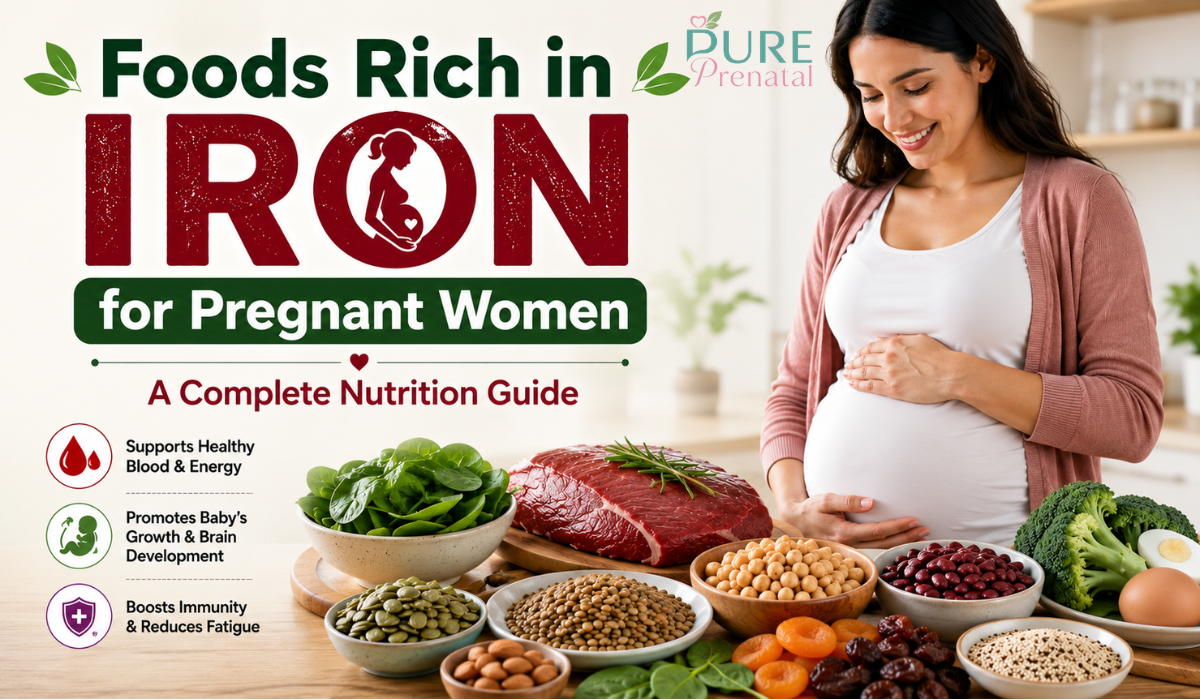
- Lean red meat: beef and lamb are among the richest sources of heme iron
- Poultry: chicken and turkey, especially the darker cuts, provide a good amount of iron
- Fish: options like salmon and sardines offer iron along with beneficial omega-3 fats (stick to low-mercury choices during pregnancy)
- Eggs: a convenient source of iron plus protein, easy to add to almost any meal
Plant-Based Iron Foods for Pregnancy
- Lentils and beans: chickpeas, kidney beans, and lentils are excellent plant-based iron foods for pregnant women and also add fiber
- Leafy greens: spinach, kale, and Swiss chard contain iron along with folate, another nutrient that’s essential in pregnancy
- Tofu and tempeh: good options for those following a vegetarian or plant-based diet
- Nuts and seeds: pumpkin seeds, cashews, and sesame seeds all contribute meaningful amounts of iron
- Fortified cereals and grains: many breakfast cereals and whole grains are fortified with iron, making them a simple way to boost intake
- Dried fruits: apricots, raisins, and prunes offer iron in a naturally sweet, portable form
How to Help Your Body Absorb Iron Better
Eating iron foods for pregnant women is only part of the picture. How you combine foods can make a real difference in how much iron your body actually absorbs.
Pair iron with vitamin C. Foods like oranges, strawberries, bell peppers, and tomatoes help your body absorb non-heme iron more efficiently. For example, adding sliced strawberries to a bowl of fortified cereal, or squeezing lemon over a lentil salad, can meaningfully improve absorption.
Be mindful of calcium timing. Calcium rich foods for pregnant woman, like milk and dairy, are essential for building your baby’s bones, but calcium can slightly reduce iron absorption if eaten in the exact same bite. You don’t need to avoid combining them entirely — just try not to rely on dairy as your main pairing with iron-rich meals.
Watch tea and coffee timing. Tannins in tea and coffee can interfere with iron absorption, so it can help to enjoy these beverages between meals rather than right alongside your iron-rich foods.
Building a Simple Iron Rich Diet Pregnancy Plan
You don’t need a complicated meal plan to meet your iron needs. Small, consistent choices throughout the day add up.
Healthy Pregnancy Breakfast Ideas
Breakfast is a great opportunity to start the day with iron. A few pregnancy breakfast ideas worth trying:
- Fortified oatmeal topped with berries and a spoonful of nut butter — and yes, is oatmeal good for pregnancy is a common question, and the answer is generally yes, since oatmeal is fortified with iron in many brands and also provides steady, slow-releasing energy
- Scrambled eggs with spinach and whole grain toast
- Greek yogurt for pregnant women paired with dried apricots and a handful of pumpkin seeds — Greek yogurt itself is lower in iron but brings protein and calcium, making it a nice complement to an iron-rich topping
- A smoothie with fortified cereal, berries, and a splash of orange juice for a vitamin C boost
Lunch and Dinner Ideas
- A lentil soup with a side salad topped with bell peppers
- Grilled chicken or fish with a side of leafy greens
- A bean and vegetable stir-fry served over brown rice
- Beef or tofu stir-fried with broccoli and served with citrus-dressed greens
Snacks That Support Iron Intake
- A handful of mixed nuts and dried fruit
- Hummus with vegetable sticks
- Whole grain crackers with a slice of turkey
Protein Rich Food for Pregnant Women and Its Connection to Iron
Protein and iron often go hand in hand, since many of the best iron sources — meat, eggs, legumes, and dairy — are also valuable protein rich foods for pregnant women. Protein supports your baby’s tissue growth and helps repair and build your own body during pregnancy, so choosing meals that combine both nutrients, like a lentil and vegetable stew or grilled fish with quinoa, is an efficient way to cover two important nutritional bases at once.
Don’t Forget Fiber and Berries
Pregnancy often brings digestive changes, including constipation, so it helps to include high fiber foods for pregnancy alongside your iron-rich choices. Whole grains, legumes, vegetables, and fruits like pears and berries all support healthy digestion.
Berries deserve a special mention. Berry for pregnancy is a smart pairing because berries are rich in vitamin C, which — as mentioned earlier — helps your body absorb non-heme iron more effectively. Blueberries, strawberries, and raspberries also provide fiber and antioxidants, making them an easy addition to breakfast, snacks, or a simple fruit salad.
Sample One-Day Pregnancy Meal Guide
Here’s an example of how a day of pregnancy meals might come together to support iron intake:
- Breakfast: Fortified oatmeal with strawberries and chopped almonds
- Mid-morning snack: An orange and a small handful of pumpkin seeds
- Lunch: Lentil and vegetable soup with a side of leafy greens dressed in lemon
- Afternoon snack: Greek yogurt with dried apricots
- Dinner: Grilled salmon or tofu with quinoa and roasted bell peppers
- Evening snack: Whole grain crackers with hummus
This kind of pattern naturally weaves in iron containing foods during pregnancy without requiring separate “iron meals,” since the nutrients are simply part of a balanced daily routine.
A Gentle Reminder About Supplements
Many healthcare providers recommend an iron supplement during pregnancy, particularly in the second and third trimesters when needs increase the most. Diet alone doesn’t always meet the full requirement for every woman, and that’s completely normal. If a supplement is recommended for you, food-based iron sources can still work alongside it to support absorption and overall nutrition.
Frequently Asked Questions
How much iron do I need during pregnancy?
Most pregnant women need around 27 milligrams of iron per day, which is higher than the amount needed before pregnancy. Your healthcare provider can confirm the right amount for your individual situation.
What are the best foods containing iron for pregnancy if I’m vegetarian?
Lentils, beans, chickpeas, tofu, fortified cereals, leafy greens, nuts, and seeds are all strong plant-based options. Pairing them with vitamin C-rich foods helps improve absorption.
Is oatmeal good for pregnancy in terms of iron?
Yes, many oatmeal brands are fortified with iron, and oatmeal also provides fiber and steady energy, making it a solid choice for a healthy pregnancy breakfast.
Can I eat too much iron during pregnancy?
It’s possible to get too much iron from supplements, which can cause side effects like constipation or nausea. Getting iron primarily from food is generally safe, but always follow your provider’s guidance on supplement dosing.
Does Greek yogurt for pregnant women help with iron levels?
Greek yogurt is not a major iron source on its own, but it’s rich in protein and calcium. Pairing it with iron-rich toppings like dried fruit or seeds can create a more balanced snack.
What foods should I avoid pairing with iron rich meals?
Try to avoid having tea, coffee, or large amounts of calcium-rich dairy at the exact same time as your main iron-rich meal, since these can reduce how much iron your body absorbs.
Can low iron affect my baby?
Untreated iron deficiency during pregnancy has been associated with risks such as low birth weight and preterm delivery. This is why monitoring and addressing iron levels early is important.
What’s a quick way to add more iron rich foods pregnant women can enjoy without much prep?
Fortified cereals, canned beans, pre-washed spinach, boiled eggs, and dried fruit are all low-effort ways to increase iron intake without extensive cooking.

Dr. Tania Adib is a Board Certified OB/GYN based in the northern suburbs of Chicago. She earned her undergraduate degree from the University of Notre Dame and her medical degree from Georgetown University in Washington, D.C., before completing her residency in Obstetrics and Gynecology at Magee-Womens Hospital, University of Pittsburgh Medical Center. Her clinical interests include full-spectrum obstetrics and gynecology, from the first period through the menopausal years, contraception, and abnormal bleeding.