

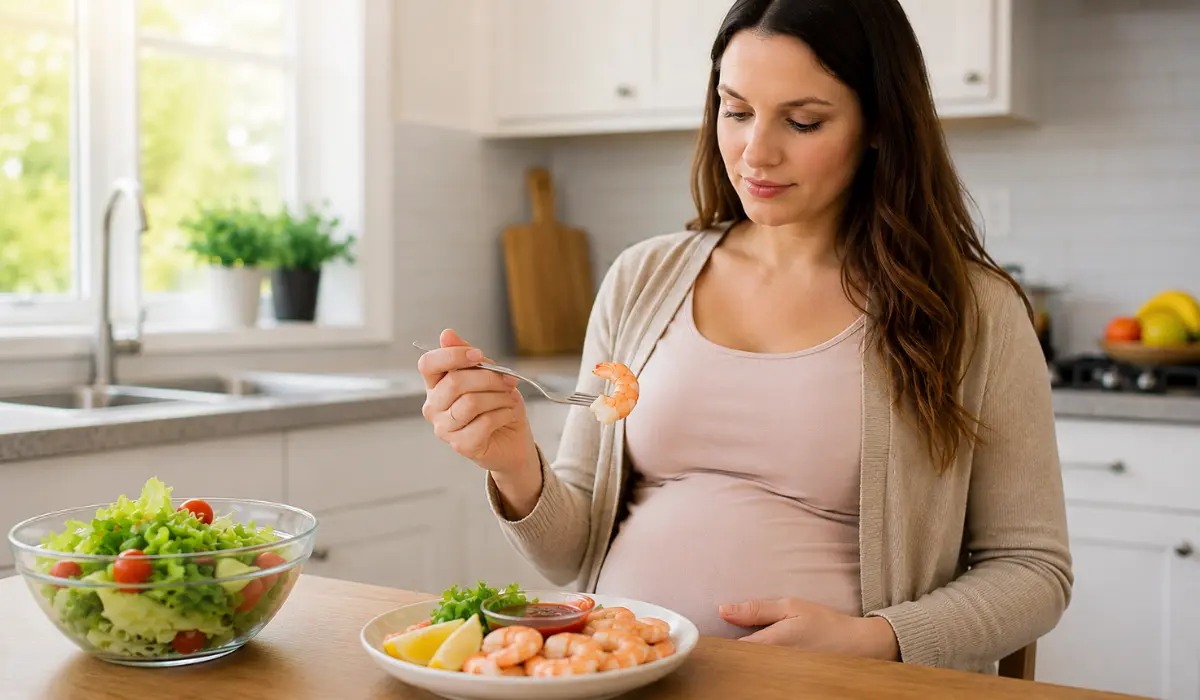
You’re standing in front of the seafood counter, or maybe scrolling a takeout menu at 9pm, and the craving hits. Shrimp. But then the second thought hits right behind it: wait, am I even allowed to eat this?
If you’ve been avoiding shrimp “just in case” since finding out you’re pregnant, you’re not alone — a lot of expecting moms play it overly safe with seafood because the mercury warnings tend to stick in your head more than the nutrition benefits do. The good news is that shrimp is actually one of the better seafood choices during pregnancy, not one to be nervous about.
That said, there’s a right way and a wrong way to eat it while pregnant, and the difference matters more than you might think. Let’s get into it.
Is It Safe to Eat Shrimp While Pregnant?
Yes — cooked shrimp is considered safe, and it’s regularly listed alongside salmon, cod, and tilapia as one of the “best choice” seafoods for pregnant women. The reason comes down to mercury.
Mercury builds up in fish over their lifetime, and it builds up faster and higher in large, long-living predators like swordfish, sharks, and king mackerel — the fish that sit at the top of the food chain and eat a lot of smaller fish along the way. Shrimp doesn’t work like that. Shrimp grow fast, live short lives, and sit near the bottom of the marine food chain, so there’s simply less time and opportunity for mercury to accumulate in their tissue.
That’s the mercury side of the story. But mercury isn’t actually the main risk with shrimp during pregnancy — bacteria is. Which brings us to the one rule that matters more than any other here: cook it thoroughly. Raw shrimp is a different conversation entirely, and we’ll cover that below.
Short version: can a pregnant woman eat shrimp? Yes, cooked, from a decent source, in reasonable amounts.
How Much Shrimp Can a Pregnant Woman Eat?
This is probably the question people search for right after “is it safe,” and it’s a fair one — because “safe in general” and “safe in unlimited amounts” are two very different things.
The general recommendation for pregnancy is somewhere between 8 and 12 ounces of low-mercury seafood per week, spread across two or three meals. Shrimp falls into that low-mercury bucket, so it counts toward that total the same way salmon or tilapia would.
To put that in real terms: a serving is roughly the size of your palm, around 3-4 ounces. So two to three shrimp-based meals a week is generally fine, assuming you’re not also loading up on other seafood on top of it.
A few things worth keeping in mind:
Don’t eat shrimp at every single meal, even if it’s tempting. Rotating between different low-mercury seafood — shrimp one day, salmon another, maybe tilapia later in the week — spreads out your nutrient intake and keeps any one exposure from adding up.
Also, shrimp sneaks into more dishes than you’d expect. Pad thai, fried rice, ramen, paella — it’s easy to underestimate how much shrimp you’re eating across a week if you’re only counting the obvious “shrimp dinner” nights. Keep a rough mental tally rather than obsessing over exact ounces.
And if you go slightly over one week? Don’t panic. These numbers are meant to guide a general pattern over time, not something to track down to the gram.
Nutritional Benefits of Shrimp During Pregnancy
Shrimp isn’t just “technically allowed” — it’s genuinely useful during pregnancy. Here’s what it actually offers:
1. High-Quality, Low-Fat Protein
Your protein needs go up noticeably during pregnancy to support the placenta, your growing blood volume, and the baby’s developing tissue. Shrimp gives you a solid protein hit without dragging along a lot of saturated fat the way some red meat does.
2. Omega-3 Fatty Acids
Not as much as salmon or sardines, admittedly, but shrimp still contributes some DHA, which plays a role in your baby’s brain and eye development. It’s a supporting player here, not the star.
3. Iron
Pregnancy is basically a crash course in why iron matters — your blood volume expands significantly, and anemia becomes a real risk if intake doesn’t keep up. Shrimp helps chip away at that need.
4. Vitamin B12
This one supports your baby’s developing nervous system, and shrimp happens to be one of the richer natural sources of it.
5. Zinc and Selenium
Both support immune function, and zinc specifically has a role in fetal growth and cell division — not something people usually associate with a shrimp cocktail, but it’s there.
6. Low in Mercury
Obviously, which we’ve already covered — but it’s worth restating because it’s the whole reason shrimp gets a green light in the first place.
Put it all together and shrimp earns its place on the plate, not just as something you’re “allowed” to eat but as something that’s doing real work nutritionally.
Potential Risks of Eating Shrimp While Pregnant
Nothing is completely risk-free, so let’s be honest about where the real concerns sit.
Raw or undercooked shrimp is the big one
This is the risk that actually matters. Raw or undercooked shrimp can carry bacteria like Vibrio and Listeria, along with parasites, and pregnancy makes you more vulnerable to these than you’d normally be — your immune system shifts during pregnancy in ways that lower your defenses against certain infections. Listeria in particular is no joke; it’s been linked to miscarriage, premature labor, and serious illness in newborns.
So sushi with raw shrimp, sashimi-style shrimp, ceviche, or shrimp cocktail made with shrimp that wasn’t fully cooked — all of that is off the table until after delivery.
Allergies don’t take a pregnancy break
If you already have a shellfish allergy, pregnancy doesn’t change that math. Keep avoiding it. And if you’ve genuinely never eaten shrimp before and you’re trying it for the first time while pregnant, it’s worth being aware of what an allergic reaction looks like — hives, swelling, trouble breathing — and getting medical help immediately if any of that shows up.
Where it came from and how it was handled matters
Even properly low-mercury shrimp can go bad if it wasn’t stored or handled well. This has nothing to do with mercury and everything to do with basic food safety — buy from places you trust, keep it refrigerated, and don’t let cooked shrimp sit out for hours at a party buffet.
Sodium in processed shrimp products
Not a pregnancy-specific issue, but worth a mention: canned, breaded, or pre-seasoned shrimp products can be surprisingly high in sodium. If you’re already dealing with blood pressure concerns or swelling, it’s something to glance at on the label.
What About Shrimp Cocktail?
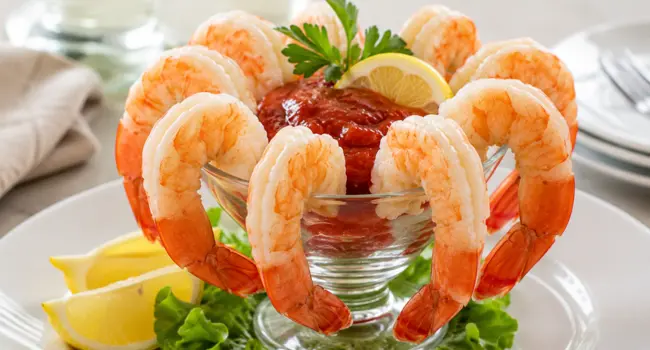
This one genuinely depends on how it was made, not on the dish itself.
Classic shrimp cocktail uses shrimp that’s been boiled or steamed fully before being chilled and served with cocktail sauce. If that’s how it was prepared — cooked thoroughly, then refrigerated promptly — it’s generally fine during pregnancy.
Where it gets risky is when the shrimp wasn’t cooked all the way through, or when it’s been sitting out at room temperature for a while, like at a wedding or holiday party spread. Bacteria doesn’t care that it’s a special occasion.
If you’re not sure how it was prepared, just ask. It’s a normal question, and most places will happily tell you.
What About Shrimp Tempura Rolls or Tempura Sushi?
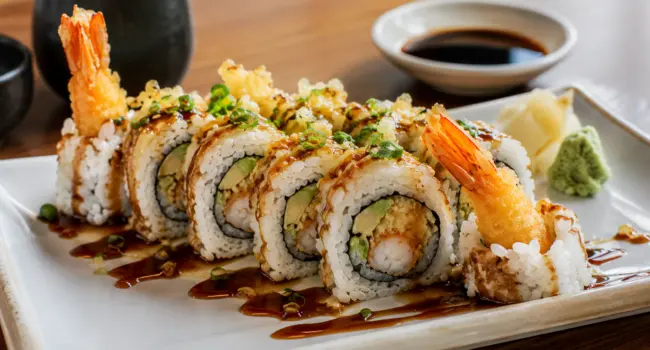
Good news here: tempura shrimp is battered and deep-fried, which means it’s fully cooked through the frying process. So a shrimp tempura roll is generally considered safe during pregnancy — the shrimp itself isn’t raw, even though it’s sitting inside a sushi roll.
A couple of things to double-check anyway:
Make sure it’s actually tempura and not raw shrimp (sometimes labeled “ebi” on menus can go either way, so ask if you’re unsure). Also check what else is in the roll — plenty of rolls mix cooked tempura shrimp with raw fish or spicy mayo that contains raw egg, and that changes the safety picture. And in a busy sushi kitchen, cooked and raw ingredients often share prep surfaces, so if you’re being extra cautious, making tempura rolls at home gives you full control over that.
Bottom line: can a pregnant woman eat shrimp tempura sushi? Yes, as long as the shrimp is properly fried and the rest of the roll doesn’t have raw components hiding in it.
Keeping It Simple: Practical Rules for Eating Shrimp While Pregnant
- Cook it all the way through — it should look opaque and pearly white/pink, never gray or translucent.
- Skip anything raw: sashimi shrimp, ceviche, undercooked shrimp cocktail, all of it.
- Buy from places with decent food safety standards, not the questionable stall you’re unsure about.
- Refrigerate promptly and don’t eat shrimp that’s been sitting at room temperature for more than a couple hours.
- Stay within the general 8-12 ounce weekly seafood range, and mix shrimp with other low-mercury options rather than eating it exclusively.
- When eating out, just ask how it’s prepared. Nobody minds the question.
- If you have a shellfish allergy, none of the above applies — skip it entirely, cooked or not.
Bottom Line
Shrimp deserves a spot on your pregnancy plate. It’s low in mercury, high in protein, and brings along iron, B12, zinc, and a bit of omega-3 — all things your body is asking for more of right now. The one thing that actually matters is preparation: fully cooked, reasonably sourced, eaten in normal portions.
Shrimp cocktail, tempura rolls, garlic shrimp, shrimp fried rice — most of it is fair game as long as the shrimp itself isn’t raw. When you’re not sure how something was made, ask. And if you have specific health concerns, your doctor is always the better source than a search engine.
Frequently Asked Questions
Can pregnant women eat shrimp?
Yes. Fully cooked shrimp is a low-mercury seafood option that’s considered safe and beneficial during pregnancy.
Can a pregnant woman eat shrimp every day?
It’s better to treat shrimp as part of your weekly seafood total (around 8-12 ounces) rather than a daily staple. Rotating with other low-mercury seafood gives you more nutritional variety.
Can pregnant women eat shrimp cocktail?
Yes, as long as the shrimp was fully cooked before being chilled and hasn’t been left out at room temperature for a long stretch. Avoid it if the shrimp was undercooked.
Can a pregnant woman eat shrimp tempura rolls?
Generally yes — tempura shrimp is deep-fried and fully cooked. Just confirm the rest of the roll doesn’t contain raw fish or raw-egg sauces.
Can a pregnant woman eat shrimp tempura sushi?
Yes, because frying cooks the shrimp thoroughly. Double-check other ingredients in the roll to be safe.
How much shrimp can a pregnant woman eat in a week?
Around 8-12 ounces of low-mercury seafood total per week, across two to three servings. Shrimp can make up some or all of that.
Is raw shrimp ever okay during pregnancy?
No — raw or undercooked shrimp, including in sushi, sashimi, or ceviche, should be avoided because of bacteria and parasite risks.
How do I know shrimp is fully cooked?
It should turn opaque with a pink-white color. If it still looks translucent or grayish, it needs more time.
Can a shellfish allergy show up during pregnancy?
Pregnancy doesn’t typically create a new allergy, but existing ones don’t go away either. If you notice any allergic reaction after eating shrimp, contact your healthcare provider right away.
Is shrimp better than other seafood during pregnancy?
It’s a solid low-mercury choice, but not a replacement for everything else. Fattier fish like salmon carry more omega-3s, so variety across different seafood types is the better overall strategy.

Dr. Tania Adib is a Board Certified OB/GYN based in the northern suburbs of Chicago. She earned her undergraduate degree from the University of Notre Dame and her medical degree from Georgetown University in Washington, D.C., before completing her residency in Obstetrics and Gynecology at Magee-Womens Hospital, University of Pittsburgh Medical Center. Her clinical interests include full-spectrum obstetrics and gynecology, from the first period through the menopausal years, contraception, and abnormal bleeding.