

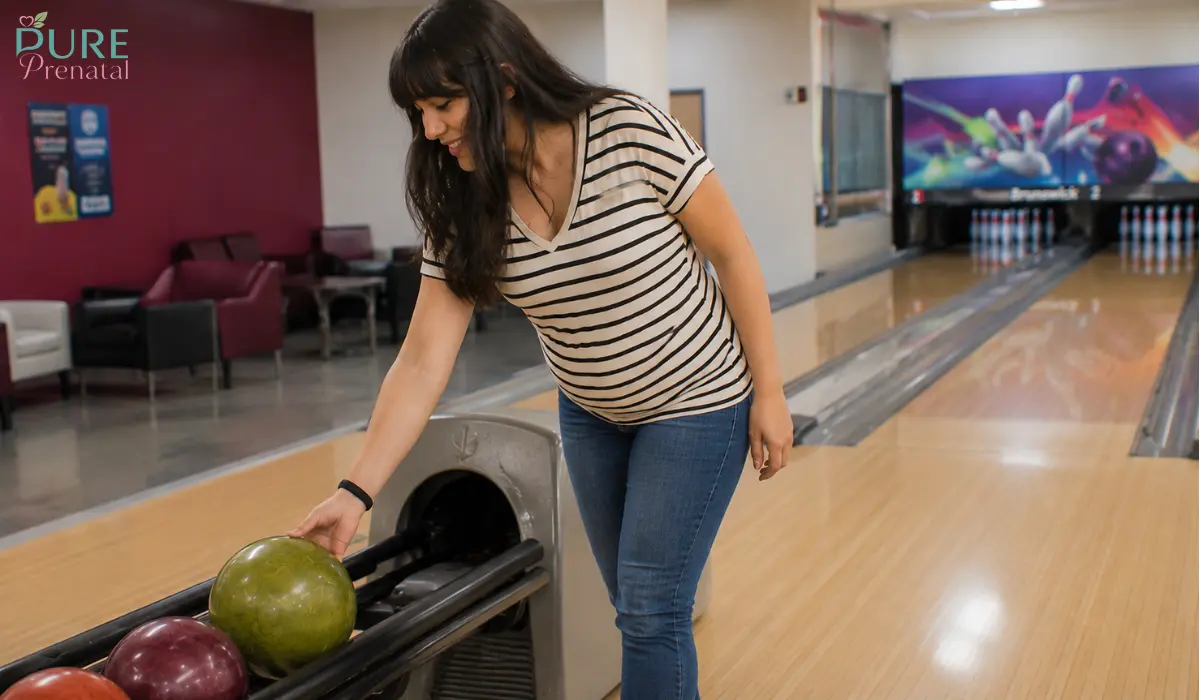
Pregnancy changes the way you move through the world, and even everyday activities can suddenly raise new questions. If bowling has always been part of your weekly routine or your social life, you might be wondering whether it’s still safe to step up to the lane now that you’re expecting. The good news is that for most healthy pregnancies, bowling can remain a fun, low-impact activity — but it does come with a few important considerations that change as your pregnancy progresses.
This guide walks you through what makes bowling generally safe during pregnancy, the specific risks to watch for, and how your approach to the game might need to shift trimester by trimester. As always, this is general guidance, not a replacement for advice from your own doctor or midwife, who knows your health history and can give you recommendations tailored to you.
Is Bowling Safe During Pregnancy?
Bowling is classified as a low-impact activity, which generally makes it more pregnancy-friendly than high-impact sports like running long distances, horseback riding, or contact sports. Unlike activities that involve jumping, sudden collisions, or a high risk of falling, bowling is a controlled, ground-based movement. This is one of the reasons many healthcare providers consider it reasonably safe to continue during a low-risk, uncomplicated pregnancy, especially if you were already a regular bowler before conceiving.
That said, “safe” doesn’t mean “risk-free.” Bowling involves a repetitive swinging motion, some degree of twisting through the torso, a controlled forward lunge as you release the ball, and standing on a smooth, sometimes slick surface. Each of these elements interacts differently with your body as pregnancy progresses, which is why the answer to “can you bowl while pregnant” isn’t a simple yes or no — it depends on your trimester, your fitness level, and how your individual pregnancy is progressing.
Why Pregnancy Changes the Way Your Body Handles Bowling
To understand the safety considerations, it helps to know what’s actually happening inside your body during pregnancy.
Relaxin and joint stability. Your body produces a hormone called relaxin throughout pregnancy, which loosens ligaments and joints to help prepare for childbirth. While this is essential for labor, it also means your joints — particularly in the hips, pelvis, and lower back — become less stable. This can make twisting motions, like the ones used in a bowling swing, more likely to cause strain or discomfort.
Shifting center of gravity. As your baby grows and your uterus expands, your center of gravity moves forward. This changes your balance, which is important to consider given that bowling requires you to walk forward, lunge, and release a weighted ball in one fluid motion on a polished floor.
Increased blood volume and heart rate. Your body is working harder even at rest, which means physical activity — including bowling multiple frames or playing several games in a row — can tire you out more quickly than it used to.
Reduced core stability. As your abdominal muscles stretch to accommodate your growing belly, your core strength and stability may decrease, which can affect your ability to control the twisting and follow-through motion of a bowling swing.
None of these changes mean bowling is off-limits. They simply explain why modifications become important as your pregnancy advances.
Bowling During Pregnancy: Trimester-by-Trimester Guide
First Trimester (Weeks 1–12)
In the first trimester, your bump isn’t yet noticeable, and your center of gravity hasn’t shifted much. For many women, this is the easiest trimester to continue bowling largely as normal, assuming there are no pregnancy complications.
However, the first trimester comes with its own challenges: fatigue, nausea, and sometimes dizziness are common as your body adjusts to rising hormone levels. If you’re feeling lightheaded or unusually tired, it’s wise to shorten your bowling session or sit out that week altogether. This is also the period when the risk of early pregnancy loss is highest for reasons unrelated to activity level, so many women feel more cautious during these weeks, even though there’s no strong evidence that a low-impact activity like bowling contributes to miscarriage risk in a healthy pregnancy.
Tips for the first trimester:
- Stay well hydrated, since nausea can make dehydration more likely.
- Take breaks between frames if you feel fatigued.
- Avoid bowling if you’re experiencing dizziness, spotting, or cramping, and check in with your provider first.
Second Trimester (Weeks 13–27)
Many women describe the second trimester as the most comfortable stretch of pregnancy, and it’s often when energy levels rebound. Your bump is more visible now, but it typically isn’t large enough yet to seriously disrupt your balance or swing mechanics.
This is a reasonable time to continue bowling for most low-risk pregnancies, but it’s also when you should start paying closer attention to your changing center of gravity. As your belly grows, your lunge and follow-through may naturally need to become shorter and more controlled.
Tips for the second trimester:
- Choose a lighter ball than you might normally use, to reduce strain on your shoulders, wrists, and lower back.
- Shorten your approach and follow-through to reduce twisting through the abdomen.
- Wear supportive, well-fitted bowling shoes to help with stability on the lane.
- Watch for any pulling or stretching sensation in your lower abdomen (round ligament pain), which is common but should ease with rest.
Third Trimester (Weeks 28–40)
By the third trimester, your belly is significantly larger, your balance is more affected, and your ligaments are at their loosest. This is the stage where most healthcare providers recommend the most caution around bowling.
The core concerns in the third trimester are:
- Balance and fall risk: A bigger bump shifts your center of gravity further forward, making a slick bowling lane approach riskier.
- Reduced visibility of your feet and the foul line, which can increase the chance of missteps.
- Physical strain: The twisting motion combined with looser joints raises the likelihood of back or pelvic discomfort.
- Fatigue and shortness of breath, which are common in late pregnancy even with minimal exertion.
Many women choose to stop bowling competitively during this trimester, opting instead for a gentler, purely social version of the game — using a lighter ball, taking a shorter approach, or simply rolling the ball with less force and skipping the traditional lunge and twist.
Tips for the third trimester:
- Talk to your healthcare provider before continuing, especially if you have any pregnancy complications such as placenta previa, preeclampsia, or a history of preterm labor.
- Consider using bumpers or opting for a slower, controlled roll rather than a full swing.
- Have someone nearby in case you need support with balance.
- Stop immediately if you feel contractions, unusual pain, dizziness, or leaking fluid.
General Safety Tips for Bowling While Pregnant
Regardless of trimester, a few overarching precautions apply to nearly every pregnant bowler:
- Choose a lighter ball Standard bowling balls range from about 6 to 16 pounds. Using a lighter ball reduces stress on your joints, shoulders, and lower back, which are already under more strain during pregnancy.
- Warm up beforehand. Light stretching or a short walk before you start can help prepare your muscles and joints for activity.
- Modify your swing. A gentler, more controlled swing with less twisting through the torso is safer than an aggressive, high-speed release.
- Stay hydrated. Bowling alleys can be warm, and pregnancy already increases your fluid needs.
- Wear proper footwear. Ill-fitting bowling shoes increase your risk of slipping, which is a bigger concern as your balance shifts.
- Take frequent breaks. Don’t feel obligated to bowl a full game or multiple games back to back. Listen to your body and rest when needed.
- Avoid crowded, smoky, or poorly ventilated alleys. Secondhand smoke and poor air quality aren’t ideal during pregnancy, so choose a well-ventilated venue when possible.
- Know your limits. If you’ve never bowled before, pregnancy isn’t necessarily the ideal time to take it up as a new, vigorous hobby. Familiar, moderate activity is generally easier for your body to handle than something new and strenuous.
When You Should Avoid Bowling Altogether
While bowling is generally considered low-impact, there are situations where it’s best to avoid it entirely and speak with your healthcare provider about safer alternatives:
- A history of miscarriage or preterm labour
- Placenta previa or other placental complications
- Cervical insufficiency
- Multiple pregnancy (twins or more), depending on your provider’s guidance
- Any diagnosed balance or joint issues that pregnancy could worsen
- High blood pressure, preeclampsia, or other pregnancy-related medical conditions
- Persistent dizziness, fatigue, or shortness of breath with minimal exertion
If any of these apply to you, it’s worth having a direct conversation with your obstetrician or midwife before your next bowling outing.
Alternatives if You Decide to Modify or Stop
If you and your provider decide that full bowling isn’t the best fit for your current stage of pregnancy, there are gentler ways to stay socially and physically active:
- Walking is one of the safest, most accessible forms of exercise throughout pregnancy.
- Prenatal yoga helps maintain flexibility and core strength without high-impact strain.
- Swimming offers a full-body, joint-friendly workout that many pregnant women find comfortable in later trimesters.
- Light stretching or prenatal Pilates can help maintain mobility and reduce back discomfort.
You don’t have to give up the social side of bowling entirely — cheering on friends, keeping score, or taking a lighter, non-competitive turn can let you stay involved without the physical strain of a full game.
Final Thoughts
For most healthy, low-risk pregnancies, bowling can remain a safe and enjoyable activity, particularly in the first and second trimesters. As your body changes — especially heading into the third trimester — modifications like using a lighter ball, shortening your approach, and reducing the twisting motion in your swing become increasingly important. Above all, pay attention to how your body feels, and don’t hesitate to sit out a session or switch to a gentler version of the game if something doesn’t feel right.
Every pregnancy is different, and what’s safe for one person may not be right for another. The most reliable way to know what’s appropriate for you is to have an open conversation with your healthcare provider about your specific health history and any risk factors you may have.
Frequently Asked Questions
Is it safe to bowl in early pregnancy?
For most healthy pregnancies, bowling in the first trimester is generally considered low-risk, since it’s a low-impact activity. Fatigue and nausea are more likely to limit your comfort than any direct risk to the pregnancy, so listen to your body and rest when needed.
Can bowling cause a miscarriage?
There’s no strong evidence that bowling, as a low-impact activity, directly causes miscarriage in a healthy pregnancy. Most early pregnancy losses are related to chromosomal or biological factors rather than moderate physical activity. If you’re concerned, discuss your specific situation with your healthcare provider.
Should I stop bowling in the third trimester?
Many women choose to reduce or modify their bowling in the third trimester due to balance changes, joint looseness, and fatigue. Some continue in a gentler, non-competitive way, while others prefer to stop altogether, especially if they have any pregnancy complications. It’s best to check with your provider based on your individual health.
What weight bowling ball is safe during pregnancy?
There’s no official medical guideline on ball weight, but many women choose a lighter ball than they’d normally use — often several pounds lighter — to reduce strain on the shoulders, wrists, and lower back as pregnancy progresses.
Can bowling cause back pain during pregnancy?
Yes, the twisting motion involved in bowling can contribute to back discomfort, especially as pregnancy hormones loosen the ligaments supporting your spine and pelvis. Using a lighter ball, shortening your swing, and taking breaks can help minimize this.
Is it safe to bowl with a bump?
It can be, particularly in the second trimester when many women feel most comfortable. As your bump grows in the third trimester, your center of gravity shifts, which can make balance more challenging, so extra caution and a modified technique are recommended.
When should I avoid bowling completely during pregnancy?
You should avoid bowling and speak with your healthcare provider if you have a history of preterm labor, placenta previa, cervical insufficiency, high blood pressure, or if you experience dizziness, unusual pain, or shortness of breath with minimal activity.

Dr. Tania Adib is a Board Certified OB/GYN based in the northern suburbs of Chicago. She earned her undergraduate degree from the University of Notre Dame and her medical degree from Georgetown University in Washington, D.C., before completing her residency in Obstetrics and Gynecology at Magee-Womens Hospital, University of Pittsburgh Medical Center. Her clinical interests include full-spectrum obstetrics and gynecology, from the first period through the menopausal years, contraception, and abnormal bleeding.