

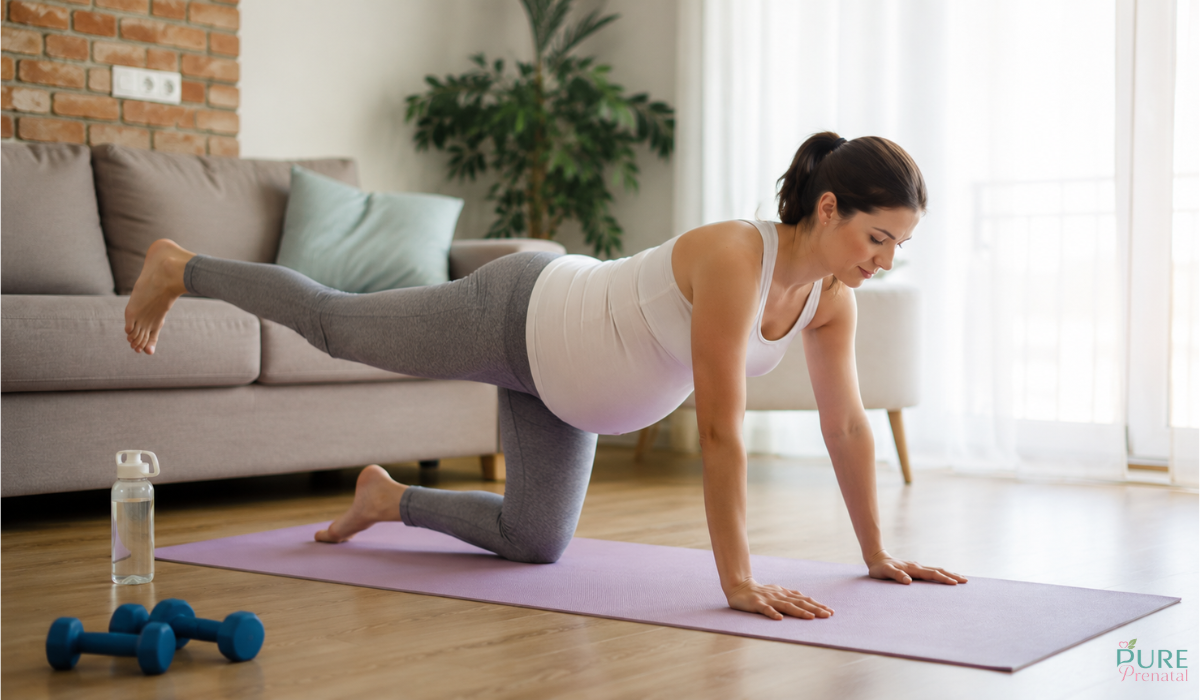
Pregnancy brings incredible changes to your body, and one of the areas that changes the most is your core. As your baby grows, your abdominal muscles stretch, your posture shifts, and your center of gravity moves forward. These changes are completely normal, but they can also lead to back pain, pelvic discomfort, reduced balance, and difficulty performing everyday activities.
Many people think core exercises during pregnancy are unsafe, but that’s a common misconception. The right exercises—performed with proper technique and appropriate modifications—can help strengthen the muscles that support your spine, pelvis, and growing belly. Instead of aiming for visible abs, pregnancy core training focuses on stability, balance, posture, and functional strength that supports your body before, during, and after childbirth.
Research suggests that regular, moderate exercise during pregnancy can improve overall physical function and may help reduce common pregnancy discomforts. A strong core also works together with your pelvic floor muscles and diaphragm to create better support for your changing body.
In this guide, you’ll learn the best core exercises for pregnancy, how they benefit each trimester, which exercises to avoid, and practical safety tips to help you exercise with confidence.
Why Core Strength Is Important During Pregnancy
Your core is much more than your abdominal muscles. It includes a group of muscles that work together to stabilize your trunk and support nearly every movement you make.
These muscles include:
- Transverse abdominis (the deepest abdominal muscle)
- Rectus abdominis
- Internal and external obliques
- Pelvic floor muscles
- Diaphragm
- Lower back muscles
- Glute muscles
- Hip stabilizers
During pregnancy, these muscles work harder than ever before.
As your uterus expands, your abdominal wall stretches to make room for your growing baby. Pregnancy hormones also soften ligaments and connective tissues, making your joints less stable. Without adequate core strength, your lower back, hips, and pelvis often absorb more stress than they should.
A strong, well-functioning core provides the support your body needs throughout pregnancy.
Benefits of the Best Core Exercises for Pregnancy
Performing the best core exercises for pregnancy regularly offers benefits that go far beyond strengthening your abdominal muscles.
1. Helps Reduce Lower Back Pain
Lower back pain affects many pregnant women, especially during the second and third trimesters. Strengthening your deep abdominal muscles helps stabilize your spine and may reduce strain on your lower back.
2. Improves Posture
As your belly grows, your shoulders often round forward while your lower back arches more than usual. Core strengthening helps support proper alignment and encourages healthier posture.
3. Supports Better Balance
Your center of gravity shifts throughout pregnancy, making falls more likely. A stronger core improves stability and body awareness during everyday activities.
4. Supports the Growing Belly
The abdominal muscles help support your uterus and growing baby. Keeping these muscles active may help you feel more supported as pregnancy progresses.
5. Makes Everyday Movements Easier
Simple tasks like getting out of bed, standing from a chair, climbing stairs, or lifting groceries become easier when your core muscles are functioning well.
6. May Improve Labor Endurance
Labor requires strength, coordination, and endurance. While exercise cannot guarantee an easier birth, maintaining good overall fitness may help your body cope with the physical demands of labor.
7. Supports Postpartum Recovery
Maintaining core strength during pregnancy often makes it easier to begin rebuilding strength after delivery. Stronger muscles may also improve posture and body mechanics while caring for a newborn.
Is It Safe to Do Core Exercises During Pregnancy?
For most women with healthy pregnancies, yes.
Organizations such as the American College of Obstetricians and Gynecologists (ACOG) recommend regular physical activity during pregnancy unless there is a medical reason to avoid exercise.
However, every pregnancy is different. Always speak with your healthcare provider before starting a new exercise routine, especially if you have:
- Placenta previa after 26 weeks
- Cervical insufficiency
- Severe anemia
- Pregnancy-induced hypertension
- Persistent vaginal bleeding
- Risk of preterm labor
- Certain heart or lung conditions
- Multiple pregnancy with complications
If your healthcare provider has advised you to avoid exercise, follow their recommendations.
How Often Should You Do Pregnancy Core Exercises?
For most healthy pregnancies, experts recommend aiming for at least 150 minutes of moderate-intensity physical activity each week.
Core exercises can usually be included 2 to 4 times per week, depending on your fitness level and comfort.
A simple routine might include:
- 5–10 minutes of warm-up
- 15–20 minutes of pregnancy-safe core exercises
- Gentle stretching
- Deep breathing exercises
Remember, consistency is more important than intensity. Even short sessions performed regularly can provide meaningful benefits.
General Safety Tips Before You Start
Following a few simple safety guidelines can help you exercise more comfortably throughout pregnancy.
Warm Up First
Spend five to ten minutes walking or performing gentle mobility exercises before beginning your workout.
Focus on Breathing
Never hold your breath while exercising. Exhale during the effort phase of each movement and inhale as you return to the starting position.
Move Slowly
Pregnancy isn’t the time for fast, explosive movements. Controlled exercises improve stability while reducing injury risk.
Stay Hydrated
Drink water before, during, and after exercise to avoid dehydration.
Wear Supportive Clothing
Choose supportive shoes and comfortable workout clothing that allows unrestricted movement.
Listen to Your Body
Stop exercising if something doesn’t feel right. Mild muscle fatigue is normal, but pain is not.
Understanding Your Deep Core Muscles
Many people assume pregnancy core exercises mean crunches or sit-ups. In reality, the most important muscle during pregnancy is the transverse abdominis (TVA).
The TVA acts like a natural corset around your abdomen. Instead of creating visible abdominal definition, it stabilizes your spine and supports your growing belly.
Most pregnancy-safe core exercises are designed to activate this deep muscle while minimizing pressure on the abdominal wall.
Learning to engage your TVA correctly is often more valuable than performing dozens of traditional abdominal exercises.
How to Activate Your Deep Core
- Stand or sit comfortably with your spine neutral.
- Take a slow breath in through your nose.
- As you breathe out, gently tighten the muscles below your belly button.
- Imagine drawing your baby gently toward your spine without sucking in your stomach.
- Continue breathing normally while holding this gentle contraction for a few seconds.
This breathing technique forms the foundation of many of the best core exercises for pregnancy.
Signs You’re Engaging Your Core Correctly
You don’t need to brace your abdomen as hard as possible. Instead, look for these signs:
- Your breathing stays relaxed.
- Your shoulders remain relaxed.
- Your lower back doesn’t arch excessively.
- Your belly doesn’t bulge outward.
- You can continue talking while exercising.
If you notice your abdomen forming a ridge or dome down the middle during an exercise, reduce the intensity or stop the movement. This may indicate excessive pressure on the abdominal wall.
1. Pelvic Tilts
Pelvic tilts are one of the safest and most effective pregnancy exercises. They strengthen the deep abdominal muscles while relieving pressure on the lower back.
How to Do It
- Get onto your hands and knees.
- Keep your hands under your shoulders and knees under your hips.
- Inhale to prepare.
- Exhale and gently tuck your pelvis under while tightening your lower abdominal muscles.
- Hold for 3–5 seconds.
- Return to a neutral spine.
Repetitions: 10–15
Benefits
- Reduces lower back pain
- Improves pelvic mobility
- Activates the transverse abdominis
- Encourages better posture
Common Mistakes
- Rounding the back too aggressively
- Holding your breath
- Moving too quickly
2. Bird Dog
The Bird Dog is one of the best core exercises for pregnancy because it strengthens your entire core while improving balance and coordination.
How to Do It
- Begin on your hands and knees.
- Tighten your core gently.
- Extend your right arm forward.
- Extend your left leg backward.
- Keep your hips level.
- Hold for 3–5 seconds.
- Return slowly.
- Repeat on the opposite side.
Repetitions: 8–10 per side
Benefits
- Improves spinal stability
- Strengthens the lower back
- Builds balance
- Engages the deep core muscles
Common Mistakes
- Rotating the hips
- Looking upward
- Lifting the leg too high
Trimester Tip: If balancing becomes difficult later in pregnancy, extend only your arm or only your leg.
3. Cat-Cow Stretch
Although often considered a mobility exercise, Cat-Cow gently activates your abdominal muscles while increasing spinal flexibility.
How to Do It
- Start on your hands and knees.
- Inhale while lifting your chest slightly and allowing your belly to relax.
- Exhale as you gently round your back.
- Continue moving slowly with your breathing.
Duration: 1–2 minutes
Benefits
- Relieves back tension
- Improves spinal mobility
- Encourages gentle core activation
- Helps reduce stiffness
Common Mistakes
- Moving too quickly
- Overarching the lower back
- Holding your breath
4. Standing Marches
Standing marches improve balance while strengthening the muscles that stabilize your pelvis.
How to Do It
- Stand with your feet hip-width apart.
- Tighten your core gently.
- Lift one knee to hip height if comfortable.
- Lower slowly.
- Alternate legs.
Duration: 1–2 minutes
Benefits
- Improves balance
- Strengthens hip flexors
- Engages the lower core
- Supports pelvic stability
Common Mistakes
- Leaning backward
- Swinging the body
- Rushing through the movement
5. Wall Plank
Traditional floor planks may become uncomfortable later in pregnancy. A wall plank provides many of the same benefits with less pressure on the abdomen.
How to Do It
- Stand facing a wall.
- Place your hands shoulder-width apart.
- Walk your feet backward until your body forms a straight line.
- Tighten your core.
- Hold while breathing normally.
Hold: 20–30 seconds
Benefits
- Builds total core strength
- Improves posture
- Supports shoulder stability
- Reduces spinal strain
Common Mistakes
- Letting the hips sag
- Holding your breath
- Shrugging the shoulders
Trimester Modification: Move closer to the wall during the third trimester if needed.
6. Side-Lying Leg Raises
Strong hip muscles work together with your core to stabilize your pelvis during pregnancy.
How to Do It
- Lie comfortably on one side.
- Support your head with your arm.
- Keep your legs straight.
- Slowly lift your top leg.
- Lower with control.
Repetitions: 12–15 per side
Benefits
- Strengthens hips
- Improves pelvic stability
- Supports walking mechanics
- Reduces hip discomfort
Common Mistakes
- Rolling backward
- Swinging the leg
- Lifting too high
7. Heel Slide
Heel slides gently strengthen the lower abdominal muscles without placing excessive pressure on your belly.
How to Do It
- Sit comfortably or lie in a supported position if approved by your healthcare provider.
- Bend both knees.
- Slowly slide one heel forward.
- Keep your pelvis steady.
- Return to the starting position.
Repetitions: 10–12 per leg
Benefits
- Activates the deep core
- Improves pelvic control
- Supports lower back health
Common Mistakes
- Arching the lower back
- Moving too quickly
- Losing core engagement
8. Seated Knee Lifts
This simple exercise is excellent when you want a gentle core workout without getting on the floor.
How to Do It
- Sit tall in a sturdy chair.
- Tighten your core.
- Lift one knee a few inches.
- Lower slowly.
- Alternate legs.
Repetitions: 12–15 each side
Benefits
- Strengthens lower abdominal muscles
- Improves posture
- Safe for all trimesters
Common Mistakes
- Leaning backward
- Using momentum
- Holding your breath
9. Glute Bridge (Modified)
Early in pregnancy, a modified bridge can strengthen your glutes and core. As pregnancy progresses, discuss this exercise with your healthcare provider, since prolonged time lying flat may not be comfortable for everyone.
How to Do It
- Lie on your back with knees bent (only if comfortable and approved).
- Tighten your glutes and core.
- Lift your hips slightly.
- Hold for two seconds.
- Lower slowly.
Repetitions: 8–10
Benefits
- Strengthens glutes
- Supports pelvic stability
- Helps reduce lower back strain
Common Mistakes
- Lifting too high
- Overarching the back
- Holding the position too long
10. Deep Core Breathing
One of the most overlooked but effective pregnancy core exercises is diaphragmatic breathing.
How to Do It
- Sit comfortably.
- Place one hand on your ribs.
- Inhale slowly through your nose.
- Exhale while gently tightening your deep abdominal muscles.
- Relax and repeat.
Duration: 3–5 minutes
Benefits
- Activates the transverse abdominis
- Supports the pelvic floor
- Encourages relaxation
- Prepares your body for labor breathing
11. Wall Squats
While primarily a lower-body exercise, wall squats also activate your core to maintain proper posture.
How to Do It
- Stand with your back against a wall.
- Slide down slightly until your knees are comfortably bent.
- Hold for a few seconds.
- Return to standing.
Repetitions: 10–12
Benefits
- Strengthens your legs and glutes
- Improves core stability
- Supports daily movements like sitting and standing
12. Stability Ball Pelvic Circles
If you have a pregnancy exercise ball, pelvic circles are an excellent way to improve mobility and gently engage your core.
How to Do It
- Sit on a properly sized exercise ball.
- Keep your feet flat on the floor.
- Slowly move your hips in a circular motion.
- Change directions after several circles.
Duration: 1–2 minutes each direction
Benefits
- Improves pelvic mobility
- Relieves lower back tightness
- Encourages better posture
- Helps prepare the pelvis for labor
Which Exercises Are Best by Trimester?
First Trimester
During the first trimester, many women can continue their regular exercise routine with minor adjustments.
Recommended exercises include:
- Pelvic tilts
- Bird Dog
- Cat-Cow
- Standing marches
- Wall squats
- Deep core breathing
Second Trimester
As your belly grows, focus on exercises that improve stability and reduce pressure on the abdomen.
Best choices include:
- Wall plank
- Side-lying leg raises
- Heel slides
- Stability ball pelvic circles
- Seated knee lifts
- Pelvic tilts
Third Trimester
Comfort and safety become the priority.
Recommended exercises include:
- Deep breathing
- Standing marches
- Pelvic tilts
- Stability ball circles
- Side-lying exercises
- Gentle stretching
Avoid any movement that causes pain, dizziness, or excessive abdominal pressure.
Exercises to Avoid, Diastasis Recti, 10-Minute Pregnancy Core Workout & Safety Tips
Building a strong core during pregnancy isn’t just about choosing the right exercises—it’s also about knowing which movements to avoid and recognizing when your body needs rest. As your pregnancy progresses, your workouts should evolve with your changing body.
Core Exercises to Avoid During Pregnancy
Not every abdominal exercise is pregnancy-friendly. Some movements can place excessive pressure on your abdominal wall, pelvic floor, or lower back, especially during the second and third trimesters.
Here are the exercises most healthcare providers and prenatal fitness specialists recommend avoiding or modifying.
1. Traditional Sit-Ups
Sit-ups create significant pressure on the front of the abdomen. As your belly grows, this pressure may contribute to abdominal bulging and discomfort.
Try instead: Pelvic tilts or seated knee lifts.
2. Crunches
While some women may still perform modified crunches early in pregnancy with professional guidance, they are generally not recommended as pregnancy progresses.
Crunches increase pressure inside the abdomen and may place unnecessary stress on the connective tissue between your abdominal muscles.
3. Double Leg Raises
Lifting both legs at the same time requires strong abdominal control and often causes the lower back to arch.
This movement can increase strain on your core and should usually be avoided during pregnancy.
4. Full Front Planks
A traditional plank is an excellent exercise outside pregnancy, but it becomes more challenging as your belly grows.
If you notice:
- Bulging down the middle of your abdomen
- Lower back discomfort
- Difficulty maintaining proper form
switch to an incline plank or wall plank instead.
5. Russian Twists
Twisting exercises with resistance place additional stress on your abdominal muscles and spine.
Gentle torso mobility is generally acceptable, but loaded twisting exercises should be avoided.
6. High-Impact Abdominal Workouts
Exercises involving jumping, rapid direction changes, or explosive movements may increase your risk of falls and unnecessary strain.
Examples include:
- Burpees
- Mountain climbers
- Jump squats
- Box jumps
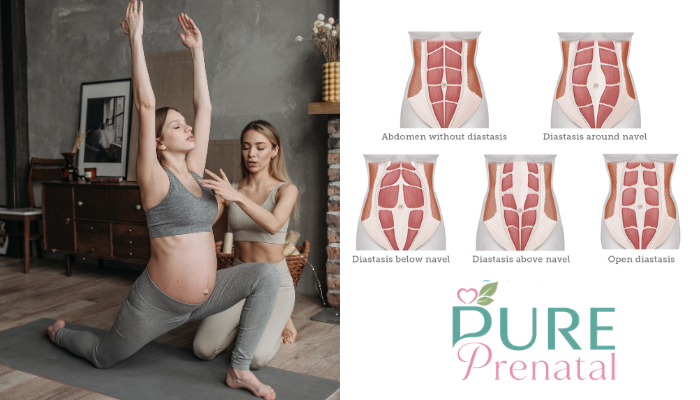
Understanding Diastasis Recti
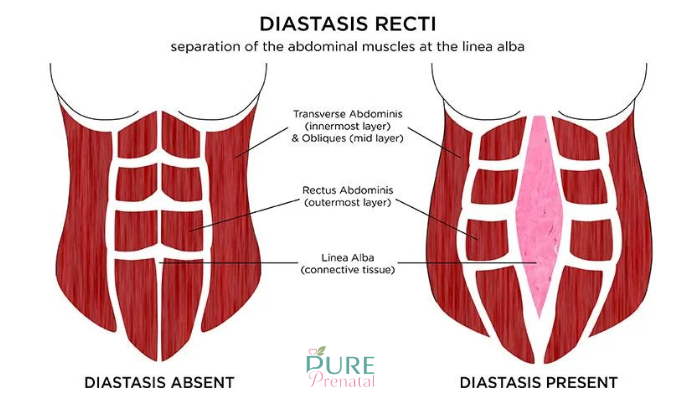
One of the biggest concerns surrounding the best core exercises for pregnancy is a condition called diastasis recti.
This occurs when the connective tissue between the left and right sides of the rectus abdominis stretches as the uterus expands.
It’s extremely common during pregnancy and, for many women, improves gradually after birth.
Can Exercise Prevent It?
Not completely.
Hormones, genetics, your baby’s size, and multiple pregnancies all influence whether diastasis recti develops.
However, using proper exercise techniques may reduce unnecessary pressure on the abdominal wall.
Signs You May Be Creating Too Much Abdominal Pressure
Stop the exercise and modify it if you notice:
- A ridge or dome running down the center of your abdomen
- Bulging around your belly button
- Sharp abdominal pain
- Lower back pain that worsens during the movement
- Feeling like you’re “bearing down”
These signs suggest the exercise may be too difficult for your current stage of pregnancy.
How to Reduce Your Risk of Diastasis Recti
Although there are no guarantees, these habits may help protect your abdominal muscles.
✔ Focus on deep core activation.
✔ Avoid holding your breath.
✔ Roll onto your side before getting out of bed.
✔ Avoid heavy lifting whenever possible.
✔ Use good posture while sitting and standing.
✔ Choose controlled movements over intense workouts.
✔ Stop exercises that cause abdominal doming.
Remember, pregnancy is not the time to “push through” difficult core workouts.
A Simple 10-Minute Pregnancy Core Workout
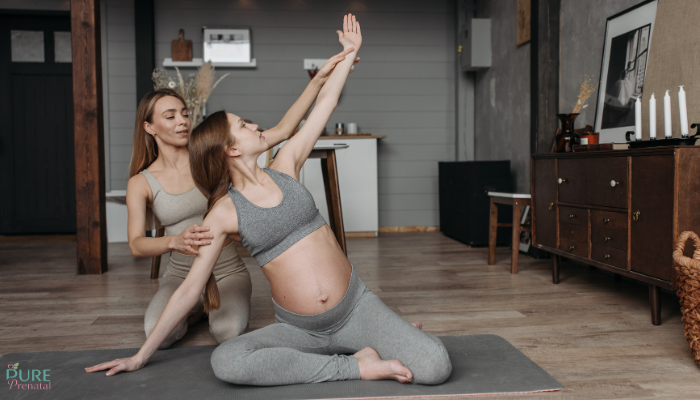
If you’re looking for a beginner-friendly routine, this workout combines several of the best core exercises for pregnancy into one short session.
Warm-Up (2 Minutes)
- Gentle walking in place
- Shoulder rolls
- Deep breathing
- Arm circles
Main Workout (6 Minutes)
Pelvic Tilts
45 seconds
Rest: 15 seconds
Bird Dog
45 seconds
Rest: 15 seconds
Standing Marches
45 seconds
Rest: 15 seconds
Wall Plank
Hold for 20–30 seconds
Repeat twice
Side-Lying Leg Raises
45 seconds per side
Deep Core Breathing
1 minute
Cool Down (2 Minutes)
Finish with:
- Cat-Cow stretches
- Gentle hip circles
- Deep breathing
- Shoulder stretches
This short routine can be performed two to four times per week if approved by your healthcare provider.
Common Mistakes During Pregnancy Core Training
Many women unknowingly make small mistakes that reduce the effectiveness of their workouts.
Holding Your Breath
This is one of the biggest mistakes.
Instead, breathe naturally throughout every exercise.
Exhale during the effort.
Inhale during the easier portion.
Trying to Exercise Like You Did Before Pregnancy
Pregnancy isn’t the time to chase personal records.
Your goal is maintaining strength—not building maximum muscle.
Ignoring Pain
Muscle fatigue is normal.
Pain is not.
Stop immediately if an exercise causes discomfort.
Exercising Too Fast
Slow, controlled movement activates your deep core far better than rushing through repetitions.
Forgetting the Pelvic Floor
Your pelvic floor and abdominal muscles work together.
Adding gentle pelvic floor exercises to your routine creates better overall support.
When Should You Stop Exercising?
While exercise is generally safe during healthy pregnancies, certain symptoms require immediate attention.
Stop exercising and contact your healthcare provider if you experience:
- Vaginal bleeding
- Fluid leaking from the vagina
- Regular painful contractions
- Chest pain
- Severe dizziness
- Fainting
- Persistent headache
- Severe shortness of breath
- Sudden swelling of the face or hands
- Decreased fetal movement after your provider has advised you to monitor it
Never ignore symptoms that feel unusual.
Can You Exercise Every Day?
Yes—but variety is important.
Instead of doing intense core workouts daily, consider rotating activities throughout the week.
For example:
Monday: Core exercises
Tuesday: Walking
Wednesday: Prenatal yoga
Thursday: Core exercises
Friday: Swimming
Saturday: Gentle stretching
Sunday: Rest or light walking
This balanced approach helps prevent overuse while keeping you active.
Should You Wear a Belly Support Band?
Some women find maternity support belts helpful during exercise, especially in the third trimester.
A support band may:
- Reduce pelvic discomfort
- Improve comfort during walking
- Decrease lower back strain
However, it shouldn’t replace strengthening your core muscles. Think of it as temporary support rather than a long-term solution.
Preparing Your Core for Postpartum Recovery
Pregnancy core training isn’t only about the months before birth—it also lays the foundation for recovery afterward.
After delivery, your body gradually begins healing. Continuing with gentle breathing exercises, pelvic floor work, and deep core activation (when cleared by your healthcare provider) can help you rebuild strength safely.
Avoid rushing back into high-intensity abdominal workouts. Recovery timelines vary depending on factors such as vaginal birth, cesarean delivery, and any abdominal muscle separation.
Developing healthy movement patterns during pregnancy often makes the transition into postpartum exercise smoother.
Can Core Exercises Help During Labor?
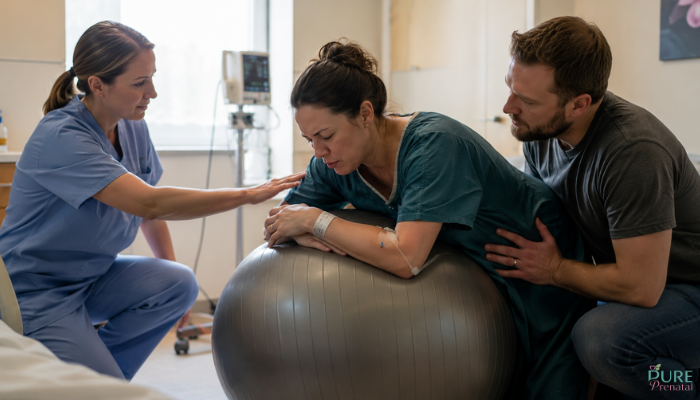
Many expectant mothers wonder whether strengthening their core will make labor easier. While no exercise can guarantee a shorter or less painful labor, maintaining a strong and functional core may help your body cope better with the physical demands of childbirth.
Your core muscles work together with your pelvic floor, diaphragm, hips, and back throughout labor. During contractions, changing positions, and pushing, these muscles help stabilize your body and support efficient movement.
Women who stay physically active during pregnancy often find it easier to:
- Change labor positions comfortably
- Maintain better posture during contractions
- Support their back while standing or walking
- Build endurance for longer labor
- Begin postpartum recovery with greater confidence
Every labor experience is different, but preparing your body with safe exercise can help you feel stronger and more confident.
Expert Tips for Safe Pregnancy Core Training
Follow these practical tips to get the most from your workouts while keeping yourself and your baby safe.
Prioritize Quality Over Quantity
A few well-controlled repetitions are far more effective than rushing through dozens of exercises.
Keep Breathing
Breathing correctly helps activate your deep core muscles while reducing unnecessary pressure on your abdomen.
Focus on Stability
Pregnancy is not the time for intense abdominal workouts. Instead, aim for steady, controlled movements that improve balance and posture.
Stay Consistent
Even 15–20 minutes of exercise a few times each week can make a meaningful difference over the course of your pregnancy.
Modify as Your Body Changes
An exercise that feels comfortable during the first trimester may need adjustments later on. Listen to your body and don’t hesitate to modify movements.
Don’t Compare Yourself to Others
Every pregnancy is different. Your energy levels, flexibility, and strength will naturally vary from someone else’s—and even from one pregnancy to the next.
Frequently Asked Questions
What are the best core exercises for pregnancy?
Some of the safest and most effective options include pelvic tilts, Bird Dog, Cat-Cow stretches, wall planks, standing marches, side-lying leg raises, heel slides, and deep core breathing. These exercises strengthen the muscles that support your back, pelvis, and growing belly while minimizing pressure on the abdominal wall.
Can I strengthen my abs while pregnant?
Yes. Pregnancy is a good time to strengthen your deep core muscles, not to build visible abdominal muscles. Focus on stability exercises instead of traditional sit-ups or crunches.
Are planks safe during pregnancy?
Modified planks can be safe for many women, especially during the early stages of pregnancy. As your belly grows, incline or wall planks are often more comfortable than traditional floor planks. Stop if you notice abdominal doming or discomfort.
Can core exercises prevent diastasis recti?
No exercise can completely prevent diastasis recti because hormones, genetics, and your baby’s growth all play a role. However, proper breathing, deep core activation, and avoiding excessive abdominal pressure may help reduce unnecessary strain.
How often should I do pregnancy core exercises?
Most healthy pregnant women can include core exercises 2–4 times per week as part of an overall fitness routine. The goal is consistency rather than intensity. Always follow your healthcare provider’s advice if you have pregnancy-related complications.
Is walking enough for core strength?
Walking is excellent for cardiovascular health and gently activates your core, but it doesn’t specifically strengthen the deep abdominal muscles. Combining walking with pregnancy-safe core exercises provides more complete support for your back, pelvis, and posture.
Should I stop exercising if my belly bulges?
Yes. If you notice a ridge or dome forming down the middle of your abdomen during an exercise, stop the movement and reduce the intensity. This may be a sign that excessive pressure is being placed on your abdominal wall.
Can I do core exercises every day?
Gentle breathing and pelvic floor exercises can often be practiced daily. However, strengthening exercises are usually best performed 2–4 days per week, allowing your muscles time to recover.
When should I avoid exercising during pregnancy?
Stop exercising immediately and contact your healthcare provider if you experience vaginal bleeding, fluid leakage, severe dizziness, chest pain, painful contractions, or any symptoms that concern you. Women with certain high-risk pregnancy conditions may also need to avoid exercise or follow a modified program recommended by their healthcare provider.
Which trimester is best for core exercises?
Core exercises can be beneficial throughout pregnancy when appropriately modified. During the first trimester, many women can continue most low-impact routines. In the second and third trimesters, exercises should focus on stability, posture, breathing, and comfort while avoiding movements that place excessive pressure on the abdomen.
Final Thoughts
The best core exercises for pregnancy are the ones that strengthen your body safely while supporting the natural changes of pregnancy. Rather than focusing on traditional abdominal workouts, aim to build a strong, functional core that includes your deep abdominal muscles, pelvic floor, hips, and lower back.
Simple exercises like pelvic tilts, Bird Dog, wall planks, side-lying leg raises, and deep breathing can improve posture, reduce back pain, enhance stability, and help prepare your body for labor and postpartum recovery.
Remember that every pregnancy is unique. Listen to your body, progress gradually, and don’t hesitate to modify exercises as your pregnancy advances. If you have any medical concerns or a high-risk pregnancy, always seek guidance from your healthcare provider before beginning or continuing an exercise program.
With consistency, proper technique, and a focus on safe movement, you can stay active and support both your health and your baby’s throughout pregnancy.

Dr. Tania Adib is a Board Certified OB/GYN based in the northern suburbs of Chicago. She earned her undergraduate degree from the University of Notre Dame and her medical degree from Georgetown University in Washington, D.C., before completing her residency in Obstetrics and Gynecology at Magee-Womens Hospital, University of Pittsburgh Medical Center. Her clinical interests include full-spectrum obstetrics and gynecology, from the first period through the menopausal years, contraception, and abnormal bleeding.