

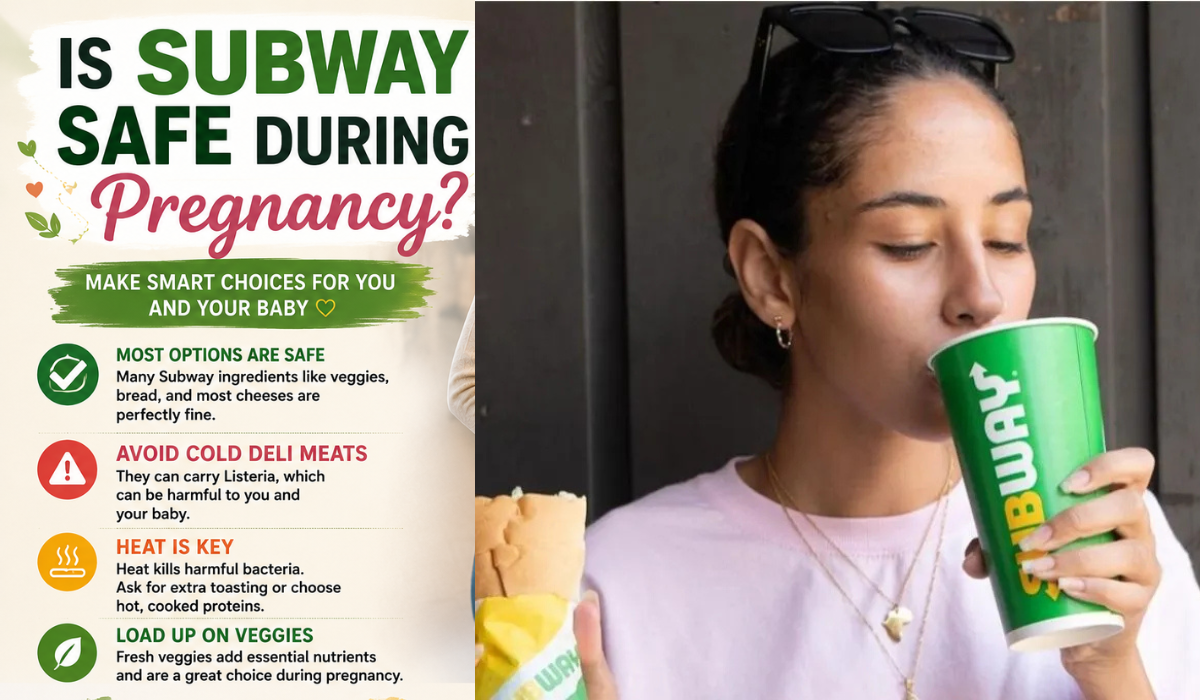
Nine months into avoiding sushi and soft cheese, and somehow it’s the Subway on the corner that makes you stop and think. Funny how that works. Sandwiches feel so harmless — bread, veggies, a bit of protein — until you remember that “protein” often means sliced deli meat pulled straight from a cold case. So is it actually fine, or should you just walk past and grab a salad instead?
Here’s the real answer: Subway isn’t off-limits during pregnancy. Most of what’s on the menu is completely fine. There’s really just one ingredient worth pausing on, and once you understand why, ordering a pregnancy-friendly sub becomes pretty simple.
The Deli Meat Problem, Explained
Turkey, ham, salami — none of these are dangerous foods on their own. The issue is how they’re stored. Deli meat sits cold, sliced, and exposed for hours or days at a time, and that’s the exact environment where a bacteria called Listeria monocytogenes thrives. Most bacteria need warmth to multiply. Listeria doesn’t care — can i eat subway while pregnant grows just fine in the fridge, which is precisely why cold cuts get singled out so often in pregnancy nutrition advice.
Here’s the part that makes this more than just a theoretical worry: pregnancy naturally dials down parts of your immune system, since your body is working hard not to reject the pregnancy itself. That same shift also leaves you far more susceptible to infections like listeriosis. It’s rare, to be clear. But when it does happen during pregnancy, it’s been linked to miscarriage, stillbirth, and serious complications for a newborn. That’s a heavy enough possibility that basically every major health authority says the same thing — skip cold deli meat unless it’s been heated until steaming.
Okay, But Does Toasting Fix It?
Probably the single most-asked version of this question, and I get why. Heat kills Listeria, full stop. So a toasted sub is genuinely safer than a cold one straight off the line.
The catch is that Subway’s toaster is built for melting cheese and warming bread — it’s not designed to bring a stack of deli meat all the way up to a true steaming-hot temperature the way reheating leftovers on your stove would. It might get close. It might not. If you’d rather not leave it to chance, ask them to run it through a second time, or skip the guesswork entirely and go with something cooked fresh to order, like meatballs, steak, or grilled chicken.
What About Subway in the UK?
Cross the Atlantic and the advice barely shifts. The NHS tells pregnant women to avoid cold cured meats — salami, pepperoni, prosciutto, that whole family — unless they’ve been properly cooked first. UK Subway menus carry a similar lineup of deli-style options, so the same logic holds no matter which country you’re ordering in: go hot, or make sure it’s heated all the way through before you take a bite.
Building a Safer Subway Order
None of this means giving up your go-to order for nine months. A few small swaps do the trick:
- Choose proteins that are cooked fresh rather than sliced cold — meatballs, grilled chicken, and steak all work.
- Craving a classic sub anyway? Ask for extra toasting so the meat actually heats through instead of just warming a little.
- Stick to the standard cheeses — cheddar, provolone, American are pasteurized and fine. Not sure about a specialty one? Just ask.
- Vegetables are largely a non-issue. Lettuce, tomato, cucumber, peppers — all fine once washed, which is standard practice anyway.
- Raw sprouts are the one exception worth skipping. They’re notoriously difficult to clean all the way through, even with a good rinse.
What About Other Meats People Ask About?
Once deli meat is on your radar, it’s natural to start wondering about everything else in the fridge. Here’s a rundown of the ones that come up most.
Hot dogs follow the exact same logic as deli meat — processed, stored cold, and a Listeria risk if eaten straight from the package. Boil them, grill them, get them steaming hot, and they’re fine in moderation.
Lobster, somewhat surprisingly, is one of the safer choices — as long as it’s fully cooked. Raw or undercooked shellfish is where the actual risk sits. Most guidelines suggest capping total seafood, lobster included, at around two to three servings a week because of mercury levels.
Lunch meat is really just deli meat with a different name, so the same rule applies. Heat it until steaming, whether it’s a sandwich you’re making at home or one you’re ordering out.
Potbelly runs on a similar model to Subway — a mix of cold cuts and toasted subs. Ask for extra heat on the meat, or lean toward something cooked to order.
Bacon is fine, provided it’s cooked until crisp with no pink or translucent fat left behind. Undercooked bacon carries the same risks as other undercooked pork.
Pork more broadly just needs to hit a safe internal temperature. The concern with pork leans more toward toxoplasmosis than Listeria, but the fix is the same — cook it through, skip anything pink or rare.
Beef jerky sits in a gray area that’s worth knowing about. It’s dried rather than truly cooked, and that drying process doesn’t reliably wipe out Listeria the way actual cooking heat does. A lot of providers recommend skipping jerky and beef sticks during pregnancy for exactly this reason. If the craving hits, look for a product labeled as cooked or heat-treated, and check with your doctor if you’re not sure.
Prosciutto is cured, not cooked, so it lands in the same category as other deli meats — best avoided cold. Cooked into a dish, though, like crisped in the oven, it’s a different story.
Eggnog is fine when it’s the store-bought, pasteurized version. Homemade eggnog is the one to be cautious about, since it’s often made with raw eggs and carries a salmonella risk. Eggnog ice cream follows the same reasoning — commercially made with pasteurized ingredients, it’s a perfectly reasonable treat.
If You Already Ate a Cold Sub, Relax
Genuinely — one sandwich isn’t a crisis. Listeriosis is rare, and this whole guide is about tilting the odds in your favor over the course of a pregnancy, not hitting a perfect score on every meal. Cravings happen, mistakes happen, and neither one deserves guilt. The point going forward is just making a slightly more informed choice next time you’re standing in line.
The Bottom Line
Subway isn’t something you need to cross off the list. Skip the cold deli meat, or make sure it’s genuinely hot rather than just warm, and you’re in good shape. That same principle covers hot dogs, lunch meat, bacon, pork, and most other cured or processed meats — heat is doing most of the safety work here. And if you’re ever unsure at the counter, just ask. Extra toasting, a swap to a hot protein, whatever it takes — nobody there is going to blink at the request.
At the end of the day, food safety during pregnancy usually comes down to one habit: heat kills what you’re worried about. That single rule covers most of the confusing questions people search for online, from sandwich shops to backyard barbecues. Keep it in mind and you’ll spend a lot less time second-guessing your lunch order.
Frequently Asked Questions
Is Subway okay to eat during the first trimester specifically?
Yes. These guidelines apply across the whole pregnancy, not just one stage — avoid cold deli meat, choose pasteurized cheese, and make sure any meat is properly heated.
Does toasting a Subway sandwich actually kill Listeria?
It helps, but it’s not guaranteed on its own, since the toaster may not heat the meat all the way through. For more certainty, ask for extra toasting or pick a hot, fully cooked protein.
Are Subway’s vegetables safe during pregnancy?
Generally, yes. Lettuce, tomatoes, cucumbers, and peppers are washed as part of normal prep. Raw sprouts are really the only exception worth avoiding.
Which Subway meats are best avoided while pregnant?
Cold cuts like ham, turkey breast, salami, and pepperoni, unless heated until steaming. Hot, freshly made options like meatballs or grilled chicken are the safer bet.
Is Subway’s cheese pregnancy-safe?
Most of it, yes — the standard options are pasteurized. If you’re not sure about a specialty cheese, just ask before ordering.

Dr. Tania Adib is a Board Certified OB/GYN based in the northern suburbs of Chicago. She earned her undergraduate degree from the University of Notre Dame and her medical degree from Georgetown University in Washington, D.C., before completing her residency in Obstetrics and Gynecology at Magee-Womens Hospital, University of Pittsburgh Medical Center. Her clinical interests include full-spectrum obstetrics and gynecology, from the first period through the menopausal years, contraception, and abnormal bleeding.