

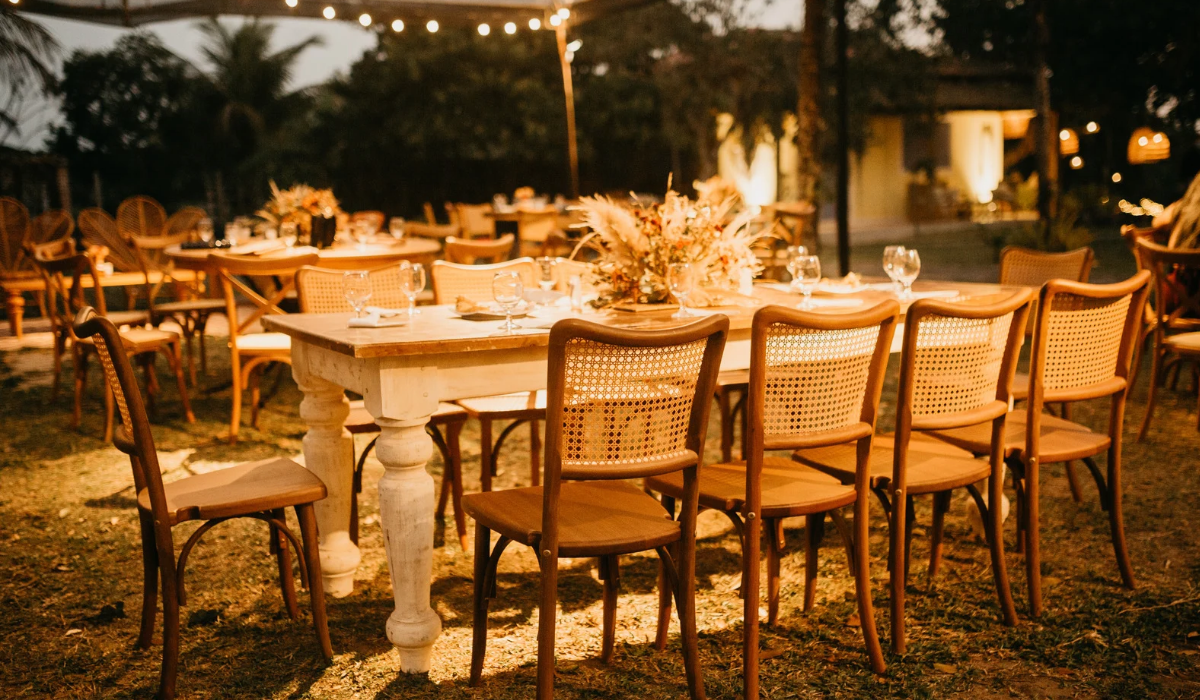
Congratulations on your engagement! Now comes one of the biggest decisions of the entire planning process: where it’s all going to happen. The venue you choose shapes almost everything else — your budget, your guest list, the mood of every photo you’ll look back on for years to come. It’s a big decision, but it doesn’t have to be an overwhelming one. Here’s how to think it through.
Start With a Budget
Weddings have a way of adding up fast. Catering, décor, entertainment, rentals — it all stacks on top of the venue rental itself, which is often the single largest expense of the whole day.
Figuring out a realistic number before you start touring spaces will save you a lot of heartache later. It narrows your search to places you can actually afford, so you’re not comparing venues that live in completely different budget tiers. And if you do fall for a spot that’s a little over what you planned to spend, that’s not automatically a dealbreaker — it just means trimming costs somewhere else, whether that’s the guest list, the florals, or the catering package.
Pick a Date — Or Stay Flexible
If you already have a season or a specific date in mind, start checking venue availability early. Popular venues can book up a year or more in advance, especially during peak wedding months in late spring through early fall.
If your date isn’t locked in yet, a little flexibility can work in your favor. Off-season weddings and weekday ceremonies often come with lower rates, more open dates, and more room to negotiate.
Think About Your Guests’ Experience
It’s easy to get caught up in how a venue looks and forget to think about how it functions for the people attending. Is it easy to find and get to? Is there enough parking, or will you need to arrange a shuttle? If out-of-town guests are coming in, are there hotels nearby?
Location affects your budget too, not just convenience. A remote or destination venue might mean covering transportation for guests, and it could shrink your guest list if travel isn’t realistic for everyone you’d want there.
Make Sure the Space Actually Fits Your Day
A gorgeous venue can still be the wrong one if it doesn’t fit your guest count. A room that’s too small feels cramped and chaotic. A room that’s too big can make even a lively wedding feel oddly empty.
Walk through every part of a venue you’re seriously considering — not just the main hall, but the ceremony space, the area for cocktail hour, the room where you’ll get ready. Ask exactly what’s included. Some venues are full-service, with tables, chairs, catering, and a day-of coordinator built in. Others are more of a blank slate, handing you a space and a list of approved vendors to work with. Neither is better, but you’ll want to know which one you’re signing up for, since it changes how much falls on you to plan.
While you’re there, ask about restrictions too — noise ordinances, end times, rules around candles or sparklers, whether outside vendors are allowed. These details rarely show up in the pretty photos, but they matter once you’re actually planning around them.
Consider How the Space Will Feel in Photos
This is the part people tend to overlook until it’s too late: your venue isn’t just a backdrop, it’s a major character in nearly every photo from your day. Long after the flowers have wilted and the playlist is forgotten, the photos are what you’ll actually go back to.
A few things worth paying attention to on a tour:
- Light. Bright, sunlit spaces tend to photograph beautifully. If you’re getting ready indoors, look for big windows. If your ceremony is outside, think about the time of day and whether nearby trees or buildings will cast shadows. Indoors, notice whether the lighting turns harsh and fluorescent after dark, and whether there’s an option for something softer during dinner and dancing.
- Ceiling color. It’s a small detail, but darker ceilings absorb light and make photos harder to light well, while lighter ceilings help flash bounce and fill a room naturally.
- Room for a first look, family portraits, and the bridal party. If you’re planning a first look, a private courtyard, garden, or quiet corner works well. And don’t underestimate how much space formal family photos need, especially with a larger family or wedding party.
Have a Backup Plan for Weather
If any part of your day is happening outdoors, ask what the rain plan looks like. The best venues have an indoor space that feels just as good as the outdoor one, so a change in weather doesn’t mean a change in how the whole day feels. Before booking, picture yourself getting married in that backup space too — if you’d be just as happy there, you’ve found a solid venue.
Get Clear on the Vibe You’re Going For
Before touring a single venue, talk with your partner about how you actually want the day to feel — not how it looks online, but how it feels while you’re living it. Relaxed and unhurried? Elegant and formal? Full of dancing and energy, or quieter with more room to talk?
That conversation will narrow your search more than any spreadsheet. A grand ballroom might be stunning, but it’s the wrong pick if what you actually want is something cozy and low-key. Once your priorities are clear, comparing venues stops feeling like an endless scroll and starts feeling like a short, obvious list.
Trust Your Gut
Once the practical boxes are checked — budget, date, capacity, location — pay attention to how a space actually makes you feel standing in it. Some venues look incredible in photos but feel stiff or sterile in person. Others aren’t flashy at all, yet something about them makes you relax without even trying.
That reaction is worth listening to. You’re not just picking a pretty room — you’re choosing the setting for one of the most meaningful days of your life, and it should be one that lets you actually be present in it.

Dr. Tania Adib is a Board Certified OB/GYN based in the northern suburbs of Chicago. She earned her undergraduate degree from the University of Notre Dame and her medical degree from Georgetown University in Washington, D.C., before completing her residency in Obstetrics and Gynecology at Magee-Womens Hospital, University of Pittsburgh Medical Center. Her clinical interests include full-spectrum obstetrics and gynecology, from the first period through the menopausal years, contraception, and abnormal bleeding.
 Jess Klintan