
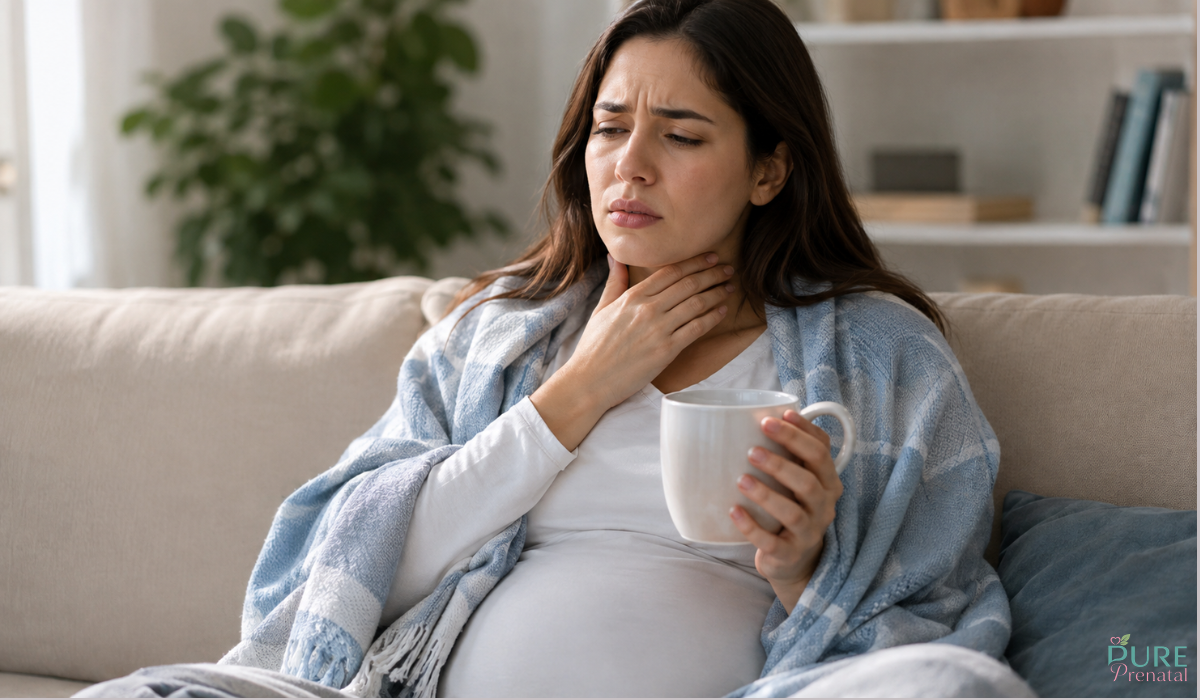
Your throat’s been hurting for a couple of days now, and somewhere in the back of your mind you’re wondering: could a sore throat be a sign of pregnancy, or is this just a cold doing the rounds? It’s a question that comes up more often than you’d expect, and honestly, in those first few weeks, it can be genuinely tricky to tell the two apart.
This guide is here to walk through what’s actually happening in your body when this overlap occurs — how to tell a garden-variety cold from early pregnancy symptoms, when throat pain in pregnancy is worth calling your doctor about, and what’s actually safe to reach for while you wait it out.
Can Pregnancy Cause a Sore Throat?
Let’s tackle the question most people are really asking first: is sore throat a sign of pregnancy on its own? Short answer — not really. It’s not one of the classic, textbook early pregnancy symptoms the way nausea, breast tenderness, or a missed period tend to be. But that doesn’t mean there’s zero connection between throat pain and pregnancy either.
Here’s the actual mechanism at play. In the earliest weeks of pregnancy, your immune system starts shifting gears. It’s a normal, protective adjustment — your body is essentially learning how to tolerate a developing pregnancy instead of reacting to it like a foreign invader. And one side effect of that recalibration? Some women simply catch colds, throat infections, or that generally “run-down” feeling more easily than they normally would. So pregnancy itself isn’t causing the sore throat directly — but the hormonal and immune shifts happening underneath the surface can leave you more open to the viruses that do.
There’s also fatigue to consider. Early pregnancy tends to come with a level of tiredness that’s hard to explain to people who haven’t experienced it, and a worn-out body simply isn’t as equipped to fight off the common cold virus that’s usually behind throat irritation in the first place. So when people type “can pregnancy cause sore throat” into Google, the more accurate framing is this: pregnancy doesn’t cause it outright, but it can make you more prone to catching whatever does.
Sore Throat Early Pregnancy Sign: What the Timing Tells You
If you’re already pregnant and dealing with a sore throat, or wondering whether it might count as an early pregnancy sign, what really matters isn’t the throat pain by itself — it’s what’s happening alongside it.
A sore throat in early pregnancy is more likely tied to those immune changes we just talked about when it shows up together with things like:
- Fatigue that feels heavier or different from your usual tired
- Breast tenderness or swelling
- Nausea, whether or not it tips into actual vomiting
- A period that’s late or hasn’t shown up at all
- Mild cramping, without any bleeding
- A stronger-than-usual reaction to smells
If none of those are present, though? Chances are your throat hurts for a much more ordinary reason — a standard cold, seasonal allergies, or irritation from dry air, too much shouting, or acid reflux (which, worth noting, tends to become more common as pregnancy progresses anyway).
Sore Throat vs Cold: Spotting the Difference
A plain old cold is still the most likely culprit behind a sore throat, pregnant or not. So it helps to lay out what a typical cold actually looks like next to what early pregnancy tends to bring, side by side.
A cold typically includes:
- Sore or scratchy throat that develops gradually
- Runny or stuffy nose
- Sneezing
- Mild cough
- Low-grade fever (sometimes none at all)
- Symptoms that peak within 2–3 days and ease within a week
Early pregnancy typically includes:
- Fatigue that feels heavier than usual, without other cold symptoms
- Breast changes
- Nausea, particularly in the morning or triggered by certain smells
- A missed period
- Mood shifts
- Mild bloating or cramping
There’s real overlap here, no doubt — both can leave you tired and generally “off.” But a cold almost always drags nasal and respiratory symptoms along with it, whereas pregnancy on its own doesn’t really do that. So if your sore throat is showing up with congestion, sneezing, and a cough tagging along, you’re most likely dealing with a common cold, not a pregnancy-specific symptom.
Sore Throat During Pregnancy: Later Trimester Causes
Now, if you already know you’re pregnant and a sore throat while pregnant shows up further down the line — say, second or third trimester — the cause is often something entirely different from those early immune shifts:
- Acid reflux. As your uterus grows and takes up more room, it pushes against your stomach. At the same time, pregnancy hormones relax the valve that normally keeps stomach acid where it belongs. Put those together and acid can creep up into your throat, leaving it feeling raw or sore.
- Dry air or plain old dehydration. Your fluid needs go up during pregnancy, and if you’re not keeping pace, a scratchy throat is often the first thing you’ll notice.
- Postnasal drip from pregnancy rhinitis. Blood flow to your nasal passages increases during pregnancy, which can lead to congestion and drainage that irritates the throat over time.
- Seasonal allergies, which quite a few women find hit harder during pregnancy thanks to a more reactive immune system.
Strep Throat in Pregnancy: When It’s More Than a Cold
Not every case of throat pain during pregnancy is viral. Strep throat while pregnant is caused by bacteria, which means it needs a different kind of attention than a run-of-the-mill cold does.
A few signs tend to point toward strep rather than a virus:
- The pain came on suddenly, rather than building up gradually
- Swallowing feels genuinely painful, not just uncomfortable
- A fever climbing above 101°F (38.3°C)
- Tonsils that look red, swollen, or have white patches on them
- Swollen glands in your neck
- No cough or runny nose (strep usually skips these, unlike a typical cold)
If this sounds like what you’re dealing with, it’s worth getting a proper throat swab from your provider rather than waiting it out. Left untreated, strep can occasionally lead to complications, though treatment during pregnancy is generally considered safe when it’s prescribed and monitored by a doctor. This is really one of those situations where trying to manage it at home on your own isn’t the move — a same-day check-in with your provider is the safer route.
What Can You Take for a Sore Throat During Pregnancy?
This might be the single most searched question on this whole topic, and it makes sense — pregnancy narrows down which medications are considered safe, and nobody wants to take a risk just to ease a scratchy throat.
The honest answer is that “safe” can shift depending on your trimester, your medical history, and anything else going on with your health, so it’s always worth running things by your midwife, GP, or obstetrician before taking anything, even things that seem harmless enough. With that caveat out of the way, here’s a general rundown of what’s commonly considered okay to ask about:
- Acetaminophen (paracetamol) is generally the pain reliever most commonly considered appropriate during pregnancy for throat discomfort, but always check the correct dosage with your provider.
- Saltwater gargles — a simple mix of warm water and salt — are a widely recommended, medication-free way to ease throat irritation.
- Throat lozenges: many pregnant women ask, can pregnant women have throat lozenges, and the general answer is that simple, non-medicated lozenges are usually considered low-risk, but it’s worth checking ingredient lists, since some contain menthol or other additives your provider may want you to avoid in large amounts.
- Cough drops: similarly, can pregnant women take cough drops is a common question, and plain versions without added medication are typically viewed as lower risk, though again, checking with your provider first is the safest approach, especially with any drop containing active decongestant or numbing ingredients.
One thing worth flagging: try not to reach straight for over-the-counter cold and flu combination products without checking first. A lot of them contain ingredients like certain decongestants or NSAIDs that aren’t recommended at various points in pregnancy, and it’s easy to overlook that when you’re just trying to feel better fast.
Home Remedies for Sore Throat in Pregnancy
Prefer to skip medication altogether for now? Plenty of women do, and there are several gentle, well-used home remedies for sore throat while pregnant worth trying first:
- Warm salt water gargle, done a few times a day, to reduce swelling and clear irritation
- Honey and warm water or herbal tea — honey has natural soothing properties for the throat (note: this applies to the pregnant person, not infants, for whom honey isn’t recommended)
- Staying well hydrated with water, warm broths, or herbal teas, since a dry throat heals more slowly
- Using a humidifier, particularly at night, to add moisture to the air and ease throat dryness
- Resting your voice if talking or straining your throat makes the discomfort worse
- Steam inhalation, such as sitting in a warm, steamy bathroom, to loosen congestion that may be contributing to throat irritation
- Elevating your head while sleeping, which can help if acid reflux is part of what’s causing your throat pain
None of these will cure something bacterial like strep, to be clear. But for a viral cold or plain irritation, they can genuinely take the edge off while your body does the work of fighting it.
When to See a Doctor
Most sore throats during pregnancy are mild, and they tend to clear up within a week without needing any real treatment. Still, it’s worth picking up the phone and calling your provider if you notice:
- A fever climbing past 101°F (38.3°C)
- Pain severe enough to make eating or drinking genuinely difficult
- White patches or pus on your tonsils
- Swollen glands in your neck
- Symptoms that just won’t budge after a week
- Trouble breathing, or a tight feeling in your throat
Any of these can point to something beyond a simple cold, and getting looked at sooner rather than later means you can get the right treatment and stop worrying about it.
The Bottom Line
So, could a sore throat be a sign of pregnancy? Not really, on its own — but the immune and hormonal shifts happening in early pregnancy can absolutely make you more prone to picking up whatever’s going around. If your sore throat is showing up with fatigue, breast tenderness, nausea, or a missed period, it might be worth taking a pregnancy test just to check. If it’s coming with a runny nose, sneezing, and congestion instead, a common cold is far more likely. And if it hit suddenly, hurts badly, or comes with a high fever, it’s worth ruling out strep with your provider rather than guessing.
Either way, a little gentle care — staying hydrated, warm salt water gargles, resting up, running a humidifier — can go a long way toward making you more comfortable while your body sorts itself out.
Frequently Asked Questions
Is a sore throat a sign of pregnancy?
Not directly. A sore throat isn’t a typical early pregnancy symptom on its own, but the immune changes of early pregnancy can make you more susceptible to colds and throat infections, which is why some pregnant women notice throat discomfort in the first few weeks.
Can pregnancy cause a sore throat?
Pregnancy itself doesn’t directly cause a sore throat, but hormonal and immune shifts can lower your resistance to common viruses, and later in pregnancy, acid reflux or nasal congestion can also irritate the throat.
Is throat pain a symptom of pregnancy?
Throat pain isn’t considered a core pregnancy symptom the way nausea or a missed period is. If it shows up alongside those more typical signs, it may be worth taking a pregnancy test, but the throat pain alone isn’t a reliable indicator.
What can I take for a sore throat while pregnant?
Acetaminophen (paracetamol) is commonly considered for pain relief in pregnancy, and warm salt water gargles, plain lozenges, and staying hydrated are generally viewed as low-risk options. Always confirm any medication, including lozenges or cough drops, with your healthcare provider first.
How do I know if it’s a cold or an early pregnancy symptom?
A cold usually comes with a runny nose, sneezing, and congestion alongside the sore throat. Early pregnancy symptoms tend to include fatigue, breast tenderness, nausea, and a missed period, without the nasal symptoms typical of a cold.
Could my sore throat be strep throat instead of a cold?
Possibly, especially if the pain came on suddenly, you have a high fever, swollen glands, or white patches on your tonsils, and you don’t have a runny nose or cough. Strep throat needs a proper diagnosis and treatment from a healthcare provider.
Are throat lozenges and cough drops safe during pregnancy?
Plain, non-medicated lozenges and cough drops are generally considered lower risk, but it’s best to check the ingredient list and confirm with your provider, since some contain additives that may need to be limited during pregnancy.
What home remedies help with a sore throat during pregnancy?
Warm salt water gargles, honey in warm tea, staying hydrated, using a humidifier, and resting your voice are all commonly used, medication-free ways to ease throat discomfort during pregnancy.

Dr. Tania Adib is a Board Certified OB/GYN based in the northern suburbs of Chicago. She earned her undergraduate degree from the University of Notre Dame and her medical degree from Georgetown University in Washington, D.C., before completing her residency in Obstetrics and Gynecology at Magee-Womens Hospital, University of Pittsburgh Medical Center. Her clinical interests include full-spectrum obstetrics and gynecology, from the first period through the menopausal years, contraception, and abnormal bleeding.