

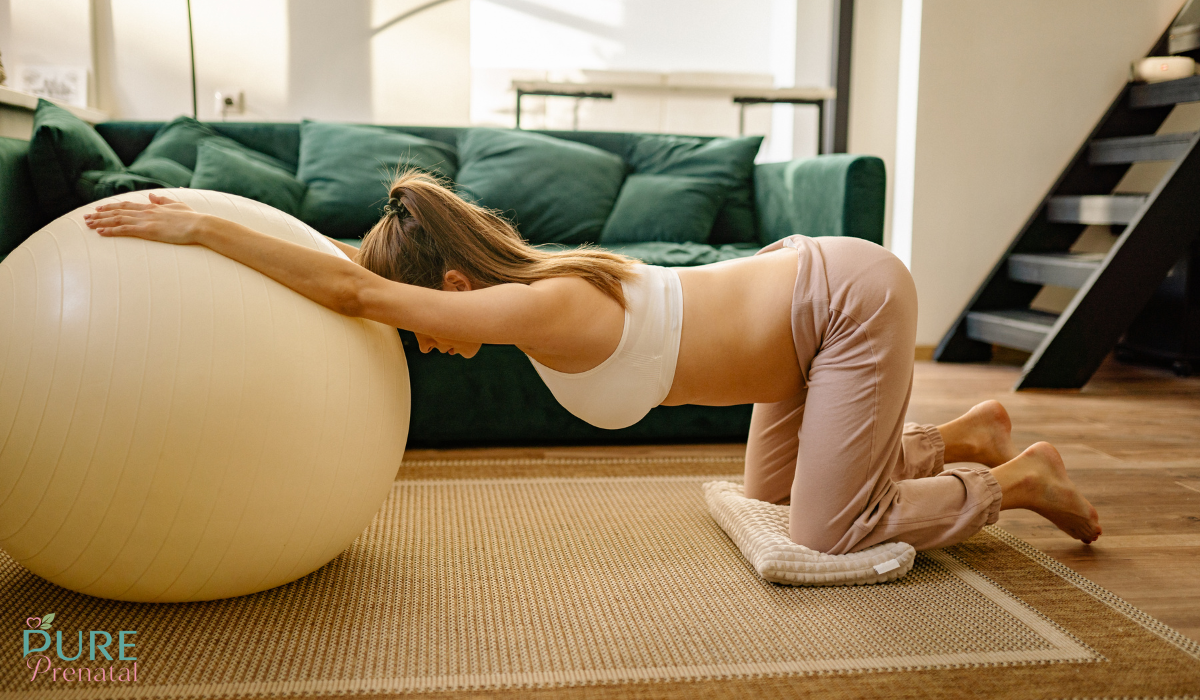
Carrying a baby changes almost everything about how your body moves, balances, and holds itself up. Your center of gravity shifts, your ligaments loosen, and your lower back usually ends up taking the brunt of it. That’s a big part of why so many expecting mothers reach for one simple, inexpensive piece of equipment: the pregnancy exercise ball.
You might know it as a balance ball, a birthing ball, a Swiss ball, or a stability ball — the names change depending on who’s using it and when, but it’s the same large inflatable sphere. It’s become a staple in prenatal fitness for good reason. It’s gentle on the joints, low-impact, and it adapts to whatever stage of pregnancy you’re in, which is probably why so many prenatal yoga classes, physiotherapy clinics, and birthing centers keep one lying around.
This guide walks through what a pregnancy exercise ball actually does for your body, how to use it safely from the first trimester all the way through labor, which size and type makes sense for you, and which exercises are actually worth your time. We’ll also take an honest look at the popular claim that bouncing on a ball helps induce labor, because that one gets asked a lot.
What Is a Pregnancy Exercise Ball?
At its core, a pregnancy exercise ball is just a large, air-filled rubber ball — the same equipment you’d find in a general fitness setting (often called a fitness ball, gym ball, or Swiss ball), just applied to prenatal movement and labor prep instead. Closer to birth, people usually start calling it a birthing ball or labor ball, but nothing about the object itself has changed.
There isn’t actually a structural difference between a “birthing ball” and a regular stability ball. The name just reflects how and when it’s being used. A Pilates ball in a prenatal class, a stability ball parked in your living room, and a labor ball sitting in a hospital delivery suite are, physically, the exact same tool.
Worth noting: a medicine ball is not the same thing. Medicine balls are smaller, weighted, and built for strength or throwing exercises — they’re not what you want for pregnancy balance work. Most prenatal fitness professionals will point you toward the larger, air-filled stability ball instead.
You might also come across a bosu balance half ball, sometimes called a mini bosu or small bosu ball — a flat-bottomed dome used for balance training. A bosu can work for gentle, supervised stability exercises early on, but it demands more core control and balance than a full round ball. Most prenatal instructors only recommend it to people who were already comfortable using one before getting pregnant.
What Size Fitness Ball Should You Use During Pregnancy?
Size matters more here than most people expect. Too small, and your hips end up below your knees, which puts pressure right on your pelvis and lower back. Too large, and you lose the support and stability that makes the ball useful in the first place.
As a rough guide for the best size gym ball for pregnancy:
- Under 5’4″ (162 cm): a 55 cm ball
- 5’4″ to 5’10” (162–178 cm): a 65 cm ball
- Over 5’10” (178 cm): a 75 cm ball
When you’re sitting on it properly, your knees should sit at roughly a 90-degree angle, in line with or slightly below your hips. It’s also worth spending a little extra on an anti-burst version rated for at least your body weight — standard exercise balls aren’t always built with pregnancy-safe weight limits in mind.
Benefits of Using an Exercise Ball During Pregnancy
A pregnancy exercise ball workout was never really about burning calories. It’s about giving your changing body some support. Here’s roughly what the research and clinical experience around prenatal stability ball exercises tends to point to.
Lower back and pelvic pain relief comes up first, and for good reason. As your baby grows, the extra weight tugs at your spine and pelvis all day long. Sitting and gently rocking on the ball encourages a more neutral spine position and can take some of that pressure off your lower back — which is exactly why so many people search for a pregnancy exercise ball for back pain in the first place.
Posture tends to improve too, mostly because a ball has no backrest to lean into. It naturally makes you engage your core and sit a bit taller, instead of slouching the way you might on a sofa after a long day.
Then there’s pelvic floor awareness. A lot of pelvic ball exercises involve small, subtle tilts and circles that help you actually feel and connect with those muscles — muscles that matter both for pregnancy comfort and for postpartum recovery later on.
Some midwives also believe sitting upright and slightly forward on a ball, rather than reclining, supports the baby settling into a head-down position, which can make labor a bit more straightforward.
For anyone who finds standing exercise uncomfortable later in pregnancy, ball-based stretches offer a way to stay mobile without putting stress on the joints. And closer to delivery, many birthing centers keep a labor ball in the room simply because upright, mobile positions — including sitting and swaying gently on a ball — tend to feel more comfortable during contractions than lying flat does.
Is It Safe? What You Need to Know
For most healthy pregnancies, using an exercise ball is considered safe right through all three trimesters. That said, safety still depends on a handful of things.
- Get clearance first. If you’re dealing with a high-risk pregnancy, placenta previa, a history of preterm labor, or anything your doctor has already flagged, check in before starting ball work or any new exercise.
- Balance gets trickier as you grow. Your center of gravity shifts along with your bump, so keep a wall, chair, or partner nearby for support, especially once you’re in the third trimester.
- Stop if something feels off. Dizziness, sharp pain, contractions, or unusual bleeding are all reasons to stop right away and call your healthcare provider.
- Watch your footwear. Socks on a hard floor are a surprisingly common cause of slips near an exercise ball — bare feet or grippy soles work better.
- Check the ball itself. Make sure it’s properly inflated (firm but not rock-hard) and rated for anti-burst safety.
On the common first-trimester question — are back extensions on a ball ok in the first trimester — gentle backward leaning or stretching over the ball is generally fine early on, when the bump is still small and balance hasn’t really been affected yet. Deep backbends or extensions, though, should always be slow and controlled, and stopped the moment you feel any strain or dizziness. As pregnancy progresses, most instructors suggest moving away from deep extensions altogether and sticking to gentler, more upright movements instead.
When Should You Start Bouncing on a Ball During Pregnancy?
There’s no hard rule here. Many women use a ball comfortably from the first trimester all the way to their due date, as long as they feel steady and haven’t been told otherwise by their doctor. Gentle bouncing is generally considered safe throughout pregnancy since it’s low-impact and doesn’t involve any sudden or jarring movement.
So what does bouncing on a pregnancy ball actually do? Mostly it’s the light, rhythmic movement that helps — it can relax pelvic muscles, ease tension in the lower back, and later in pregnancy, may encourage the baby to settle further down into the pelvis. It’s not a guaranteed shortcut to anything, but plenty of women simply find it comfortable, especially by the third trimester.
Trimester-by-Trimester Guide
First Trimester
Energy and nausea levels swing widely in early pregnancy, so the focus here is gentle mobility rather than anything intense.
- Seated pelvic tilts: sit on the ball with feet flat on the floor, hip-width apart, and slowly rock your pelvis forward and back in small movements.
- Hip circles: sitting tall, draw slow circles with your hips in both directions to loosen up the lower back and hips.
- Gentle seated stretches: reach one arm overhead while sitting upright to open up the side body.
Balance is usually still close to normal at this stage, so most low-intensity pilates ball pregnancy exercises are fine, as long as morning sickness isn’t causing dizziness that would make balance work risky.
Second Trimester
This tends to be the most comfortable stretch of pregnancy for a lot of women, and it’s often when a more consistent pregnancy ball workout routine starts to take shape.
- Wall squats with the ball: place the ball between your lower back and a wall, then slowly bend your knees into a shallow squat before rising back up. Builds leg strength without stressing the joints.
- Seated figure-eights: similar to hip circles, but tracing a figure-eight pattern, which works slightly different pelvic muscles.
- Cat-cow over the ball: kneel and drape your upper body gently over it, moving between a rounded and arched spine to release back tension.
- Side stretches: sitting on the ball, reach one arm up and over to stretch the side of your torso, then switch sides.
Third Trimester
In these final weeks, comfort and stability matter more than anything else. Yoga ball exercises for pregnancy third trimester tend to focus on opening the pelvis and relieving pressure rather than building strength.
- Pelvic rocking: slow, controlled forward-and-back rocking while seated — many find this genuinely soothing during Braxton Hicks contractions.
- Figure-eight hip movements: keep these going gently through the third trimester to support pelvic mobility.
- Forward lean with support: kneel and lean forward onto the ball, with a partner or wall nearby, to relieve lower back pressure — a position a lot of women also use during early labor.
- Wide-knee sitting stretch: sit with your knees wide apart on the ball to gently open the hips and pelvis ahead of labor.
Keep movements slow and controlled throughout the third trimester, and avoid any position that brings on dizziness, since lying flat for too long puts extra pressure on major blood vessels at this stage.
Exercise Ball Stretches for Pregnancy Back Pain
Lower back pain is one of the most common complaints during pregnancy, and it’s also probably the single biggest reason people go looking for a pregnancy exercise ball in the first place. A few stretches target it specifically.
The ball-supported cat-cow mentioned earlier gently mobilizes the spine. A seated forward lean — walking your feet slightly forward and letting your torso fold over your thighs — allows your back to round gently rather than staying locked in one position. Lateral rocking, where you slowly shift your weight from one hip to the other while sitting tall, can also release tension along the lower back and sacroiliac joints.
None of these will make pregnancy-related back pain disappear entirely, but combined with decent posture habits and physiotherapy if you need it, they can meaningfully take the edge off day to day.
Birthing Ball and Labor Ball Exercises
As your due date gets closer, the same ball you’ve been using for stretches often turns into a labor ball. Birthing ball exercises for labor show up constantly in hospitals and birth centers, largely because they support upright, active positions — something many care providers actively encourage over lying flat during labor.
Common birth ball exercises for labor include slow seated rocking through contractions, which helps some women manage discomfort rhythmically; leaning forward over the ball while kneeling, which takes pressure off the lower back; wide, supported squatting using the ball for balance, which may help open the pelvis; and gentle hip swaying from side to side while seated, which can encourage the baby’s movement through the pelvis.
Can an Exercise Ball Help Induce Labor?
This is probably the single most-searched question around pregnancy ball exercises, so it deserves a straight answer: there isn’t strong clinical evidence that bouncing or moving on a ball reliably induces labor. What it can do is help you stay upright and mobile, and some research into labor positioning suggests that mobility supports the natural progress of labor once it’s already underway, and may make contractions more manageable to get through.
If you’re due date and interested in ways to induce labor, a ball is a low-risk, comfortable way to try, but it’s not a sure thing and it should never replace medical advice. If you are being monitored for a late term pregnancy, discuss with your midwife or doctor which options make sense for you.
How to Use an Exercise Ball When Pregnant: General Tips
- Exercise on a non-slip surface — carpet or a mat works best.
- Keep a chair, wall, or another person nearby for balance, especially from the second trimester onward.
- Move slowly. Avoid sudden or overly bouncy movements that feel jarring rather than gentle.
- Breathe steadily throughout — holding your breath can spike blood pressure unnecessarily.
- Stop immediately if you feel dizzy, short of breath, or notice anything unusual.
- Start with short sessions, around 5–10 minutes, and build up gradually as it feels right.
Choosing the Best Pregnancy Exercise Ball
Not every exercise ball on the market was designed with pregnancy in mind, so a few practical checks go a long way.
Look for one labeled “anti-burst” or “slow deflate” — meaning that even if it does get punctured, it deflates gradually instead of collapsing out from under you, which matters a lot once you’re relying on it for balance. Check the weight rating too, and choose something rated comfortably above your current body weight, since manufacturer limits are usually tested under static placenta complications rather than the kind of dynamic movement you’ll actually be doing. A lightly textured surface (rather than a glossy one) also cuts down on slipping, particularly if you tend to work out in leggings. Some pregnancy-specific kits even come with a small ring base for extra stability, which is handy if you plan on sitting for long stretches, like at a desk.
Plenty of women end up keeping their ball out full-time as an alternative to a desk chair through the second and third trimesters. Sitting upright on it throughout the day, not just during a dedicated pregnancy ball workout, tends to reinforce good posture habits without you even thinking about it.
How a Ball Fits Into a Broader Prenatal Fitness Routine
An exercise ball works best alongside other approaches to prenatal fitness, not as a replacement for them. A lot of prenatal pilates and yoga classes bring a ball in for specific segments — using it for support during stretches, or as a prop for pelvic floor and core work — while still keeping mat-based and standing movements in the mix. If you’re already going to a prenatal yoga ball class or a pilates ball pregnancy session, the exercises in this guide are a solid way to keep practicing safely in between.
If you’re starting from scratch, five to ten minutes of gentle ball-based movement a few times a week is a reasonable place to begin. Build up from there as your body adjusts. Consistency ends up mattering a lot more than intensity when it comes to comfort and mobility during pregnancy.
Frequently Asked Questions
Is it safe to use a stability ball throughout all three trimesters of pregnancy?
For most healthy, low-risk pregnancies, yes — a stability ball can generally be used safely from the first trimester right through to labor. It’s still worth checking with your healthcare provider first, especially if you’re dealing with any pregnancy complications.
What size exercise ball is best for pregnancy?
It comes down to your height. As a general rule, a 55 cm ball suits those under 5’4″, a 65 cm ball suits 5’4″ to 5’10”, and a 75 cm ball suits anyone taller than 5’10”. Your knees should form roughly a 90-degree angle when you’re seated.
Does bouncing on a birthing ball actually help start labor?
Not according to strong scientific evidence — it doesn’t reliably induce labor. What it may do is help you stay upright and comfortable, which some believe supports labor progression once it’s already begun, but it’s not a proven way to start things off.
Can I use a regular gym ball, or do I need a special pregnancy ball?
A standard fitness or stability ball is fine, as long as it’s anti-burst rated and the right size for your height. There’s no special “pregnancy-only” version you actually need.
Are back extension on a ball safe in first trimester?
In early pregnancy, slow, gentle backward stretches are usually okay if done slowly and without strain. When your bump is on the rise, it’s best to switch to more gentle, upright movements.
How long do I have to use an exercise ball during pregnancy?
Most women can keep using a ball right up until labor unless told otherwise by their doctor. Consult a physician immediately if you experience dizziness, pain, bleeding or decreased fetal movement.
Is a medicine ball the same as a pregnancy exercise ball?
No. A medicine ball is smaller and weighted, built for strength training — it’s a different tool entirely from the large, air-filled stability or birthing ball used in prenatal exercise.

Dr. Tania Adib is a Board Certified OB/GYN based in the northern suburbs of Chicago. She earned her undergraduate degree from the University of Notre Dame and her medical degree from Georgetown University in Washington, D.C., before completing her residency in Obstetrics and Gynecology at Magee-Womens Hospital, University of Pittsburgh Medical Center. Her clinical interests include full-spectrum obstetrics and gynecology, from the first period through the menopausal years, contraception, and abnormal bleeding.