

Introduction
I used to think dead hangs were basically a rest between sets — grab the bar, hang for a second, catch your breath, get back to the “real” exercise. Turns out I had that backwards. The hang itself is doing more work than most people give it credit for, which is probably why it’s shown up everywhere from physio clinics to climbing gyms to random fitness reels promising it’ll fix your posture, your back pain, and apparently your height (more on that later — spoiler, it’s mostly not true).
What is a Dead Hang, Exactly?
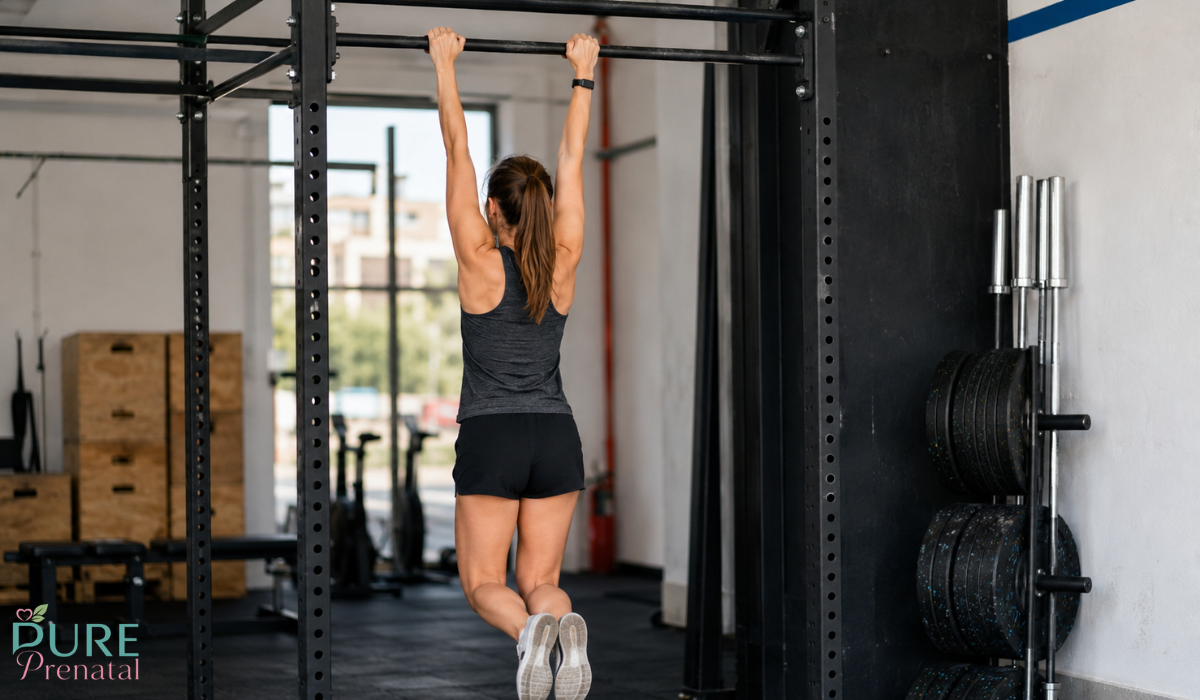
It’s about as simple as exercises get on paper: grab a bar, let your feet come off the ground, and hold that position with your arms fully extended. No pulling motion, no swinging on purpose, nothing dynamic — you’re just holding your bodyweight up with your grip.
But “simple” doesn’t mean “easy.” Try it for a minute straight and you’ll feel your forearms start screaming pretty quickly. Your shoulders are also doing quiet stabilizing work the whole time, and your core is fighting to keep you from twisting or swaying. It’s more of a full-body hold than it looks like from the outside.
How to Actually Do It Right
I’ll be honest, for years I just grabbed the bar and hung there without thinking about form, and I don’t think I got much out of it because of that. A few small adjustments make a real difference.
Grip the bar a bit wider than shoulder width, palms facing away from you. Step off your platform (a box, a bench, whatever) so your arms hang fully straight and your feet clear the floor completely. Here’s the part people usually skip: let your shoulders settle into a relaxed position — not shrugged up near your ears, but not totally slack either. Keep a light brace through your core so you’re not swinging around, and just breathe like a normal person. It’s weirdly common to hold your breath during a hang, which honestly just makes everything harder than it needs to be.
Common mistakes worth watching for: squeezing the bar way too hard (your forearms will burn out faster for no real benefit), letting the shoulders creep up toward the ears, and swinging instead of holding still. None of these ruin the exercise, but fixing them makes it noticeably more effective.
If You’re Just Starting Out
Don’t try to be a hero on day one. Ten to twenty seconds is genuinely fine to start with — do three or four sets of that, resting about a minute between them, and you’ll see real progress within a few weeks.
If a full straight-arm hang feels out of reach right now, stand on something so part of your weight stays on your feet, and gradually take more weight off as you get stronger. And I’d rather see someone hold a clean 15-second hang than a shaky, straining 30-second one — quality really does beat duration here, at least early on.
What You’re Actually Getting Out of This
Your shoulders will probably thank you. If you spend your day hunched over a laptop (who doesn’t, at this point), your shoulders end up tight and rolled forward without you noticing. Hanging gently opens that joint back up, and a lot of people describe it as a stretch they didn’t realize they needed until they felt it.
Grip strength, obviously. Since your hands are literally holding your whole bodyweight, this is about as direct a grip exercise as you’ll find. That strength carries over into things you don’t think about — carrying heavy grocery bags, opening stubborn jars, climbing, whatever.
Some genuine back relief. While you hang, vertebrae apart, which can ease pressure that builds up from sitting all day. I’ve had days where my lower back felt noticeably looser after a few sets of hangs — not a cure-all, but a real, noticeable difference.
The height thing — let’s settle this. No, dead hangs don’t make you permanently taller. What actually happens is your spinal discs decompress and expand a little, so you might measure a few millimeters taller right after a session. That’s real, but it’s temporary — it fades within a few hours once your discs settle back to normal. If your growth plates have already closed (which, for most adults, they have), hanging isn’t changing your actual height, no matter how consistent you are.
Using Dead Hangs for Specific Problems
Grip strength isn’t just a “nice to have” for climbers functional fitness as people get older. Dead hangs are a cheap, low-equipment way to work on that without needing a gym membership.
Got tight shoulders from lifting or just from life in general? Hanging works almost like a passive mobility session, encouraging a range of motion that regular training doesn’t always hit. For mild lower back tightness (the non-structural kind), the decompression effect genuinely helps a lot of people — though if you’ve got a diagnosed back condition, please check with a doctor or physio before making this a habit.
Rotator cuff stuff is trickier. Controlled hanging can strengthen the muscles that stabilize that joint, but if you already have an injury there, this isn’t something to just try casually — get input from someone who’s actually assessed your shoulder first.
If your goal is specifically to hang longer, train it two or three times a week, add some farmer’s carries or grip work on the side, and focus on relaxing anything that doesn’t need to be tense. Don’t try to double your hang time in a week — that’s a fast way to just burn out your forearms and get frustrated.
Variations Worth Knowing About
Active vs. passive hang. A passive hang is the standard version — arms straight, shoulders relaxed. An active hang has you pull your shoulder blades down and back slightly before hanging, which builds more shoulder stability and doubles as decent prep work for pull-ups.
Weighted dead hangs. Once regular bodyweight hangs stop being challenging, strapping on a weight belt or holding a dumbbell between your feet is the obvious next step.
One-arm dead hangs. This is genuinely advanced — hanging on one arm demands a lot of grip and shoulder strength, so don’t rush into this before two-arm hangs feel easy and controlled.
Dead Hang vs. Pull-Up: They’re Not the Same Thing
Same bar, different exercise, honestly.
| Aspect | Dead Hang | Pull-Up |
|---|---|---|
| Movement | Static, no motion | Dynamic, pulling motion |
| Main focus | Grip strength, shoulder mobility | Back and bicep strength |
| Beginner difficulty | Easier to start | Harder to start |
| Best for | Warm-ups, grip work, decompression | Building pulling strength |
A lot of coaches will tell you to get comfortable hanging before you even attempt pull-ups, and honestly, that tracks — the grip and shoulder stability you build carries straight over.
How Long Should You Actually Hang For?
There’s no magic number, but here’s a rough range depending on where you’re at:
- Beginner: 10–20 seconds per set
- Intermediate: 30–45 seconds per set
- Advanced: 60+ seconds per set
You really don’t need to do this daily — three to four times a week, a few sets each session, with proper rest, is plenty to make steady progress without frying your grip.
Equipment: You Don’t Need Much
This is one of the more accessible exercises out there. A doorway pull-up bar, a wall-mounted one, or a freestanding station all get the job done. Don’t have a bar at home? Most local parks have monkey bars or a pull-up station tucked away somewhere. If you’re still building up strength, looping a resistance band around the bar for some assistance can help bridge the gap. Gymnastics rings are also worth trying — they let your wrists rotate a bit, which some people find easier on their shoulders than a completely fixed bar.
Final Thoughts
It looks like nothing’s happening when you’re just hanging there, but the payoff is real — better grip, healthier shoulders, and genuine relief for a stiff back. Start with short holds, keep your form honest, and let your hang time grow naturally over weeks rather than forcing it in a few days. Consistency wins here, every single time.
Frequently Asked Questions
Should I dead hang every day?
Not really needed. Three or four sessions a week is enough to see steady progress without overloading your grip.
Does dead hanging actually make you taller?
Only temporarily. Your spine decompresses slightly, so you might be a touch taller right after a session, but it fades within a few hours and doesn’t change your actual height long-term.
How long should a beginner hang for?
Start around 10–20 seconds per set and build up gradually as your grip strength improves.
What’s the real difference between a dead hang and a pull-up?
A dead hang is a static hold focused on grip and shoulder stability. A pull-up is a dynamic pulling movement that builds back and arm strength.

Dr. Tania Adib is a Board Certified OB/GYN based in the northern suburbs of Chicago. She earned her undergraduate degree from the University of Notre Dame and her medical degree from Georgetown University in Washington, D.C., before completing her residency in Obstetrics and Gynecology at Magee-Womens Hospital, University of Pittsburgh Medical Center. Her clinical interests include full-spectrum obstetrics and gynecology, from the first period through the menopausal years, contraception, and abnormal bleeding.