

Introduction
When most people imagine labor, they picture contractions that begin in the abdomen and gradually become stronger as the baby moves closer to birth. However, not every labor experience follows that pattern. Some women feel the majority of their pain in the lower back rather than the front of the belly. This is known as back labor, and although it can be more intense than typical labor pain, it is a common variation of a normal labor experience.
It isn’t a separate type of labor. Instead, it describes labor where contractions cause severe pain and pressure in the lower back, sometimes continuing even between contractions. This discomfort is often linked to the baby’s position, but it can also occur for other reasons. Understanding what back labor feels like, why it happens, and how to relieve it can help you feel more prepared as your due date approaches.
Whether you’re planning a labor natural birth or simply learning how to prepare for labor and delivery, knowing what to expect can reduce anxiety and help you make informed decisions throughout childbirth.
What Is Back Labor?
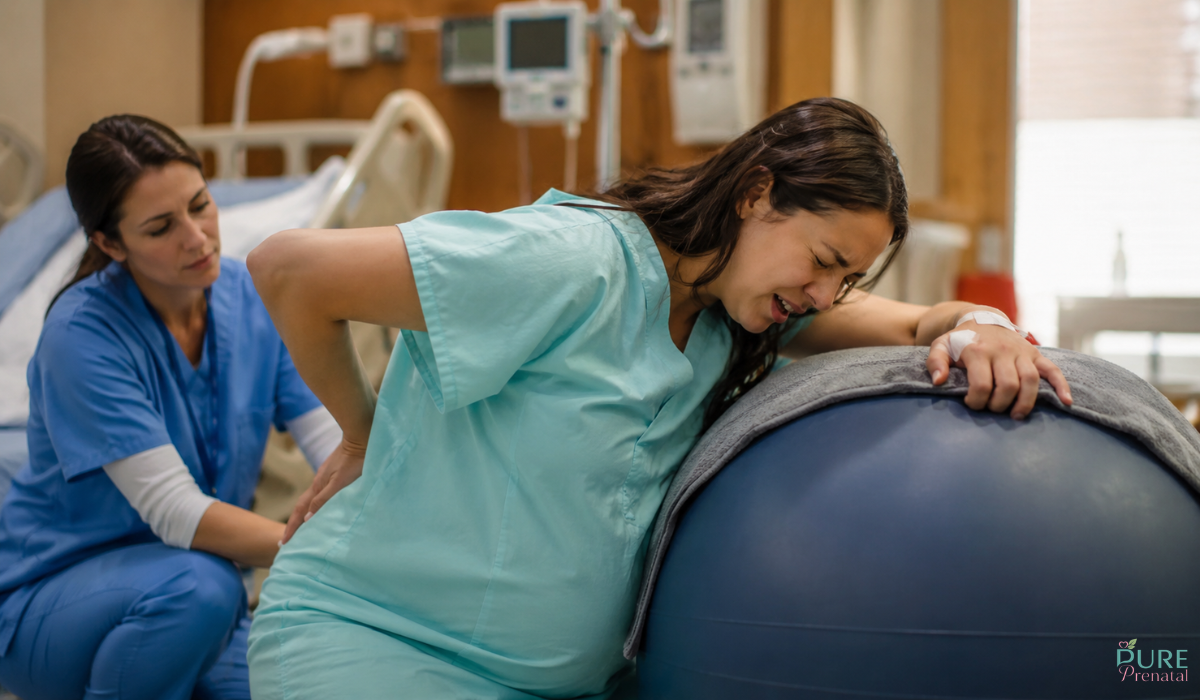
Back labor refers to intense lower back pain that occurs during labor contractions. Unlike regular labor, where pain is usually felt across the lower abdomen and pelvis, back labour concentrates much of the discomfort in the lumbar spine and tailbone area.
Some women experience back pain only during contractions, while others notice a constant aching sensation that never completely goes away. Although back labour is often more uncomfortable, it does not automatically mean your labor will be longer or that you’ll need a cesarean delivery.
What Does Back Labor Feel Like?
Every woman’s experience is unique, but many describe back labor as one of the most intense forms of labor pain.
Common descriptions include:
- Deep, aching pain in the lower back
- Sharp pain around the tailbone
- Constant pressure against the spine
- Pain that radiates into the hips and thighs
- Severe cramping that starts in the back before moving forward
- Lingering soreness between contractions
Unlike regular contractions, where discomfort often eases between each wave, back contractions may leave your lower back sore throughout labor.
Some mothers compare the feeling to severe muscle spasms, while others say it resembles intense menstrual cramps combined with heavy pressure on the lower spine.
Back Labor Symptoms
Although pain is the main symptom, back labor often includes several other signs.
Persistent Lower Back Pain
The discomfort is usually centered just above the tailbone and may continue even after a contraction ends.
Pain During Every Contraction
Each contraction often begins in the back before spreading around the abdomen.
Pelvic Pressure
As labor progresses, many women feel increasing pressure in the pelvis as the baby moves through the birth canal.
Difficulty Getting Comfortable
Sitting, standing, or lying down may all feel uncomfortable because the pain remains focused in the same area.
Hip and Thigh Pain
Back labor sometimes causes aching that spreads into the hips, buttocks, or upper thighs.
What Causes Back Labor?
Several factors may contribute to back labor.
Baby’s Position
The most common cause is when the baby is facing upward instead of toward the mother’s spine. This position, known as occiput posterior (OP) or “sunny-side up,” places the back of the baby’s head directly against the mother’s lower spine.
Each contraction increases pressure in this area, creating the intense pain associated with back labor.
Pelvic Shape
Every woman’s pelvis has a unique shape. Certain pelvic structures may make it easier for the baby to settle into a position that increases back pressure.
Previous Back Problems
Women with chronic lower back pain, scoliosis, or previous injuries may notice stronger back pain during labor.
Muscle Tension
Stress naturally causes muscles to tighten. Tight lower back and pelvic muscles can make contractions feel even more painful.
Back Contractions Explained
Back contractions are labor contractions that are felt mainly in the lower back instead of the abdomen.
Many women describe them as:
- Deep pressure against the spine
- Sharp pain near the tailbone
- Tightening that spreads into the hips
- Continuous aching between contractions
Although they may feel different from traditional contractions, back contractions still help open the cervix and move the baby downward.
Natural Ways to Relieve Back Labor
While back labor cannot always be prevented, several natural comfort measures may reduce discomfort.
Change Positions Frequently
Remaining in one position for long periods may increase pressure on your back. Walking, standing, kneeling, or leaning forward often helps.
Use Counterpressure
Firm pressure applied to the lower back during contractions can significantly reduce pain for many women.
Try a Birth Ball
Sitting on a birth ball while gently rocking your hips may encourage the baby to rotate into a more favorable position.
Apply Heat
A warm shower or heating pad placed on the lower back can help relax tense muscles.
Practice Deep Breathing
Slow, controlled breathing helps reduce muscle tension and allows you to stay focused during contractions.
Massage
Gentle massage between contractions may ease soreness and improve circulation.
Best Labor Positions
Changing positions throughout labor can make contractions more manageable and reduce pressure on your lower back.
Hands-and-Knees
This position helps relieve spinal pressure and may encourage the baby to rotate into an ideal birth position.
Leaning Forward
Leaning over a bed, chair, or birth ball takes pressure off the lower back while allowing your support person to apply counterpressure.
Standing and Walking
Staying upright uses gravity to help your baby descend through the pelvis and may improve labor progress.
Side-Lying
When you need rest, lying on your side with a pillow between your knees can relieve pressure while conserving energy.
Squatting
A supported squat widens the pelvis, creating more room for the baby to move through the birth canal.
How to Prepare for Labor and Delivery
Preparing for labor isn’t just about packing a hospital bag. Learning how to prepare for labor and delivery can help you feel more confident and reduce anxiety as your due date approaches. While every birth is different, taking a few practical steps ahead of time can make the experience smoother.
Here are some ways to prepare:
- Attend childbirth education classes to understand the labor process.
- Practice breathing and relaxation techniques.
- Stay physically active with pregnancy-safe exercises if approved by your healthcare provider.
- Pack your hospital bag by 36–37 weeks of pregnancy.
- Discuss your birth preferences with your healthcare provider or midwife.
- Arrange transportation and childcare plans if needed.
- Learn the signs of true labor and when it’s time to seek medical care.
Preparing ahead of time won’t eliminate labor pain, but it can help you feel more in control during the experience.
Understanding the Birth Canal
The birth canal is the pathway your baby travels during a vaginal birth. It includes the cervix, pelvis, pelvic floor muscles, and vagina.
During labor, contractions gradually move your baby downward while the cervix softens, thins (effaces), and opens (dilates). As your baby descends through the birth canal, they rotate to fit through the mother’s pelvis before being born.
A baby’s position within the birth canal can influence how labor feels. For example, babies facing the mother’s abdomen (occiput posterior position) are more likely to cause back labor because the back of their head presses against the mother’s spine.
The 4 Stages of Labor
Labor is divided into four stages, each marking an important step toward childbirth.
Stage 1: Early and Active Labor
This stage begins with regular contractions that gradually open the cervix.
During early labor, contractions are mild to moderate and may feel like menstrual cramps or lower back pain. As labor progresses into active labor, contractions become stronger, longer, and closer together. The cervix opens from 0 to 10 centimeters during this stage.
Stage 2: Pushing and Birth
Once the cervix is fully dilated, you’ll begin pushing as your baby moves through the birth canal. Many women feel an intense urge to bear down, similar to needing a bowel movement. Your healthcare provider will guide you on when and how to push effectively.
Stage 3: Delivery of the Placenta
After your baby is born, mild contractions continue until the placenta separates from the uterus and is delivered. This stage usually lasts between 5 and 30 minutes.
Stage 4: Early Recovery
The first one to two hours after birth are considered the fourth stage of labor. During this time, your healthcare team monitors you for bleeding, checks your vital signs, and encourages skin-to-skin contact and breastfeeding if possible.
What Does Childbirth Feel Like?
Although every birth is different, labor generally becomes more intense as it progresses.
Early labor often feels like strong menstrual cramps that gradually become more regular. During active labor, contractions create waves of pressure that build, peak, and then ease. If you’re experiencing back labor, the pain may remain concentrated in your lower back rather than your abdomen.
During the pushing stage, many women feel intense pelvic pressure and a powerful urge to bear down. As the baby’s head crowns, you may experience a stretching or burning sensation that lasts only a short time before your baby is born.
Many mothers describe feeling immediate relief once the baby is delivered, followed by excitement, exhaustion, and overwhelming joy.
When to Go to the Hospital for Labor
Knowing when to go to the hospital for labor can help you avoid arriving too early or waiting too long.
For many low-risk pregnancies, healthcare providers recommend the 5-1-1 rule:
- Contractions are 5 minutes apart
- Each contraction lasts 1 minute
- This pattern continues for 1 hour
You should also contact your healthcare provider or go to the hospital if:
- Your water breaks.
- You have heavy vaginal bleeding.
- Your baby is moving much less than usual.
- You have severe abdominal or back pain that doesn’t improve.
- You develop regular contractions before 37 weeks of pregnancy.
If you’re unsure whether labor has started, it’s always safest to call your healthcare provider for advice.
How Baby Dropping Affects Labor
As your due date approaches, your baby may move lower into your pelvis. This is called baby dropping or lightening.
Many women ask, “How long after baby dropped did you go into labor?” or “How long after baby drops does labor start?” Unfortunately, there’s no exact answer.
For first-time mothers, the baby often drops two to four weeks before labor. For women who have given birth before, the baby may not drop until labor has already begun.
Signs that your baby has dropped include:
- Your belly appears lower.
- You can breathe more easily.
- You need to urinate more often.
- You feel increased pelvic pressure.
- Walking may become more uncomfortable.
Although baby dropping shows your body is preparing for birth, it doesn’t reliably predict when labor will begin.
When Do Cervix Checks Start?
Many women wonder, “When do cervix checks start?”
Routine cervical examinations are often offered during the last few weeks of pregnancy, commonly around 36 to 37 weeks, although practices vary among healthcare providers.
During labor, cervix checks are performed to measure:
- Cervical dilation
- Effacement (thinning)
- Baby’s position
- Baby’s station within the pelvis
These examinations help your healthcare team understand how labor is progressing, but cervical dilation alone cannot predict exactly when labor will begin.
Types of Delivery
There are different types of delivery, and the safest option depends on your pregnancy and labor.
Common kinds of delivery include:
- Vaginal delivery, which is the most common type of birth.
- Assisted vaginal delivery, using forceps or a vacuum when medically necessary.
- Cesarean delivery (C-section), performed through surgery when a vaginal birth isn’t the safest option.
Your healthcare provider will recommend the most appropriate delivery method based on your individual circumstances.
Labour and Delivery Triage
When you arrive at the hospital, you’ll usually be assessed in labour and delivery triage before being admitted.
The healthcare team may:
- Check your contractions.
- Monitor your baby’s heart rate.
- Measure your blood pressure and temperature.
- Ask whether your water has broken.
- Perform a cervical examination if appropriate.
This assessment helps determine whether you’re in active labor or if it’s safe to return home for a little longer.
Frequently Asked Questions
What causes back labor?
Back labor is most commonly caused by the baby being in the occiput posterior (OP) position, where the back of the baby’s head presses against the mother’s spine. Pelvic anatomy and muscle tension may also contribute.
Is back labor more painful than regular labor?
Many women find back labor more intense because the pain is concentrated in the lower back and may continue between contractions. However, every labor experience is different.
Can I have a natural birth with back labor?
Yes. Most women with back labor can still have a successful vaginal birth. Comfort measures, position changes, and support from your healthcare team can help you manage the pain.
Does baby dropping mean labor is about to start?
Not necessarily. Some women go into labor within a few days after the baby drops, while others may remain pregnant for several weeks.
Can changing positions help back labor?
Yes. Forward-leaning positions, hands-and-knees, using a birth ball, and walking may reduce pressure on the lower back and encourage the baby to rotate into a more favorable position.
Conclusion
Back labor can be one of the most challenging aspects of childbirth, but understanding why it happens and how to manage it can make the experience feel less overwhelming. Although the pain is concentrated in the lower back, it is still a normal part of labor for many women and is often related to the baby’s position as they move through the birth canal.
Preparing for birth by learning how to prepare for labor and delivery, recognizing the signs of back contractions, understanding the 4 stages of labor, and knowing when to go to the hospital for labor can help you approach childbirth with greater confidence. Natural comfort measures such as changing positions, using counterpressure, practicing controlled breathing, and staying mobile may provide meaningful relief during labor.

Dr. Tania Adib is a Board Certified OB/GYN based in the northern suburbs of Chicago. She earned her undergraduate degree from the University of Notre Dame and her medical degree from Georgetown University in Washington, D.C., before completing her residency in Obstetrics and Gynecology at Magee-Womens Hospital, University of Pittsburgh Medical Center. Her clinical interests include full-spectrum obstetrics and gynecology, from the first period through the menopausal years, contraception, and abnormal bleeding.